What Is an Exothermic Welding System, and How Is It Used for Electrical Grounding?

Ai Earthing
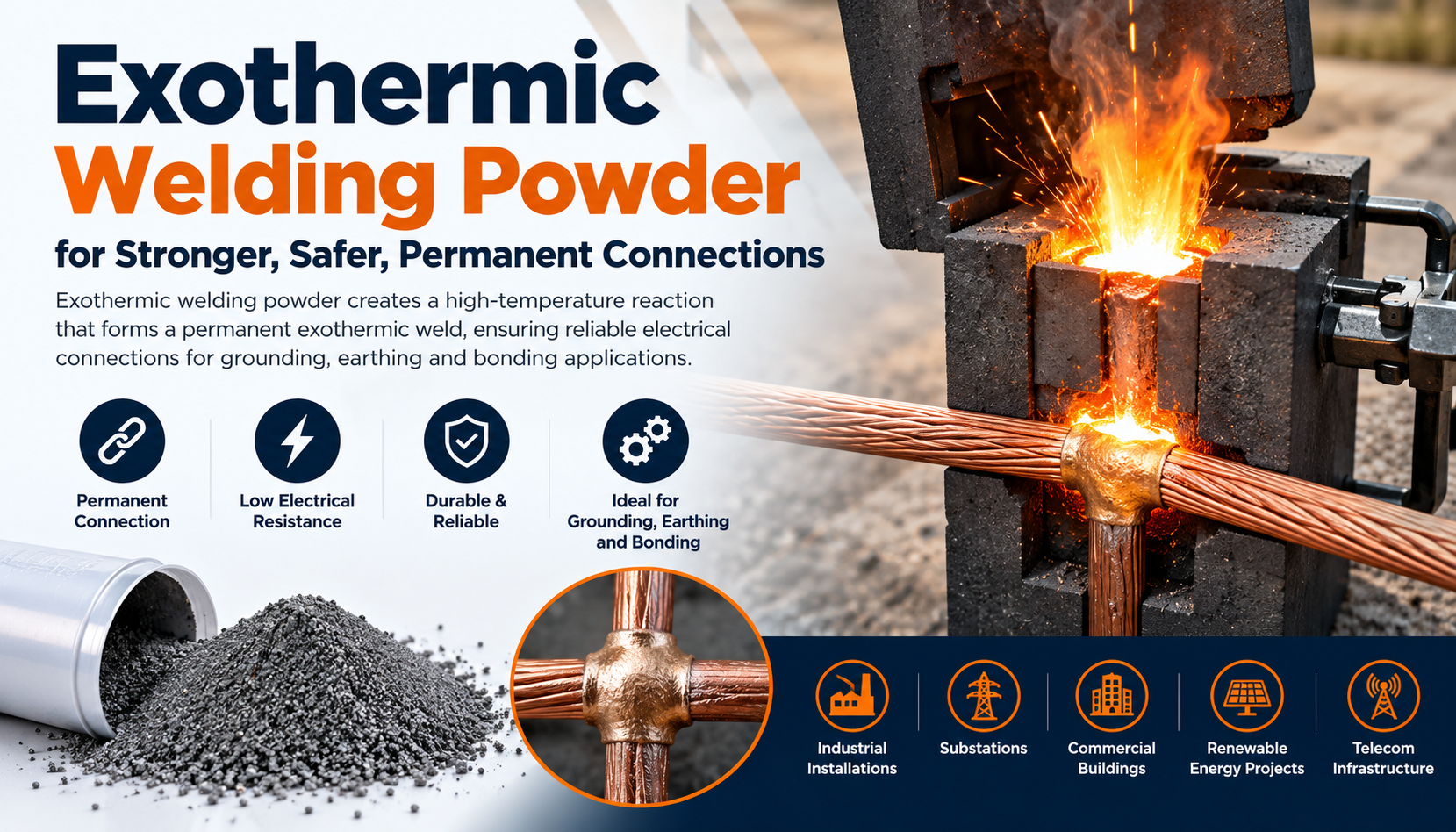
An exothermic welding system is used to create permanent electrical connections between compatible metal conductors without requiring an external power supply for the welding reaction. It is widely used in electrical grounding, earthing networks, lightning protection, railway infrastructure, industrial facilities, and utility installations.
Unlike conventional mechanical connectors, exothermic welding creates a metallurgical bond between compatible conductors. When the connection is correctly designed and installed, it can provide excellent electrical continuity and long-term durability.
For engineers, contractors, and industrial buyers, understanding the exothermic welding process, system components, connection types, and installation requirements is essential when selecting a suitable solution for an electrical project.
What Is an Exothermic Welding System?
An exothermic welding system is a collection of specially designed components used to join compatible metallic conductors through a chemical reaction that generates intense heat. The reaction produces molten metal, which forms a permanent connection between the conductors.
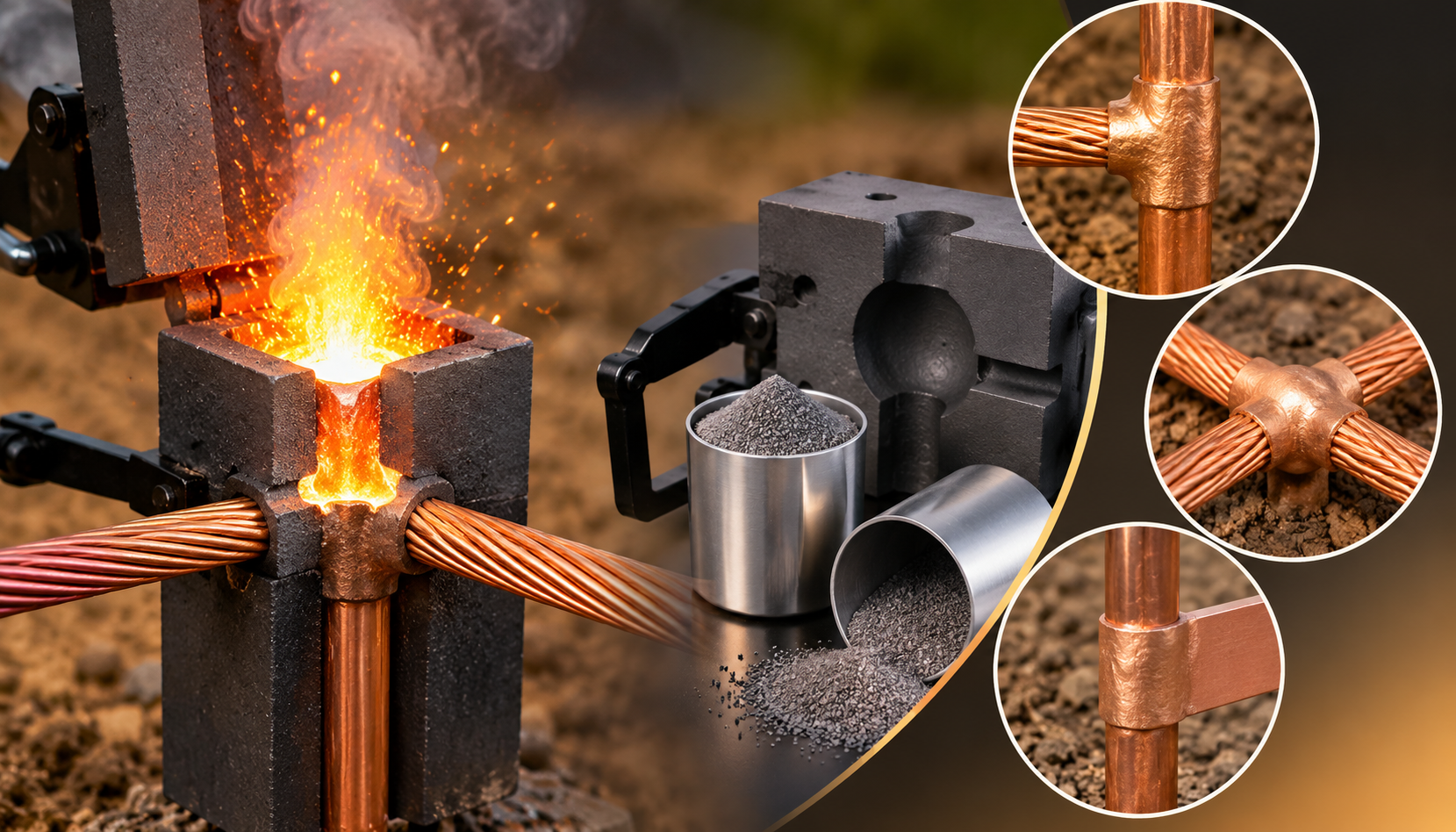
A typical system includes a graphite mould, an exothermic welding powder or charge, an ignition system, and the accessories required for safe and accurate installation.
The process is commonly used to connect copper conductors, grounding cables, copper-bonded steel rods, and other compatible metallic components. The exact application depends on the conductor materials, connection geometry, and manufacturer's specifications.
An exothermic welding system is particularly useful where electrical connections must withstand environmental exposure, corrosion, mechanical stress, and electrical fault currents.
How Does Exothermic Welding Work?
The exothermic welding process uses a controlled chemical reaction to generate enough heat to produce molten metal. The molten material flows into a prepared mould containing the conductors to be joined and solidifies to form a permanent connection.
The general process involves the following stages:
1. Prepare the Conductors
The conductors must be clean, dry, and compatible with the selected welding connection. Remove dirt, moisture, grease, and other contaminants according to the manufacturer's instructions.
Proper preparation helps improve the quality and consistency of the finished joint.
2. Select the Appropriate Mould
Choose a mould designed for the specific conductor combination and connection type. Examples include cable-to-cable, cable-to-ground rod, and cable-to-steel connections.
The mould cavity, conductor dimensions, and welding charge must match the manufacturer's approved configuration.
3. Position the Conductors
Place the conductors securely inside the mould. Correct alignment is important because movement or incorrect positioning can affect the resulting connection.
The mould must also be properly closed and secured before the welding reaction begins.
4. Add the Welding Charge
Load the specified exothermic welding charge according to the product instructions. Charge quantity and composition depend on the mould design and conductor configuration.
Only the approved charge for the selected system should be used.
5. Ignite the Reaction
Activate the designated ignition system in accordance with the manufacturer's procedure. The chemical reaction generates intense heat and produces molten metal.
Because the reaction involves high temperatures and hot molten material, operators must follow the prescribed safety precautions and maintain the required exclusion zone.
6. Allow the Connection to Solidify
After the reaction, allow the joint to cool for the specified period before opening the mould or handling the connection. Premature movement can damage the joint or create a safety hazard.
7. Inspect the Finished Joint
Inspect the connection for visible defects and verify that the installation meets the applicable project specifications. Electrical continuity, resistance, or other required tests should be conducted using the appropriate methods.
Following the manufacturer's instructions at every stage helps achieve consistent and dependable connections.
Main Components of an Exothermic Welding System
A complete exothermic welding system consists of several components that work together to produce the required connection.
1. Exothermic Welding Powder
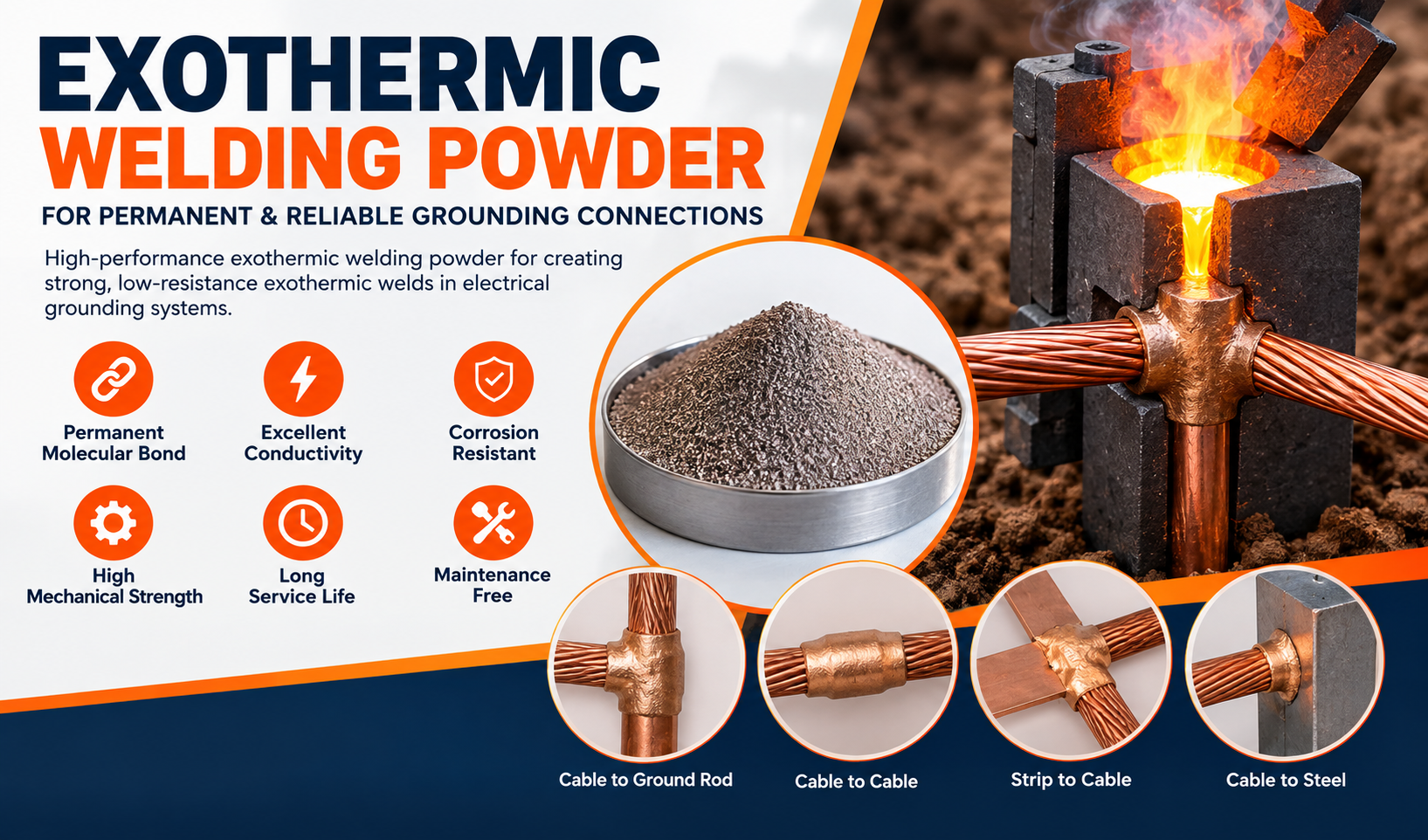
Exothermic welding powder, also called an exothermic welding charge, provides the reactive material used to generate heat and molten metal.
Different charge sizes and formulations are available for specific connection designs. Selecting the correct charge is essential for compatibility, connection quality, and safe operation.
2. Exothermic Welding Mould
An exothermic welding mould is commonly made from graphite and is shaped to hold the conductors and contain the molten metal during the reaction.
Moulds are manufactured for different joint configurations, including straight-through cable connections, T-connections, cross-connections, and connections to grounding rods.
3. Ignition System
The ignition system initiates the chemical reaction. Depending on the product design, the system may use an approved ignition accessory or another manufacturer-specified method.
Operators should use only the ignition equipment recommended for the welding system.
4. Handle Clamp and Accessories
Clamps and associated accessories help secure the mould and support proper positioning during installation. Additional accessories may include cleaning tools, brushes, and equipment for maintaining the mould.
The required accessories vary according to the system and application.
5. Safety Equipment
Appropriate personal protective equipment may include heat-resistant gloves, safety glasses or a face shield, protective clothing, and suitable footwear.
The installation area should be dry, properly ventilated where required, and free of incompatible combustible materials. Workers should follow the product safety data sheet and site-specific safety procedures.
Applications of Exothermic Welding
Exothermic welding is used in many industries where durable electrical connections are important.
Electrical Grounding and Earthing
Grounding and earthing systems help provide a controlled path for fault currents and support electrical safety. Exothermic welding can be used to connect conductors in grounding grids, earth electrodes, and bonding networks.
Lightning Protection Systems
Lightning protection installations may use exothermic welding to join compatible conductors and grounding components. The connection must be designed according to the applicable lightning protection standards and project requirements.
Substations and Power Utilities
Electrical substations require interconnected grounding conductors to help manage fault currents and maintain equipotential bonding. Exothermic welding is often selected for permanent connections in these networks.
Renewable Energy Projects
Solar power plants, wind energy installations, and other renewable energy facilities may require extensive grounding and bonding networks. Exothermic welding can provide permanent conductor connections where the system design and installation conditions permit its use.
Railway and Transportation Infrastructure
Railway, metro, and other transportation projects may use exothermic welding for approved grounding, bonding, and electrical connection applications. The connection type must be suitable for the specific railway system and relevant engineering requirements.
Industrial Facilities
Factories, data centres, commercial buildings, and process plants may use exothermic welding for grounding networks, equipment bonding, and other compatible electrical applications.
Key Benefits of an Exothermic Welding System
Permanent Metallurgical Connection
The process forms a metallurgical bond rather than relying solely on mechanical pressure or fasteners. This makes it suitable for applications where a permanent connection is required.
Reliable Electrical Continuity
A correctly formed exothermic weld can provide a low-resistance electrical path. Actual performance depends on the materials, connection design, installation quality, and testing requirements.
Potential Resistance to Corrosion
Because the connection is metallurgical rather than dependent on exposed contact surfaces alone, a properly made weld can offer good long-term performance in suitable environments. Soil chemistry, moisture, dissimilar metals, and installation conditions still need to be considered.
No External Welding Power Supply
The chemical reaction supplies the heat required for the joining process, so conventional electrical arc-welding equipment is not needed to initiate the weld. However, the system still requires suitable tools, ignition accessories, preparation, and safety controls.
Suitable for Grounding Networks
Exothermic welding can be used for many conductor combinations found in grounding and bonding systems. Its suitability depends on the conductor material, joint configuration, and the applicable design standards.
Long-Term Infrastructure Performance
When correctly selected, installed, and inspected, exothermic connections can support long service life and reduce the need for routine mechanical retightening. Periodic inspection of the overall grounding system may still be necessary.
Exothermic Welding vs. Mechanical Connectors
Exothermic welding and mechanical connectors are both used to join electrical conductors, but they work differently.
| Feature | Exothermic Welding | Mechanical Connectors |
|---|---|---|
| Connection method | Chemical reaction forms a metallurgical bond | Clamping, bolting, or compression |
| External electrical power | Not generally required for the reaction | Usually not required |
| Permanent connection | Yes, when correctly completed | Depends on connector design |
| Retightening | Not normally required for the welded joint | May be required for certain connections |
| Installation | Requires a compatible mould, charge, ignition system, and trained handling | Requires compatible connectors and appropriate tools |
| Best application | Suitable permanent joints in approved configurations | Applications where mechanical installation, accessibility, or removability is preferred |
The best option depends on the project specifications, conductor materials, installation conditions, required maintenance, and applicable electrical standards.
How to Choose the Right Exothermic Welding System
Selecting the right system helps improve connection quality, installation efficiency, and overall project reliability.
Consider these factors before purchasing:
- Conductor material: Confirm whether the conductors are copper, copper-bonded steel, or another compatible material.
- Connection type: Identify whether the project requires a cable-to-cable, cable-to-rod, cable-to-steel, or another connection.
- Conductor dimensions: Check cable sizes, rod diameters, and other relevant dimensions.
- Mould compatibility: Ensure the mould is designed for the exact connection configuration.
- Welding charge: Select the specified charge size and formulation for the chosen mould.
- Application environment: Consider soil conditions, moisture, temperature, accessibility, and environmental exposure.
- Standards and project specifications: Confirm compliance with applicable electrical, grounding, and safety requirements.
- Supplier support: Evaluate product documentation, availability of replacement moulds and charges, technical assistance, and traceability.
Avoid selecting a system based only on the lowest purchase price. Compatibility, installation quality, product documentation, and long-term performance are also important.
Safety Precautions for Exothermic Welding
Exothermic welding involves intense heat, molten metal, and reactive materials. It must be carried out by trained personnel using the manufacturer's approved procedures.
Important precautions include:
- Read the product instructions and safety data sheet before installation.
- Ensure conductors, moulds, and materials are prepared as instructed, particularly regarding moisture.
- Wear the specified protective equipment.
- Keep unprotected personnel away from the welding area.
- Use only compatible moulds, charges, and ignition accessories.
- Do not attempt to open or handle a hot mould prematurely.
- Store welding charges according to the manufacturer's requirements.
- Follow local fire safety rules and site-specific risk assessments.
- Inspect the completed joint before putting the system into service.
These precautions help control the risks associated with high temperatures, sparks, and molten metal.
Common Problems in Exothermic Welding
Connection defects can occur when the wrong components are selected or installation instructions are not followed.
Poor or incomplete weld: This may result from contamination, incorrect charge selection, unsuitable conductor positioning, or an incompatible mould.
Porosity or visible cavities: These defects may be associated with moisture, contamination, or incorrect process conditions. Follow the manufacturer's inspection and acceptance criteria.
Molten metal leakage: Incorrect mould assembly, worn mould surfaces, or improper conductor positioning may contribute to leakage.
Inconsistent results: Using non-approved charges, worn moulds, or inconsistent preparation can affect repeatability.
Where a connection fails inspection, follow the manufacturer's approved corrective procedure. Do not assume that a visually acceptable connection meets all electrical performance requirements.
Frequently Asked Questions About Exothermic Welding Systems
What is an exothermic welding system used for?
An exothermic welding system is used to create permanent electrical connections between compatible conductors. Common applications include grounding grids, earthing systems, lightning protection, electrical bonding, substations, and industrial infrastructure.
What are the main components of an exothermic welding system?
The main components typically include an exothermic welding charge, a compatible mould, an ignition system, clamps or accessories, and appropriate safety equipment.
Is exothermic welding better than mechanical connections?
Neither method is universally better. Exothermic welding is useful when a permanent metallurgical connection is required, while mechanical connectors may be preferable where removability, accessibility, or specific installation constraints are important.
Can exothermic welding be used for grounding?
Yes. Exothermic welding is widely used for compatible grounding and earthing connections, including certain cable-to-cable and cable-to-ground-rod joints. The connection must meet the design and safety requirements of the grounding system.
How long does an exothermic welding connection last?
A properly designed and installed exothermic weld can provide long-term service. Its actual lifespan depends on conductor compatibility, environmental conditions, corrosion exposure, installation quality, and the requirements of the application.
How do I select the correct exothermic welding powder?
Choose the charge specified for the exact mould and conductor configuration. Verify the manufacturer's compatibility information rather than selecting a charge based only on its size or price.
Conclusion
An exothermic welding system is an important solution for creating permanent electrical connections in grounding, earthing, lightning protection, and industrial bonding applications. Its main advantages include metallurgical bonding, reliable electrical continuity, and the ability to create connections without a conventional external welding power supply.
Successful installation depends on selecting compatible conductors, the correct mould and welding charge, proper preparation, safe handling, and appropriate inspection. Engineers and contractors should evaluate the complete system against project specifications and applicable standards before installation.
For industrial buyers, working with a knowledgeable supplier can simplify product selection and help ensure that the chosen exothermic welding system meets the technical requirements of the application.