Exothermic Welding Powder: The Complete Guide to Permanent Exothermic Weld Connections for Grounding Systems

Ai Earthing
Reliable electrical grounding is the foundation of every safe and efficient power system. Whether it is a power substation, telecom tower, solar plant, railway network, or industrial facility, the quality of the grounding connection directly affects system performance and safety.
Exothermic welding powder is widely used to create permanent electrical connections that offer superior conductivity and long-term durability. Unlike mechanical connectors, an exothermic weld forms a molecular bond between conductors, resulting in a maintenance-free connection that can last for decades.
This guide explains everything you need to know about exothermic welding powder, how an exothermic weld is created, its advantages, applications, installation process, and best practices.
What Is Exothermic Welding Powder?
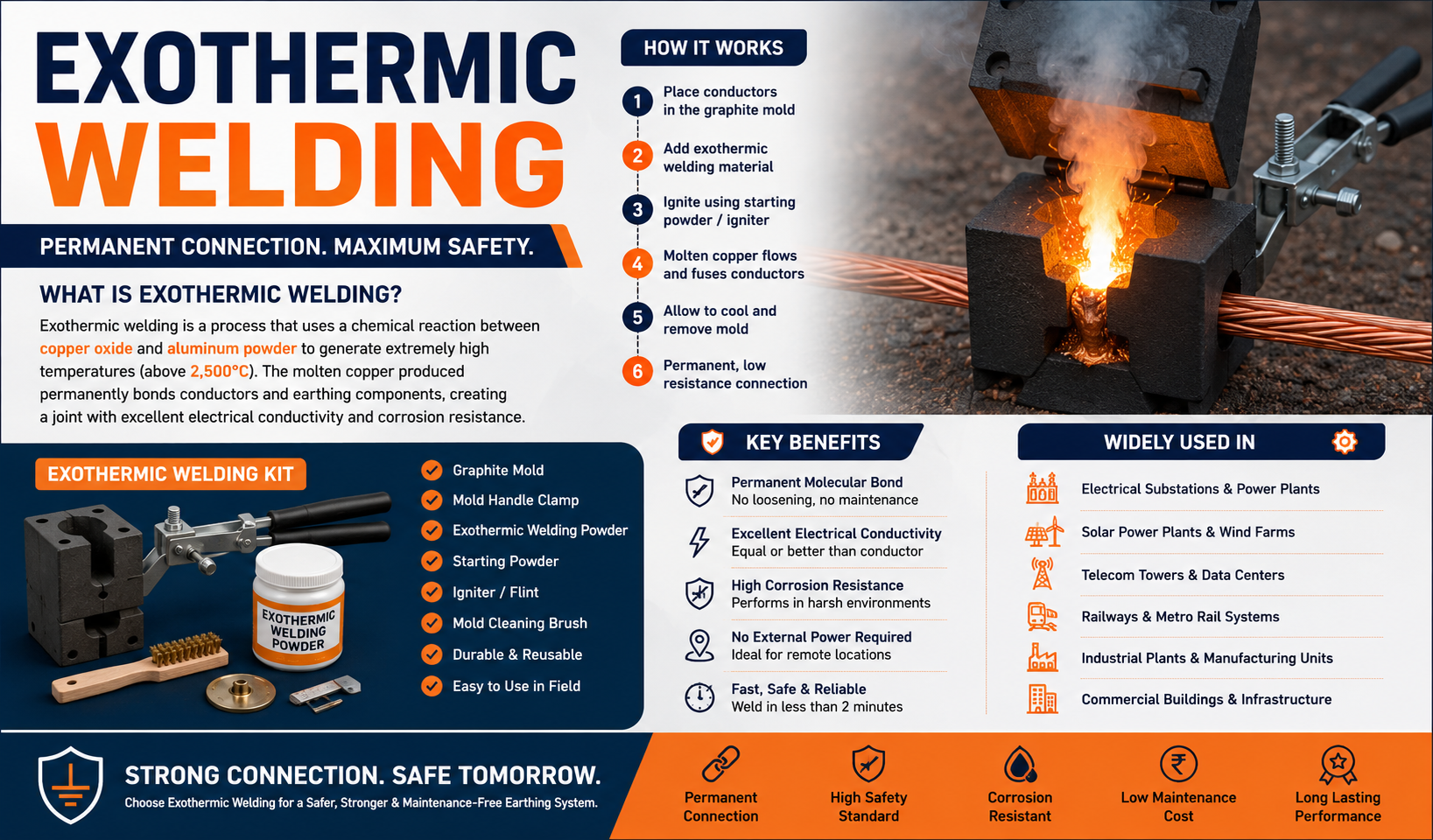
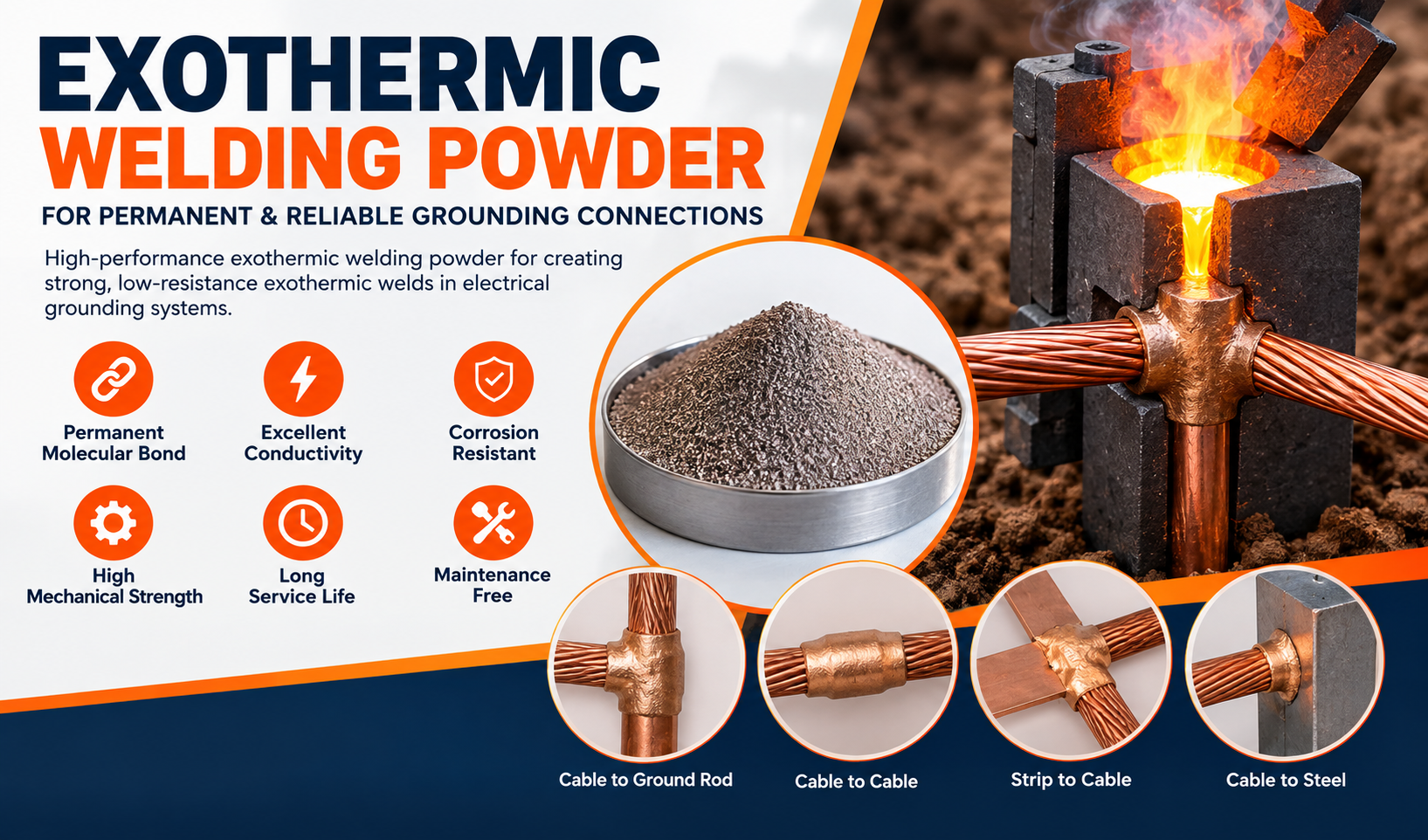
Exothermic welding powder is a specially engineered mixture of copper oxide, aluminum, and other conductive materials that produces an intense chemical reaction when ignited. The reaction generates molten copper at extremely high temperatures, allowing two metal conductors to fuse into a single continuous electrical connection.
The powder is manufactured in different charge sizes to match various conductor diameters and mold designs, ensuring consistent weld quality across different applications.
Features of Exothermic Welding Powder
- High electrical conductivity
- Permanent molecular bonding
- Excellent corrosion resistance
- Suitable for copper and steel conductors
- Long service life
- Maintenance-free performance
What Is an Exothermic Weld?
An exothermic weld is a permanent electrical connection formed through a controlled chemical reaction rather than mechanical pressure or soldering. During the welding process, molten copper flows into a graphite mold and bonds the conductors together, creating one solid conductive path.
Because the connection becomes molecularly bonded, it offers lower resistance and greater reliability than conventional mechanical clamps or bolted connectors.
How Does the Exothermic Welding Process Work?
The exothermic welding process follows a series of carefully controlled steps to ensure a high-quality connection.
Step 1: Surface Preparation
Clean the conductors thoroughly to remove oxidation, grease, moisture, and dirt. A clean surface improves conductivity and weld quality.
Step 2: Install the Graphite Mold
Select the appropriate graphite mold based on the conductor type and connection configuration. Position the conductors securely inside the mold.
Step 3: Add Exothermic Welding Powder
Pour the recommended quantity of exothermic welding powder into the mold along with the retaining disc and ignition material.
Step 4: Ignite the Powder
The powder is ignited using an approved igniter. The chemical reaction produces molten copper that fills the mold cavity and bonds the conductors.
Step 5: Remove the Weld
After the mold cools, open it carefully and inspect the completed exothermic weld for proper filling, shape, and connection integrity.
Why Choose Exothermic Welding?
Exothermic welding provides significant advantages over traditional grounding methods.
|
Feature |
Exothermic Weld |
Mechanical Connection |
|---|---|---|
|
Connection Type |
Permanent molecular bond |
Pressure contact |
|
Electrical Resistance |
Very low |
Moderate |
|
Corrosion Resistance |
Excellent |
Moderate |
|
Maintenance |
Not required |
Periodic inspection |
|
Vibration Resistance |
High |
Can loosen |
|
Service Life |
30+ years |
Lower |
For critical grounding infrastructure, exothermic welding is often the preferred solution because it maintains consistent electrical performance throughout its lifespan.
Applications of Exothermic Welding Powder
Electrical Substations
Ground grids require permanent copper-to-copper and copper-to-steel connections that can safely carry fault current.
Solar Power Plants
Solar farms use exothermic welds to connect grounding conductors across extensive earthing networks exposed to outdoor conditions.
Telecom Towers
Communication towers rely on permanent grounding connections for lightning protection and equipment safety.
Railway Infrastructure
Railway signaling and traction systems require reliable electrical bonding to maintain operational safety.
Industrial Facilities
Manufacturing plants, refineries, data centers, and process industries use exothermic welding for equipment grounding and structural bonding.
Common Types of Exothermic Weld Connections
Different graphite molds are designed for specific conductor combinations, including:
- Cable to ground rod
- Cable to cable
- Cable to copper strip
- Copper strip to ground rod
- Cable to structural steel
- Steel to steel grounding connections
Selecting the correct mold ensures proper metal flow and optimal weld quality.
Benefits of Using High-Quality Exothermic Welding Powder
Using premium exothermic welding powder improves both installation efficiency and long-term performance.
Superior Conductivity
The molecular bond creates a continuous conductive path with minimal electrical resistance.
Corrosion Resistance
The weld resists moisture, chemicals, and environmental corrosion better than mechanical connectors.
Permanent Connection
Unlike clamps or bolted joints, an exothermic weld does not loosen due to vibration or thermal expansion.
High Mechanical Strength
The completed weld withstands mechanical stress while maintaining excellent electrical continuity.
Long Service Life
Properly installed exothermic welds can perform reliably for several decades without maintenance.
Installation Best Practices
For consistent welding results, follow these recommendations:
- Use the correct graphite mold for the conductor size.
- Ensure conductors are clean and completely dry.
- Store exothermic welding powder in a moisture-free environment.
- Use the specified powder charge recommended for the mold.
- Inspect every completed weld before commissioning.
- Replace damaged or worn graphite molds when necessary.
These practices help achieve strong, low-resistance grounding connections.
Safety Precautions During Exothermic Welding
Exothermic welding generates temperatures above 2,000°C and should always be performed using proper safety procedures.
- Wear heat-resistant gloves and eye protection.
- Keep the graphite mold dry before use.
- Never use damp welding powder.
- Maintain a safe distance during ignition.
- Allow the mold to cool before opening.
- Perform welding only in well-ventilated work areas.
Proper safety measures reduce installation risks and improve weld quality.
How to Select the Right Exothermic Welding Powder
Choosing the correct exothermic welding powder depends on several factors:
- Conductor diameter
- Cable or strip type
- Ground rod size
- Connection configuration
- Graphite mold compatibility
- Required current carrying capacity
- Environmental conditions
Using the correct powder and mold combination ensures reliable exothermic weld performance and long-term grounding reliability.
Conclusion
Exothermic welding powder is one of the most effective solutions for creating permanent electrical grounding connections. By producing a molecular bond instead of a mechanical contact, an exothermic weld delivers exceptional conductivity, outstanding corrosion resistance, and decades of maintenance-free performance.
For substations, telecom projects, solar power plants, industrial facilities, and railway infrastructure, exothermic welding remains the preferred method for achieving safe, durable, and high-performance grounding systems.