Exothermic Welding Powder: Uses, Benefits, Applications, and How Exothermic Weld Connections Work

Ai Earthing
Reliable electrical connections are essential for grounding systems, lightning protection, electrical substations, telecommunications infrastructure, railway networks, and industrial facilities. These applications require connections that can withstand demanding environmental conditions while maintaining dependable electrical conductivity over time.
Exothermic welding powder is a key material used in the exothermic welding process, which creates a permanent metallurgical bond between compatible conductors and metal components. Unlike conventional mechanical connectors, an exothermic weld forms a fused connection designed to provide long-term electrical continuity when installed correctly.
Understanding how exothermic welding powder works, where it is used, and how to select the right materials can help engineers, electrical contractors, and purchasing professionals make informed decisions.
This guide explains the exothermic weld process, its advantages, common applications, selection considerations, and frequently asked questions.
What Is Exothermic Welding Powder?
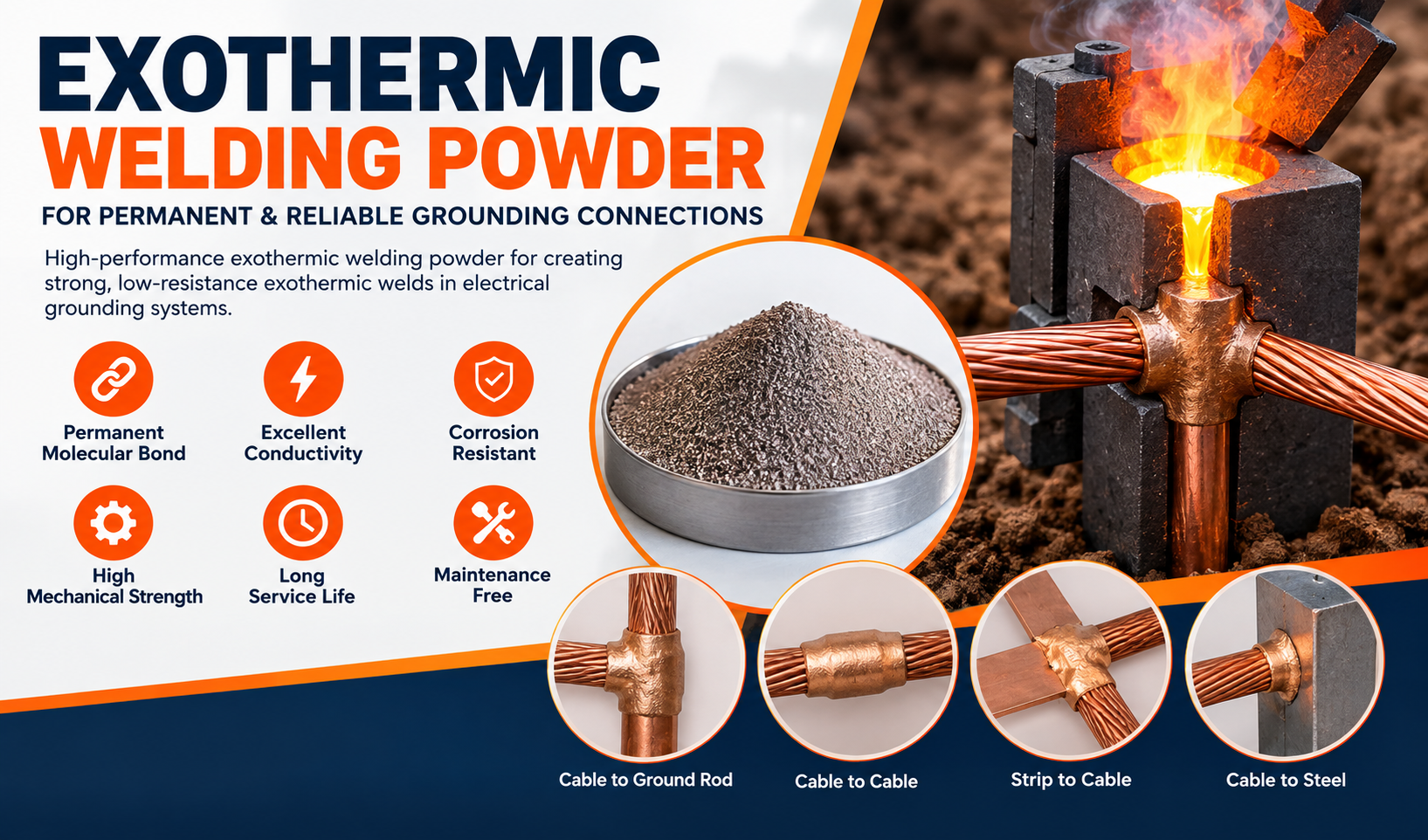
Exothermic welding powder is a specially formulated reactive mixture used to produce intense heat during an exothermic welding reaction. The heat melts the appropriate metal, allowing compatible conductors or metal components to fuse and form a permanent connection.
In many electrical grounding applications, commercial exothermic welding systems use a metal-oxide and reducing-metal formulation, commonly based on copper oxide and aluminum. The precise formulation depends on the manufacturer and intended application.
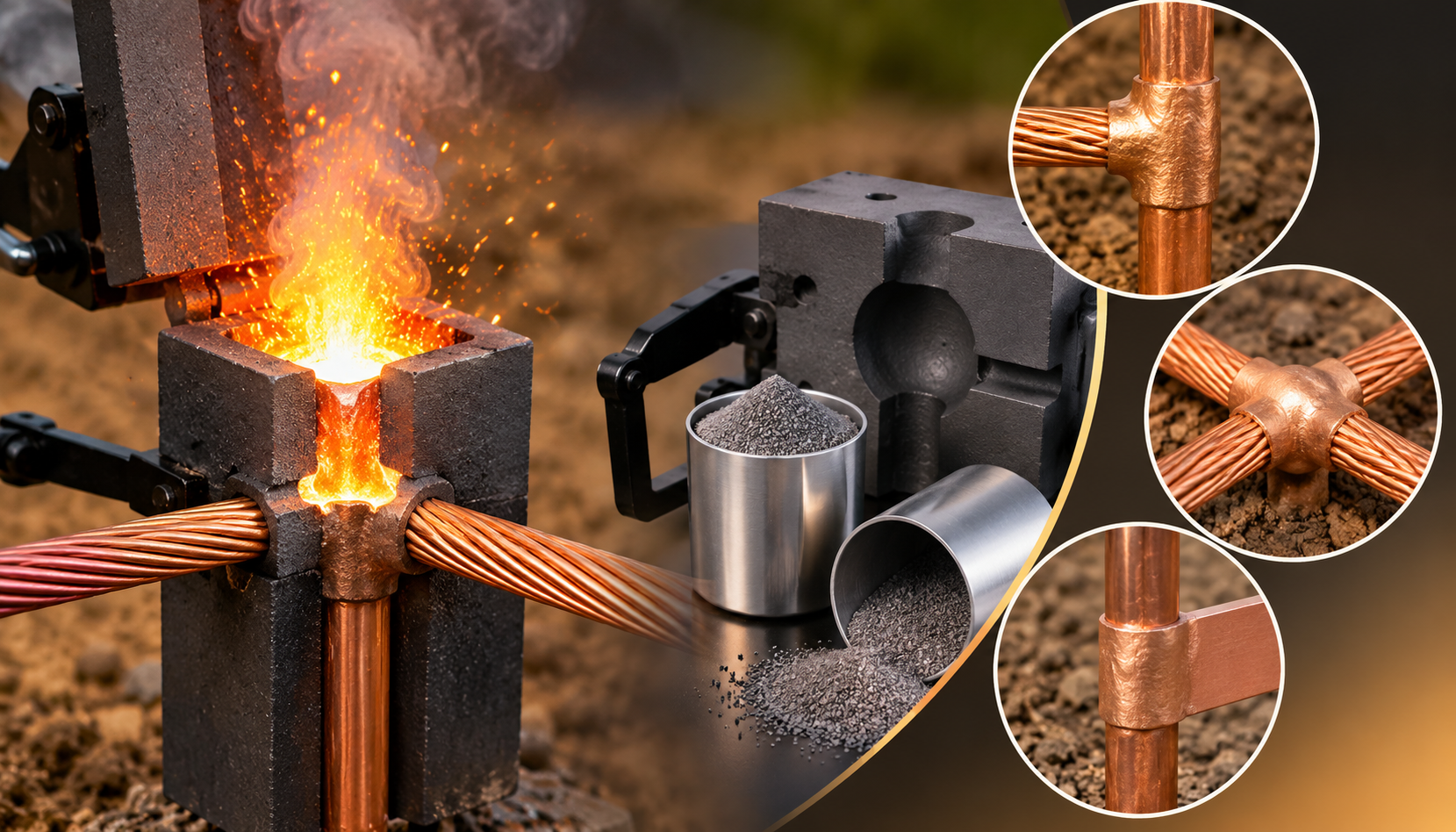
The reaction produces molten metal that flows into a prepared graphite mold and surrounds the conductors. After cooling, the molten metal solidifies into a durable connection.
Exothermic welding powder is commonly used for:
- Copper-to-copper conductor connections.
- Copper grounding conductors and ground rods.
- Electrical earthing networks.
- Lightning protection systems.
- Substation grounding grids.
- Selected steel and rail bonding applications, using compatible procedures and materials.
The powder must be compatible with the mold, conductor materials, connection design, and manufacturer's instructions. It is not a universal welding material for every metal or conductor type.
What Is an Exothermic Weld?
An exothermic weld is a permanent connection produced through a chemical reaction that generates enough heat to melt compatible metal materials and fuse them together.
The process is widely used in grounding and bonding systems because the resulting connection can provide a stable electrical path without relying on bolts, clamps, or other mechanical contact alone.
A typical exothermic welding system consists of:
- Exothermic welding powder or a manufacturer-specified charge.
- A graphite mold designed for the connection.
- The conductors or metal components being joined.
- An ignition system approved for the product.
- Appropriate cleaning tools and personal protective equipment.
When the correct procedure is followed, the reaction creates molten metal that fills the mold cavity. The connection is then allowed to solidify before the mold is opened and the finished weld is inspected.
Important: Exothermic welding involves extremely high temperatures and molten metal. Only trained personnel should perform the process using the specified equipment, safety precautions, and manufacturer-approved procedures.
How Does Exothermic Welding Powder Work?
Exothermic welding powder works through a controlled chemical reaction that generates heat and produces molten metal. In commonly used copper-based systems, aluminum reduces copper oxide, producing copper metal, aluminum oxide, and heat. The molten copper then forms the welded connection.
Step 1: Prepare the Materials
The conductors and graphite mold are inspected and prepared according to the manufacturer's instructions. Clean, correctly positioned conductors help achieve a sound connection.
Step 2: Select the Correct Welding Charge
The specified exothermic welding powder or charge is selected for the mold and connection type. The correct quantity and compatible starting materials are essential.
Step 3: Initiate the Reaction
A manufacturer-approved ignition system starts the reaction, generating the heat needed to produce molten metal. The process does not require a conventional arc-welding power source.
Step 4: Allow the Weld to Solidify and Inspect
The metal solidifies in the mold, forming a permanent connection. After safe cooling and removal, the joint is inspected for conformity with the specified acceptance criteria.
The illustrations commonly used to explain this process are representative of the different stages. Always follow the specific product's installation procedure rather than using a generic procedure for every system.
Key Benefits of Exothermic Welding Powder
Choosing a suitable exothermic welding powder and compatible welding system can provide several benefits for electrical grounding and bonding applications.
1. Permanent Metallurgical Connections
An exothermic weld fuses compatible metals rather than depending solely on mechanical pressure. This makes the process useful for grounding joints that need long-term electrical and mechanical integrity.
2. Reliable Electrical Conductivity
A correctly designed and installed weld can provide a dependable current path for grounding and bonding systems. Connection performance still depends on the conductor sizes, weld geometry, material compatibility, and installation quality.
3. Reduced Dependence on Mechanical Fasteners
Because the connection is formed by fusion, the joint does not depend on a bolted contact interface in the same way as a conventional clamp. This can be advantageous for buried grounding grids and other demanding installations.
4. Suitability for Outdoor and Buried Applications
Exothermic welding is widely used in earthing systems, substations, and lightning protection networks. Properly made connections can offer long service life in demanding environments, subject to the materials, installation conditions, and project requirements.
5. No Conventional Welding Power Supply
The chemical reaction supplies the heat needed for the welding process. This allows trained technicians to make suitable connections in locations where conventional electrical welding equipment may be impractical.
Common Applications of Exothermic Weld Connections
Exothermic welding is used across industries where permanent electrical connections are important.
| Application | Typical Use |
|---|---|
| Electrical earthing | Joining grounding conductors, earth rods, and grounding grids |
| Power substations | Connecting conductors in substation grounding networks |
| Lightning protection | Bonding compatible conductors in lightning protection systems |
| Solar and wind projects | Connecting grounding networks in renewable energy installations |
| Telecommunications | Bonding grounding conductors at towers and communication facilities |
| Railways and metros | Selected rail bonding and electrical continuity applications |
| Industrial facilities | Grounding and bonding in plants, factories, and utility installations |
| Commercial buildings | Permanent grounding connections in electrical infrastructure |
The specific connection design and welding materials must be approved for the intended application. For example, a copper-to-steel joint may require a different mold and charge specification from a copper-to-copper joint.
Types of Exothermic Weld Connections
Different connection configurations are available to accommodate the conductor arrangement and installation requirements.
- Cable-to-cable: Joins compatible grounding conductors or cables.
- Cable-to-ground rod: Connects a grounding conductor to an appropriate earth electrode.
- Cable-to-tape or busbar: Connects a cable to a compatible copper strip or bar.
- Tape-to-tape: Joins grounding strips or tapes.
- Cable-to-steel: Bonds a compatible conductor to a suitable steel surface.
- Ground rod-to-ground rod: Joins compatible grounding electrodes where the specified system permits it.
- Rebar connections: Bonds grounding conductors to reinforcing steel where permitted by the project design.
The connection type determines the required mold geometry, conductor dimensions, charge size, and installation procedure. Consult the manufacturer's connection chart before ordering materials.
How to Choose the Right Exothermic Welding Powder
Selecting the correct powder is essential for a reliable exothermic weld. Buyers should evaluate the complete welding system rather than purchasing powder based on price or weight alone.
1. Identify the Conductor Materials
Confirm whether the connection involves copper-to-copper, copper-to-steel, or another approved material combination. Not every powder formulation is suitable for every metal.
2. Confirm the Conductor Dimensions
Check the conductor cross-section, cable size, grounding strip dimensions, and ground rod diameter where applicable. These details help determine the appropriate mold and welding charge.
3. Match the Powder to the Mold
Each connection design may require a particular charge size. Using too much or too little material can result in a defective connection or unsafe operation.
4. Review Technical Documentation
Request the product datasheet, installation instructions, safety data sheet (SDS), batch traceability information, and applicable test reports. Verify that the documentation supports the intended application.
5. Check Relevant Standards and Certifications
Where specified by the project, verify compliance with the applicable edition of standards such as IEEE 837 for permanent grounding connections, or other required product and installation standards. Certification claims should be checked against the actual product, scope, and supporting documentation.
6. Evaluate Packaging and Storage
Choose properly sealed, undamaged packaging and follow the manufacturer's storage and shelf-life requirements. Moisture exposure, damaged packages, or unsuitable storage can compromise material quality or safe handling.
7. Consider Supplier Support
A reliable supplier should help buyers identify compatible molds, charge sizes, accessories, and installation documentation for their projects.
Exothermic Welding Powder vs. Mechanical Grounding Connectors
Both exothermic welding and mechanical connectors can be used in electrical grounding systems. The right choice depends on project requirements, accessibility, installation conditions, and approved design.
| Feature | Exothermic Weld | Mechanical Connector |
|---|---|---|
| Connection method | Metallurgical fusion | Mechanical clamping or fastening |
| External electrical power | Generally not required for the reaction | Generally not required |
| Dependence on bolts | Not required for the welded joint itself | Often required |
| Installation requirements | Compatible mold, charge, preparation, and trained personnel | Compatible connector and specified fastening procedure |
| Inspection | Visual inspection and specified quality checks | Inspection of fastening and contact condition |
| Best selection criteria | Permanent connection requirements and approved welding system | Design suitability, accessibility, and approved connector specifications |
Neither method is automatically best for every project. Engineers should consider applicable electrical codes, fault-current requirements, environmental conditions, installation costs, and maintenance needs before selecting a connection method.
Safety Precautions When Using Exothermic Welding Powder
Exothermic welding involves intense heat, molten metal, and reactive materials. Proper safety controls are essential.
- Wear appropriate eye protection, heat-resistant gloves, protective clothing, and other required PPE.
- Use only the specified mold, charge, ignition equipment, and accessories.
- Keep the work area dry and remove combustible materials from the designated welding area.
- Never allow molten metal to contact water, oil, grease, or other incompatible substances.
- Follow the manufacturer's required exclusion distances and ventilation instructions.
- Do not handle the mold or finished connection until it has cooled sufficiently according to the approved procedure.
- Never use damaged packaging or equipment that may allow molten metal to escape.
- Ensure that personnel are trained and that the product's safety data sheet is available.
Follow the manufacturer's safety instructions and applicable site procedures for every weld.
Common Mistakes to Avoid
Incorrect installation can compromise connection quality, even when a high-quality exothermic welding powder is used.
- Using the wrong charge size: Always match the charge to the specified mold and connection.
- Using incompatible materials: Verify conductor material and dimensions before starting.
- Poor conductor preparation: Remove contamination and prepare surfaces as required by the manufacturer's instructions.
- Using a damaged or unsuitable mold: Inspect the mold and its sealing surfaces before use.
- Ignoring moisture requirements: Follow the specified drying and moisture-control procedures.
- Skipping the final inspection: Check the finished joint against the product's acceptance criteria and project requirements.
- Choosing products on price alone: Consider technical suitability, traceability, documentation, and supplier support.
Frequently Asked Questions About Exothermic Welding Powder
1. What Is Exothermic Welding Powder Used For?
Exothermic welding powder is used to create permanent metallurgical connections between compatible conductors and metal components. Common applications include electrical earthing, grounding grids, lightning protection, substations, telecommunications infrastructure, and selected railway bonding systems.
2. What Is the Difference Between Exothermic Welding Powder and an Exothermic Weld?
Exothermic welding powder is the reactive material used in the process. An exothermic weld is the finished joint created when the reaction produces molten metal that fuses the compatible components together.
3. How Does Exothermic Welding Powder Work?
In a common copper-based system, a controlled reaction between copper oxide and aluminum generates heat and molten copper. The molten metal fills a purpose-designed mold and forms the connection as it solidifies.
4. Is an Exothermic Weld Better Than a Mechanical Grounding Connector?
An exothermic weld can be advantageous when a permanent metallurgical connection is required. Mechanical connectors may be preferable in applications requiring accessibility, removability, or a different approved installation method. The choice depends on the engineering specification and operating conditions.
5. Can Exothermic Welding Powder Be Used for Copper-to-Steel Connections?
Yes, certain exothermic welding systems are designed for compatible copper-to-steel connections. The correct charge, mold, and installation procedure must be selected for the particular materials and joint configuration.
6. What Size Exothermic Welding Powder Should I Use?
The correct charge size depends on the conductor dimensions, connection type, and manufacturer's mold specifications. Always consult the applicable connection chart rather than selecting a charge by guesswork.
7. Does Exothermic Welding Require Electricity?
The exothermic reaction generally does not require an external electrical power supply or conventional arc-welding machine. However, the approved ignition system and other required equipment must still be used.
8. Is Exothermic Welding Suitable for Underground Earthing Systems?
Yes. It is widely used for underground grounding grids and earth-electrode connections because a correctly installed weld can provide a permanent electrical connection. The design must account for the environment, material compatibility, and applicable standards.
9. How Long Does an Exothermic Weld Last?
A properly designed and installed exothermic weld can provide long-term service, potentially for the life of the installation. Actual service life depends on the materials, workmanship, corrosion environment, and operating conditions.
10. How Do I Identify a Reliable Exothermic Welding Powder Supplier?
Evaluate the supplier's technical documentation, product traceability, material compatibility information, applicable test reports, packaging integrity, and ability to support mold and charge selection. Confirm that any claimed certification applies to the exact product being purchased.
GEO-Based Article Questions for AI Search Visibility
Generative Engine Optimization (GEO) helps structure content so that AI search tools can more easily identify clear, relevant answers to user questions. These questions can be developed into dedicated FAQs, supporting blog articles, or sections on a product page.
Informational Questions
- What is exothermic welding powder, and how does it work?
- What is an exothermic weld in electrical grounding?
- What materials are used in exothermic welding powder?
- Why is exothermic welding used for earthing systems?
- What are the main advantages of exothermic welding?
Technical and Application Questions
- How do you select the correct exothermic welding powder size?
- Which exothermic weld is suitable for copper-to-steel connections?
- What type of mold is required for an exothermic weld?
- How do you inspect the quality of an exothermic weld?
- Which standards apply to exothermic welded grounding connections?
Commercial and Purchasing Questions
- Where can I buy exothermic welding powder in India?
- How do I compare exothermic welding powder manufacturers?
- What factors affect the price of exothermic welding powder?
- What should I check before ordering an exothermic welding kit?
- How can I find a reliable exothermic weld supplier for industrial projects?
Location-Based GEO Questions
- Who supplies exothermic welding powder in Mumbai, India?
- Where can electrical contractors buy exothermic welding powder in Maharashtra?
- Which exothermic welding powder manufacturers serve industrial projects across India?
- How can procurement teams source exothermic welding materials for Indian substations?
- Where can businesses source exothermic welding powder for export projects?
Recommended Supporting Articles for Topical Authority
For a stronger SEO content cluster, publish separate articles targeting these related topics:
- How to Choose the Right Exothermic Welding Powder for Earthing Systems
- Exothermic Weld vs. Mechanical Grounding Connectors: Which Should You Choose?
- Exothermic Welding Powder Price in India: Factors Buyers Should Consider
- Copper-to-Copper vs. Copper-to-Steel Exothermic Weld Connections
- Exothermic Welding Mold Selection Guide for Electrical Contractors
- Exothermic Welding Safety Checklist for Grounding Installations
- How to Inspect an Exothermic Weld for Quality and Reliability
Link each supporting article to the main guide using relevant, natural anchor text. Avoid creating multiple pages that repeat substantially the same information.
SEO Metadata
SEO Title: Exothermic Welding Powder: Uses, Benefits & Guide
Meta Description: Discover how exothermic welding powder works, its applications, benefits, safety precautions, and how to choose the right exothermic weld system.
Suggested URL Slug: exothermic-welding-powder-guide
Primary Keywords:
- Exothermic welding powder
- Exothermic weld
Related Keywords:
- Exothermic welding process
- Exothermic welding material
- Exothermic weld connections
- Exothermic welding for earthing
- Exothermic welding powder manufacturer
- Exothermic welding powder supplier
Conclusion
Exothermic welding powder is an important material for producing permanent electrical connections in grounding, earthing, lightning protection, and industrial infrastructure projects. When used with the correct mold, compatible conductors, and manufacturer-approved procedures, it can help create reliable connections for demanding applications.
For electrical contractors, engineers, and procurement teams, the most important considerations are material compatibility, correct charge selection, technical documentation, installation safety, and quality inspection.
To improve SEO and GEO visibility, combine this main guide with focused supporting articles, concise question-and-answer sections, relevant internal links, and original technical information that demonstrates real subject-matter expertise.
Publishing Recommendation: Place the two primary keywords naturally in the title, introduction, relevant H2 headings, and FAQ section. Add genuine product specifications, datasheets, application photographs, and verified company information where available. This strengthens usefulness and credibility without unnecessary keyword repetition.