How Does Exothermic Welding Work for Electrical Grounding Systems?

Ai Earthing
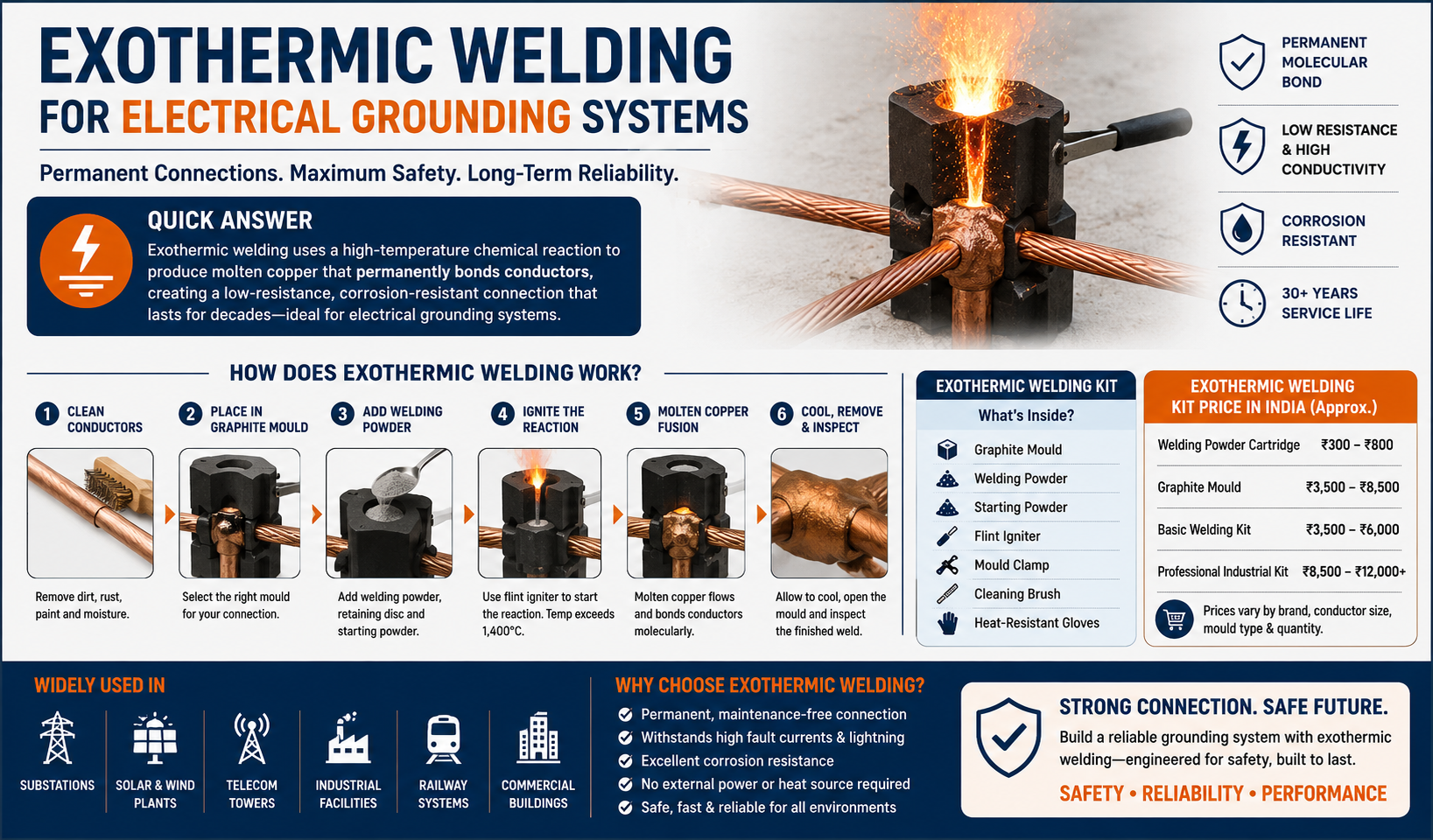
Exothermic welding is a permanent method of joining electrical grounding conductors using a high-temperature chemical reaction. A specially formulated welding powder produces molten copper that fuses cables, earth rods, or steel components into a single molecular bond. The result is a low-resistance, corrosion-resistant, maintenance-free grounding connection that can last as long as the conductor itself.
Introduction
A reliable electrical grounding system is one of the most important safety requirements for industrial, commercial, and infrastructure projects across India. Whether it is a solar power plant, electrical substation, telecom tower, railway network, manufacturing facility, or high-rise building, the grounding system protects people and equipment from fault currents and lightning strikes.
Among all grounding connection methods, exothermic welding is widely regarded as the most dependable solution because it creates a permanent electrical bond instead of a mechanical connection. Unlike clamps or bolted joints that may loosen over time, an exothermic weld becomes part of the conductor itself, providing excellent conductivity and long-term durability.
This article explains how exothermic welding works, its applications, required equipment, advantages, safety practices, exothermic welding supplies, and the typical exothermic welding kit price in India.
What Is Exothermic Welding?
Exothermic welding is a chemical welding process used to permanently connect electrical conductors. It is also known as thermite welding or exothermic bonding. The process uses a specially designed copper oxide and aluminum welding powder that generates intense heat when ignited. The reaction produces molten copper, which flows around the conductors inside a graphite mould and solidifies into a permanent electrical connection.
Since the process generates its own heat, no external power supply, gas cylinder, or conventional welding machine is required. This makes exothermic welding highly suitable for remote installations and outdoor electrical grounding projects throughout India.
How Does Exothermic Welding Work?
The exothermic welding process follows a precise sequence to ensure a strong and reliable grounding connection.
Step 1: Preparing the Conductors
The first step is cleaning the conductors thoroughly. Copper cables, copper strips, GI strips, steel bars, or earth rods must be free from moisture, grease, paint, rust, and oxidation. Clean metal surfaces ensure proper bonding with molten copper.
Step 2: Positioning Inside the Graphite Mould
A graphite mould is selected according to the type of connection being created. Different moulds are available for cable-to-cable, cable-to-earth rod, strip-to-strip, strip-to-rod, T-joints, and cross connections. The conductors are placed securely inside the mould before welding begins.
Step 3: Adding the Welding Powder
A measured quantity of exothermic welding powder is poured into the crucible section of the mould. A retaining disc is placed beneath the powder, followed by a small amount of starting powder that helps initiate the reaction.
Step 4: Igniting the Reaction
A flint igniter produces sparks that ignite the starting powder. Within seconds, the chemical reaction generates temperatures exceeding 1,400°C. The copper alloy melts rapidly and flows into the weld cavity surrounding both conductors.
Step 5: Creating the Molecular Bond
As the molten copper cools, it permanently fuses with the conductors. Instead of simply holding the metals together through pressure, exothermic welding creates a molecular bond that provides exceptional electrical conductivity and mechanical strength.
Step 6: Cooling and Inspection
After the weld solidifies, the graphite mould is opened and the finished connection is inspected. A successful weld appears smooth, completely filled, and free from cracks or voids.
Why Is Exothermic Welding Ideal for Grounding Systems?
Electrical grounding systems require connections that remain stable for decades despite exposure to moisture, soil chemicals, temperature changes, and vibration. Mechanical connectors may gradually loosen or corrode, increasing electrical resistance over time.
Exothermic welding eliminates these problems by creating a continuous conductive path between grounding components. The welded connection maintains consistent electrical performance even during high fault currents and lightning discharges, making it the preferred choice for critical infrastructure projects.
The Science Behind Exothermic Welding
The process is based on an aluminothermic reaction. Aluminum powder reacts with copper oxide, releasing enormous thermal energy and producing molten copper. The heat generated is sufficient to melt copper without requiring electricity or gas.
This self-sustaining reaction makes exothermic welding practical for field installations where electrical power may not be available. It also ensures consistent weld quality when the correct powder and graphite mould are used.
Components of an Exothermic Welding Kit
A complete exothermic welding kit contains specialized tools required for creating permanent grounding connections.
|
Component |
Purpose |
|---|---|
|
Graphite mould |
Forms the weld connection |
|
Welding powder |
Produces molten copper |
|
Starting powder |
Initiates ignition |
|
Flint igniter |
Creates the spark |
|
Mould clamp |
Secures the mould |
|
Cleaning brush |
Cleans conductors and mould |
|
Heat-resistant gloves |
Protects the installer |
Professional contractors often carry multiple graphite moulds to accommodate different conductor sizes and connection types.
Exothermic Welding Supplies You Need
Choosing high-quality exothermic welding supplies is essential for achieving reliable grounding performance. The most commonly required supplies include graphite moulds, welding powder cartridges, starting powder, retaining discs, flint igniters, mould clamps, cleaning accessories, safety equipment, and replacement mould parts.
For large industrial projects, contractors typically purchase welding powder and consumables in bulk while reusing graphite moulds for multiple installations. Selecting compatible moulds and powder sizes ensures consistent weld quality across different grounding applications.
Exothermic Welding vs Mechanical Grounding
Although both methods connect grounding conductors, their long-term performance differs significantly.
|
Feature |
Exothermic Welding |
Mechanical Clamp |
|---|---|---|
|
Connection |
Permanent molecular bond |
Mechanical pressure |
|
Electrical resistance |
Very low |
May increase over time |
|
Corrosion resistance |
Excellent |
Moderate |
|
Maintenance |
Minimal |
Periodic tightening |
|
Lightning performance |
Excellent |
Variable |
|
Expected lifespan |
30+ years |
Lower |
For mission-critical grounding systems, engineers generally prefer exothermic welding because reliability is more important than initial installation cost.
Applications of Exothermic Welding in India
Exothermic welding is widely used throughout India's electrical and infrastructure sectors. Common applications include electrical substations, solar power plants, wind energy projects, telecom towers, railway signaling systems, data centers, hospitals, airports, industrial manufacturing plants, oil and gas facilities, commercial buildings, and lightning protection systems.
As India's renewable energy capacity and industrial infrastructure continue expanding, permanent grounding solutions have become increasingly important for ensuring electrical safety and regulatory compliance.
Exothermic Welding Kit Price in India
One of the most searched commercial queries is exothermic welding kit price. The cost varies depending on conductor size, mould configuration, accessories, and manufacturer.
|
Product |
Approximate Price |
|---|---|
|
Welding powder cartridge |
₹300–₹800 |
|
Graphite mould |
₹3,500–₹8,500 |
|
Basic exothermic welding kit |
₹3,500–₹6,000 |
|
Professional industrial kit |
₹8,500–₹12,000+ |
These prices are indicative and may vary based on brand, project quantity, and technical specifications. Industrial buyers often receive customized quotations for bulk orders.
How to Choose the Right Exothermic Welding Kit
When selecting an exothermic welding kit, the lowest price should not be the only consideration. The quality of the graphite mould, consistency of the welding powder, conductor compatibility, availability of replacement consumables, and manufacturer support all influence long-term performance.
A durable mould can be reused multiple times, making it a cost-effective investment for contractors handling frequent grounding installations.
Safety Guidelines
Exothermic welding produces extremely high temperatures, so proper safety practices are essential. Installers should wear heat-resistant gloves, face shields, protective clothing, and safety footwear during every weld. The graphite mould must remain completely dry because moisture can create dangerous steam expansion during ignition.
The welding area should also be free from combustible materials, and every completed weld should be inspected before commissioning the grounding system.
Common Installation Mistakes
Poor installation practices are one of the primary reasons for weld failure. Conductors that are not properly cleaned may prevent effective bonding, while damp graphite moulds can affect weld quality and safety. Using the wrong quantity of welding powder, misaligning conductors inside the mould, or opening the mould before the weld has fully cooled can all reduce the strength and conductivity of the finished connection.
Following the manufacturer's installation procedure helps ensure consistent and reliable results.
Benefits of Exothermic Welding
Exothermic welding offers numerous advantages for electrical grounding systems. It creates a permanent molecular bond with excellent electrical conductivity, provides outstanding corrosion resistance, requires virtually no maintenance, performs reliably under lightning and fault current conditions, does not require external electricity, and delivers a service life comparable to the grounding conductor itself. These benefits make it one of the most trusted grounding technologies for Indian infrastructure projects.
Conclusion
Exothermic welding is the gold standard for permanent electrical grounding connections in India. By generating molten copper through a controlled chemical reaction, it creates a low-resistance, corrosion-resistant bond that significantly outperforms conventional mechanical connectors. From substations and solar farms to telecom towers and industrial facilities, this technology provides the long-term reliability required for modern electrical infrastructure.
When comparing exothermic welding kit price and sourcing exothermic welding supplies, prioritize product quality, mould precision, and compatibility rather than choosing the lowest-cost option. A properly installed exothermic weld can protect electrical systems safely for decades.
Frequently Asked Questions (FAQ)
1. What is exothermic welding?
Exothermic welding is a chemical process that permanently joins electrical conductors using molten copper produced by an aluminothermic reaction.
2. Why is exothermic welding used in grounding systems?
It creates a permanent, low-resistance electrical connection that offers superior conductivity, corrosion resistance, and long-term reliability.
3. Does exothermic welding require electricity?
No. The process generates its own heat through a chemical reaction and does not need external electrical power.
4. What temperature does exothermic welding reach?
The reaction typically produces temperatures above 1,400°C, allowing copper conductors to fuse permanently.
5. What is included in an exothermic welding kit?
A standard kit usually includes a graphite mould, welding powder, starting powder, flint igniter, mould clamp, cleaning brush, and safety accessories.
6. What is the exothermic welding kit price in India?
Basic kits generally range from ₹3,500 to ₹6,000, while professional industrial kits may cost ₹8,500 to ₹12,000 or more.
7. Can exothermic welding connect copper and GI conductors?
Yes. Specialized graphite moulds are available for copper-to-GI, cable-to-rod, strip-to-strip, and other grounding connections.
8. Is exothermic welding better than mechanical clamps?
Yes. It provides a permanent molecular bond with lower resistance and better long-term performance than mechanical connectors.
9. Are exothermic welds maintenance-free?
A properly installed exothermic weld requires minimal maintenance and is designed to last for decades.
10. Where is exothermic welding commonly used in India?
It is widely used in substations, solar power plants, telecom towers, railway infrastructure, industrial facilities, commercial buildings, and lightning protection systems.