How to Choose Reliable PEEK Rod Suppliers and Manufacturers for Industrial Applications

Polymat India
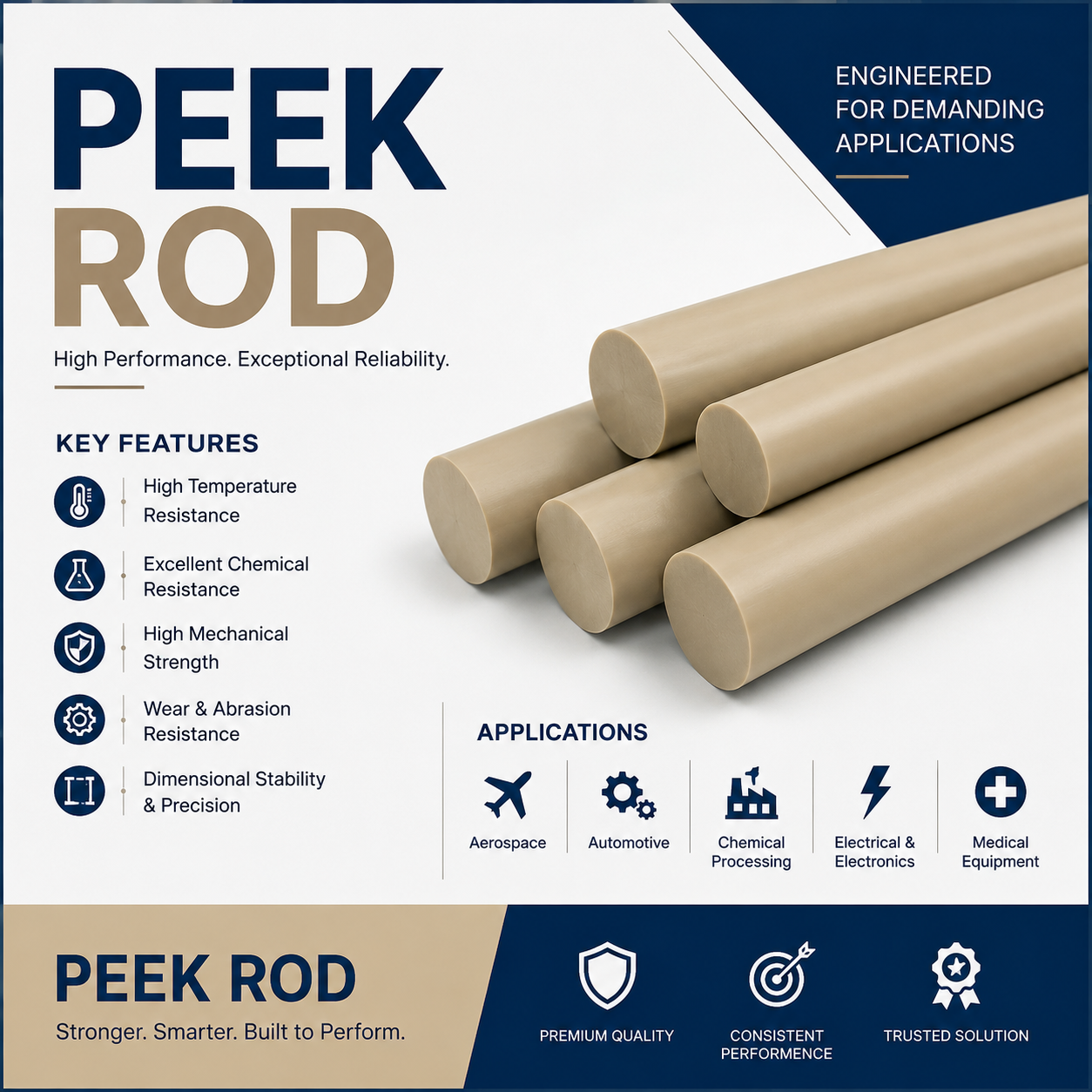
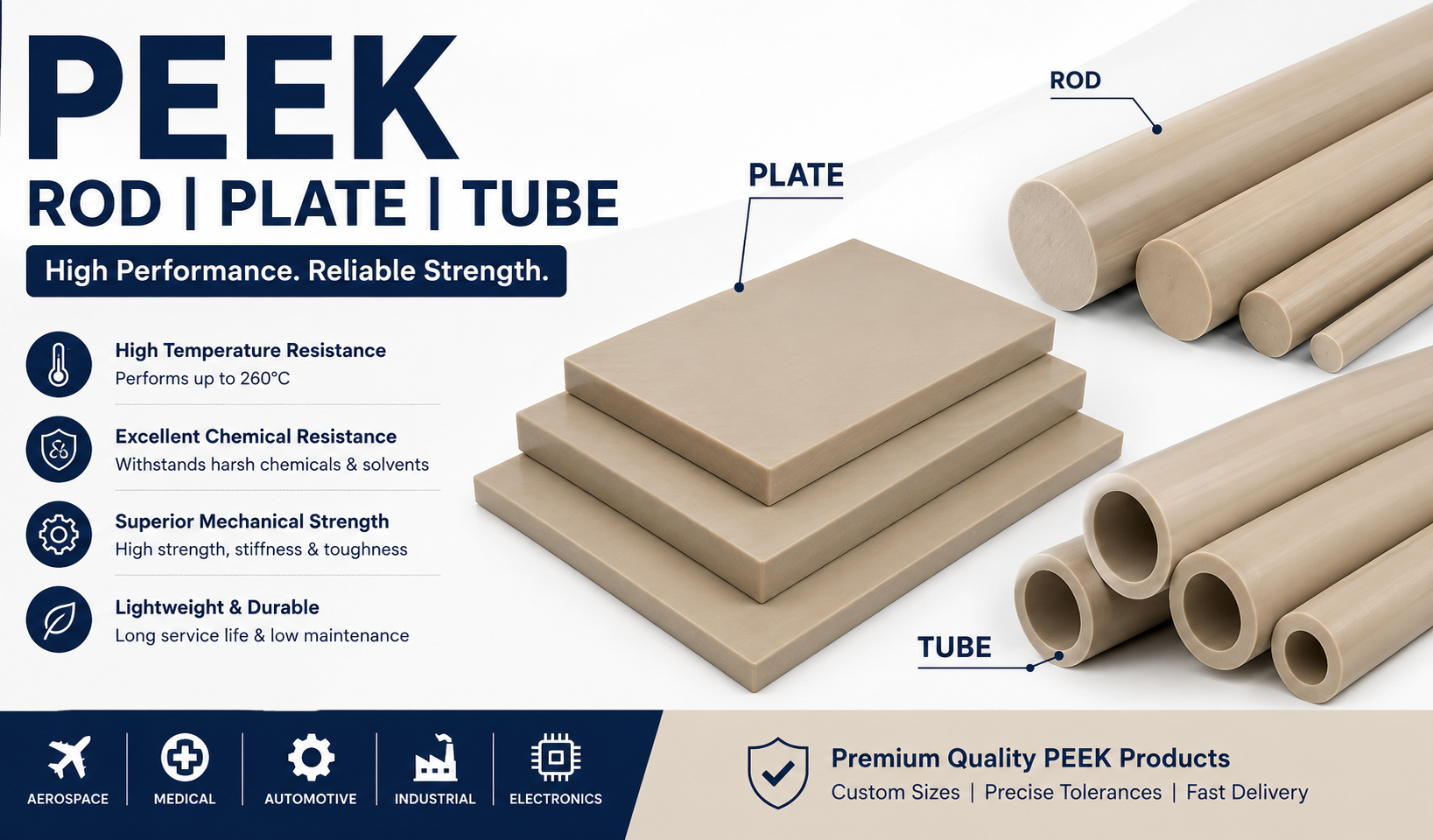
PEEK, or polyether ether ketone, is a high-performance engineering thermoplastic known for its excellent mechanical strength, chemical resistance, dimensional stability, and ability to perform in demanding temperature environments. Because of these properties, PEEK rods are used across industries such as aerospace, automotive, chemical processing, electrical and electronics, medical equipment, and precision engineering.
For businesses sourcing PEEK rods, selecting reliable PEEK rod suppliers and experienced PEEK rod manufacturers is important for maintaining consistent product quality and ensuring that the material meets specific application requirements. Factors such as PEEK grade, dimensions, tolerances, surface finish, manufacturing standards, and application requirements should all be considered before purchasing.
What Are PEEK Rods?
PEEK rods are cylindrical profiles manufactured from polyether ether ketone, a high-performance thermoplastic engineered for demanding applications. Depending on the grade and manufacturing process, PEEK rods can offer a strong combination of mechanical performance, chemical resistance, wear resistance, and thermal stability.
These rods can be machined into components such as bushings, bearings, seals, rollers, rings, insulators, spacers, and custom engineering parts. Their ability to maintain performance under challenging operating conditions makes PEEK an attractive alternative to conventional engineering plastics in applications where higher performance is required.
Why Are PEEK Rods Used in Engineering Applications?
One of the main reasons industries use PEEK rods is their combination of strength and resistance properties. PEEK can maintain useful mechanical characteristics across a broad range of temperatures, making it suitable for components exposed to heat and mechanical stress.
PEEK also provides excellent resistance to many chemicals, including various solvents and aggressive industrial chemicals. This makes PEEK components useful in chemical processing and other environments where conventional plastics may deteriorate more quickly.
Another important characteristic is wear resistance. Properly selected PEEK grades can be used for components that experience friction and repeated movement. This makes PEEK rods suitable for manufacturing precision components such as bushings, bearings, and wear rings.
PEEK also has good dimensional stability. For precision-engineered components, maintaining accurate dimensions is essential, particularly when components operate under temperature changes or mechanical loads.
Applications of PEEK Rods
PEEK rods are used in numerous industrial and technical applications. In the aerospace industry, PEEK can be used for lightweight components that require mechanical performance and resistance to demanding environmental conditions.
In automotive applications, PEEK components may be used in areas where heat resistance, low friction, chemical resistance, and dimensional stability are important. PEEK can also be found in electrical and electronic applications because of its useful insulating properties and thermal performance.
Chemical processing equipment can benefit from PEEK because of its resistance to many aggressive chemicals. Precision engineering applications also use PEEK rods to manufacture custom-machined components with demanding dimensional requirements.
Other applications can include pumps, valves, semiconductor equipment, laboratory equipment, oil and gas components, and specialized industrial machinery.
How to Choose PEEK Rod Suppliers
Choosing the right supplier requires more than comparing prices. Businesses should first determine the required PEEK grade, rod diameter, length, tolerances, and intended application.
A reliable supplier should be able to provide clear information about the material being supplied. This can include technical specifications, material grade, dimensions, manufacturing details, and relevant quality documentation.
The supplier's ability to provide consistent dimensions is also important. When PEEK rods are being machined into precision components, variations in diameter, straightness, or surface condition can affect the final component.
Businesses should also consider whether the supplier can provide different sizes and grades according to their requirements. A supplier with a broader product range may be more suitable for companies that regularly purchase engineering plastics for different applications.
Evaluating PEEK Rod Manufacturers
When comparing PEEK rod manufacturers, it is useful to evaluate their manufacturing capabilities, quality-control processes, product specifications, and experience with high-performance engineering plastics.
Manufacturing consistency is particularly important when PEEK rods are being used for precision components. The manufacturer should have appropriate processes for producing rods with consistent dimensions and material characteristics.
It is also useful to ask about available PEEK grades. Different applications may require different formulations or grades depending on requirements such as wear resistance, strength, friction characteristics, electrical performance, or temperature exposure.
Technical support can be another important consideration. Experienced manufacturers should be able to provide basic technical information that helps customers determine whether a particular PEEK grade is appropriate for their intended application.
PEEK Rod Grades and Material Selection
PEEK is available in different grades and formulations. Standard unfilled PEEK is commonly selected when a combination of mechanical strength, chemical resistance, and dimensional stability is required.
Other formulations may incorporate reinforcing materials or additives to improve particular properties. For example, reinforced PEEK grades may be selected for applications requiring enhanced wear resistance, stiffness, or mechanical performance.
The correct grade depends on the operating environment and the component's design. Temperature, load, friction, chemical exposure, electrical requirements, and machining conditions should all be considered before selecting a material.
PEEK Rod Size and Dimensional Requirements
Dimensions are an important consideration when purchasing PEEK rods. Depending on the application, buyers may require specific diameters, lengths, tolerances, and surface conditions.
For machining applications, the rod should be suitable for the intended manufacturing process. Dimensional consistency can help machinists achieve the required final component dimensions while reducing material waste.
Before placing an order, buyers should communicate their technical requirements clearly to the supplier or manufacturer. Providing detailed specifications can help ensure that the supplied PEEK rod matches the intended application.
PEEK Rods for CNC Machining
PEEK rods are commonly used as raw material for CNC machining. Manufacturers can machine the rods into complex components with precise dimensions and geometries.
However, machining PEEK requires appropriate tooling, cutting parameters, and temperature management. Improper machining conditions can affect dimensional accuracy and surface quality.
For this reason, businesses should select an appropriate PEEK grade and work with experienced machining professionals when producing precision components.
Benefits of Working With Reliable Suppliers
Working with dependable PEEK rod suppliers can provide several advantages. Consistent product quality can help manufacturers maintain predictable machining and component performance.
Reliable suppliers can also make procurement easier by providing accurate specifications, consistent availability, and technical information. For businesses that require PEEK regularly, establishing a relationship with a dependable supplier can help simplify long-term sourcing.
A trustworthy supplier should also communicate clearly about product specifications, availability, lead times, packaging, and other purchasing requirements.
What to Ask Before Buying PEEK Rods
Before purchasing PEEK rods, buyers should confirm the material grade, dimensions, tolerances, length, surface finish, and intended application. If the application involves high temperatures, chemicals, friction, or heavy mechanical loads, these operating conditions should be communicated to the supplier.
It is also worthwhile to ask whether technical documentation or material certification is available when required by the application or quality-management process.
For specialized applications, buyers may also want to discuss the operating environment with the supplier or manufacturer before selecting a specific PEEK grade.
Conclusion
PEEK rods are valuable engineering materials for applications that demand a combination of mechanical strength, chemical resistance, thermal performance, wear resistance, and dimensional stability. However, the quality and suitability of the material depend heavily on selecting the right grade and sourcing it from a dependable manufacturer or supplier.
When comparing PEEK rod suppliers and PEEK rod manufacturers, businesses should look beyond price and evaluate product quality, dimensional consistency, available grades, technical specifications, manufacturing capabilities, and application support. A careful selection process can help manufacturers obtain PEEK rods that are better suited to their specific engineering and production requirements.