Exothermic Welding System: Working Principle, Benefits, Applications, and How to Choose the Right Solution

Ai Earthing
An exothermic welding system is an effective solution for creating permanent electrical connections in grounding, earthing, lightning protection, and power distribution installations. It uses a controlled chemical reaction to generate the heat required to join conductive metals, typically copper-to-copper or copper-to-steel, without relying on an external power supply.
For electrical contractors, industrial manufacturers, infrastructure developers, and grounding professionals, choosing the right exothermic welding system can help improve connection reliability, electrical continuity, and long-term installation performance.
In this guide, we explain how exothermic welding works, its key components, major applications, advantages, and the factors businesses should consider when selecting an appropriate system.
What Is an Exothermic Welding System?
An exothermic welding system is a specialized process and equipment combination used to create permanent metallurgical bonds between compatible conductive materials. The process relies on an exothermic chemical reaction that releases heat and produces molten metal, which forms the connection between the prepared conductors.
Unlike conventional mechanical connectors, which depend on pressure or clamping, an exothermic weld forms a fused connection when the process is performed correctly.
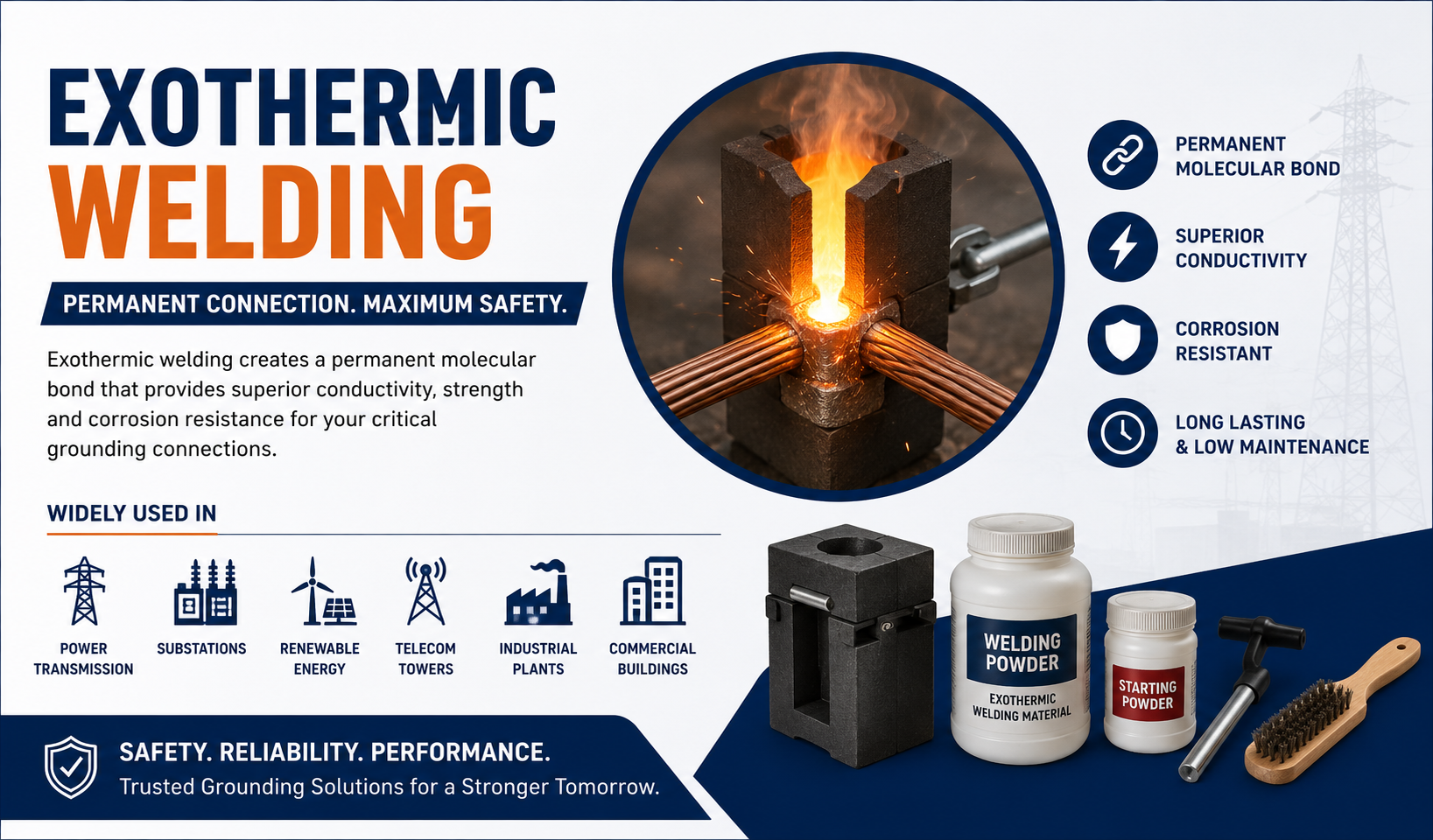
A typical system includes a graphite mould, welding material, an ignition system, and the accessories required for safe and controlled operation. The components and consumables vary according to the conductor type, connection configuration, and manufacturer's specifications.
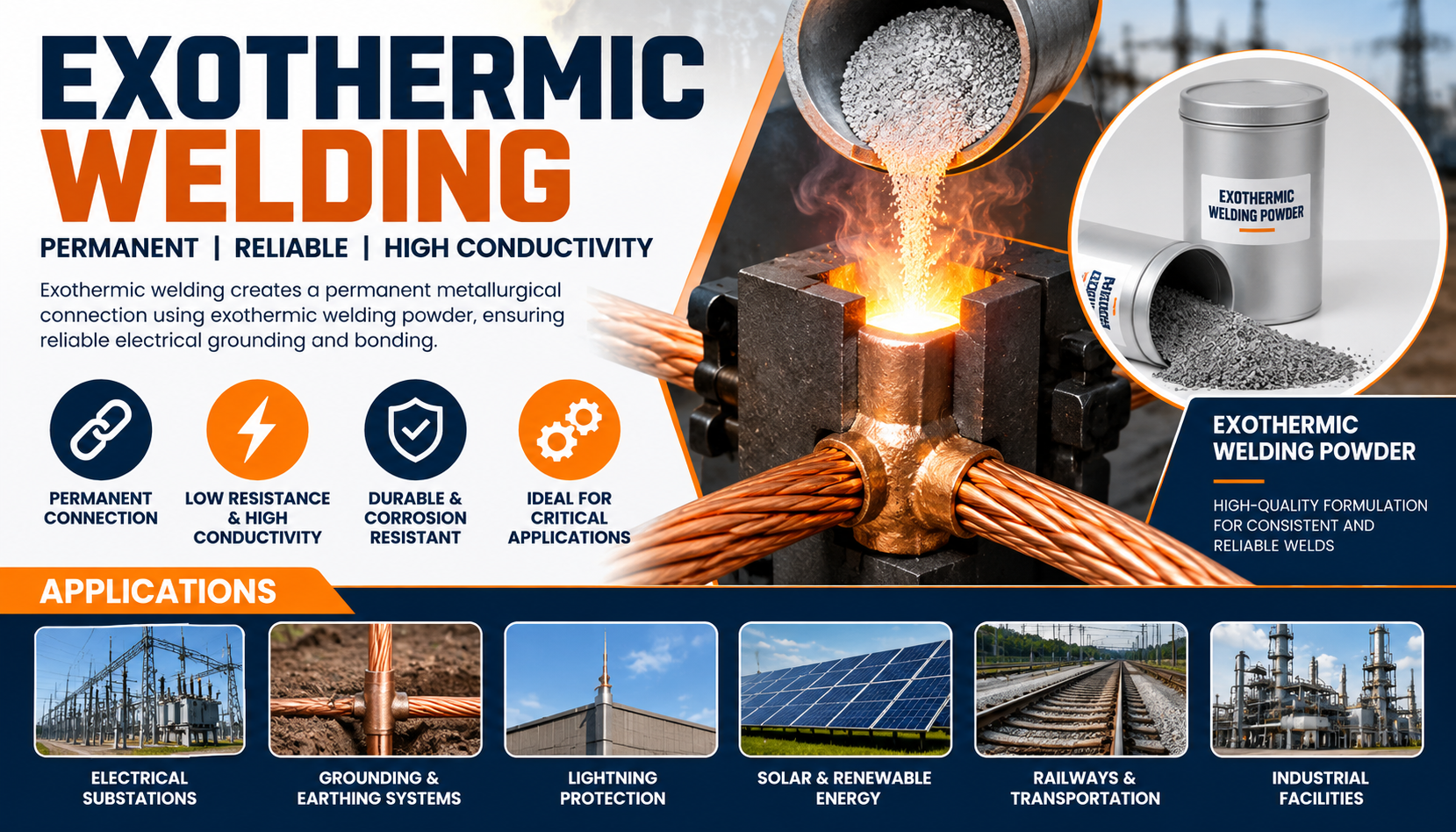
Exothermic welding is widely used in electrical earthing systems, substations, transmission infrastructure, industrial facilities, and lightning protection networks.
How Does Exothermic Welding Work?
Exothermic welding works through a chemical reaction that generates intense heat and produces molten metal. The molten material fills the prepared mould cavity and joins the conductors to create a permanent connection.
The process generally involves the following steps:
1. Prepare the Conductors
Clean and prepare the conductors according to the manufacturer's instructions. Dirt, moisture, oxidation, and contamination can affect weld quality.
2. Select the Correct Graphite Mould
Choose a mould designed for the specific conductor materials, conductor sizes, and connection type. The correct mould helps establish the required connection geometry.
3. Position the Conductors
Place the conductors securely inside the mould. Verify their alignment and ensure that the mould is properly assembled before proceeding.
4. Load the Approved Welding Material
Use the specified exothermic welding powder or welding charge compatible with the mould and connection design. Follow the manufacturer's instructions for loading and ignition.
5. Ignite the Reaction
Activate the approved ignition system as directed by the product instructions. The chemical reaction generates the heat needed to produce molten metal.
6. Allow the Weld to Solidify
Allow the connection to cool for the required period before opening the mould. Avoid disturbing the joint while it solidifies.
7. Inspect the Finished Connection
Inspect the completed weld according to the applicable specifications, project requirements, and manufacturer's quality criteria. Verify that the connection is suitable for its intended electrical and mechanical application.
Safety note: Exothermic welding involves high temperatures, molten metal, and potentially hazardous reaction products. Only trained personnel should perform the process using the prescribed personal protective equipment, dry materials, approved tools, and site-specific safety procedures.
Key Components of an Exothermic Welding System
Understanding the components helps buyers choose a system that meets their installation requirements.
Graphite Welding Mould
A graphite mould shapes the molten metal around the conductors. Mould selection depends on conductor size, material, connection type, and the manufacturer's product range.
Exothermic Welding Powder
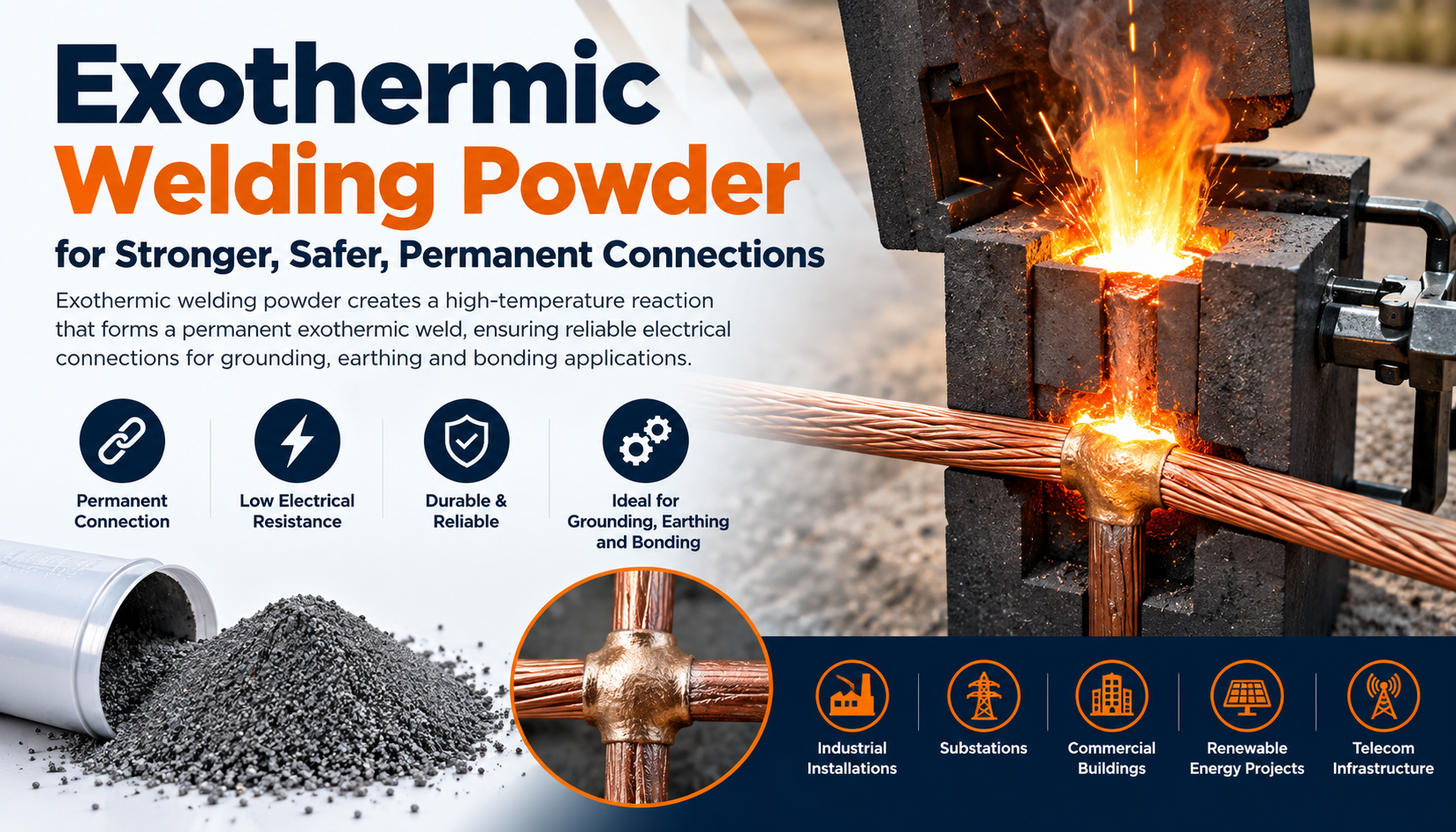
Exothermic welding powder, also known as a welding charge, supplies the reactive material needed to generate heat and molten metal. The correct charge must be selected for the intended mould and connection.
Ignition System
The ignition system initiates the reaction using the method approved by the manufacturer. Ignition equipment and consumables may differ between product systems.
Welding Tools and Accessories
Additional accessories can include mould handles, cleaning tools, clamps, and other equipment needed to position the conductors and operate the system safely.
Compatible Conductors and Connection Designs
A complete solution must support the required conductor materials and connection geometries. Buyers should confirm compatibility before purchasing the moulds and consumables.
Major Applications of Exothermic Welding
Exothermic welding is used in several industries where durable electrical connections are important.
1. Electrical Earthing and Grounding
Grounding networks help provide a path for fault current and support electrical safety. Exothermic welding can create permanent connections between grounding conductors, earth electrodes, and other compatible components.
2. Electrical Substations
Substations require grounding grids and bonding connections to support safe operation. Properly designed and installed exothermic welds can provide durable connections within these networks.
3. Lightning Protection Systems
Lightning protection installations use interconnected conductors to provide a path for lightning current. Exothermic welding can be used for compatible connections within grounding and bonding arrangements.
4. Power Transmission and Distribution
Power infrastructure projects may use exothermic welding for grounding and bonding applications that require permanent conductive joints.
5. Industrial Plants and Manufacturing Facilities
Factories, processing facilities, warehouses, and other industrial sites use grounding and bonding networks to support electrical safety and equipment protection.
6. Renewable Energy Projects
Solar power plants, wind installations, and other renewable energy facilities require suitable earthing and bonding systems. Exothermic welding may be selected for compatible grounding connections in these projects.
7. Railways and Infrastructure
Railway infrastructure, telecommunications installations, and large construction projects may require specialized electrical bonding and grounding connections, subject to the relevant design requirements.
Benefits of an Exothermic Welding System
The performance of an exothermic welding installation depends on the system, materials, workmanship, and operating conditions. When correctly specified and installed, it offers several advantages.
Permanent Metallurgical Connections
Exothermic welding fuses compatible conductors rather than relying solely on mechanical clamping. This can be beneficial in applications where permanent connections are required.
Reliable Electrical Continuity
A correctly executed weld can provide a low-resistance electrical path. Actual performance depends on the materials, connection design, weld quality, and inspection results.
Reduced Dependence on Mechanical Fasteners
The welded connection does not depend on a bolt or clamp maintaining contact pressure at the joint. Other parts of the grounding installation may still require mechanical hardware.
Suitability for Outdoor Installations
Appropriately designed exothermic welds can be suitable for buried grounding networks and other demanding environments. Corrosion resistance and service life depend on the materials, surrounding environment, and installation conditions.
No External Welding Power Supply
The process generates heat through a chemical reaction rather than requiring an external electrical welding power source. Other equipment and site safety arrangements may still be necessary.
Flexible Connection Configurations
Different mould designs can support various conductor arrangements, including conductor-to-conductor and conductor-to-grounding-electrode connections, where the manufacturer provides an appropriate configuration.
Exothermic Welding vs. Mechanical Connectors
Both exothermic welding and mechanical connectors can be appropriate for grounding and bonding applications. The correct choice depends on project specifications, accessibility, maintenance requirements, cost, and installation conditions.
| Factor | Exothermic welding | Mechanical connectors |
|---|---|---|
| Connection method | Metallurgical fusion | Mechanical clamping or fastening |
| External electrical power | Generally not required | Generally not required |
| Installation requirements | Specific moulds, consumables, training, and safety procedures | Compatible connector, tools, and installation procedures |
| Inspection | Visual inspection and project-specific acceptance criteria | Inspection of fastening and contact conditions as specified |
| Maintenance | Weld itself does not require periodic bolt tightening | Some connections may require inspection or retightening as specified |
| Best selection criteria | Permanent connection requirements and approved designs | Project requirements, accessibility, and approved connector designs |
Neither method is universally superior. Engineers should select the connection method based on applicable standards, the design of the grounding network, the environment, and the manufacturer's recommendations.
How to Choose the Right Exothermic Welding System
Selecting an appropriate exothermic welding system requires more than comparing the price of welding powder or equipment.
1. Identify the Application
Determine whether the system will be used for electrical earthing, grounding grids, lightning protection, substations, industrial facilities, or another application.
2. Confirm Conductor Compatibility
Check the conductor material, dimensions, and connection configuration. Confirm that the mould and welding charge are designed for the intended combination.
3. Evaluate Product Quality and Documentation
Ask the supplier for technical datasheets, installation instructions, safety documentation, and relevant test reports or certifications where applicable.
4. Check Applicable Standards
Verify the project specifications and relevant electrical, grounding, and lightning protection standards. Do not assume that one product or connection design meets every standard or application.
5. Consider Installation and Training
Evaluate the availability of suitable tools, operator training, consumables, and technical support. Proper installation practices are essential for consistent results.
6. Compare Total Project Cost
Consider moulds, consumables, accessories, labour, training, logistics, and replacement requirements. A lower initial purchase price may not represent the lowest overall project cost.
7. Assess Supplier Support
Choose a supplier that can explain product compatibility, provide clear documentation, and support the requirements of your project.
Common Mistakes to Avoid
The following mistakes can affect weld quality, safety, or project efficiency:
- Selecting an incompatible mould or welding charge.
- Using wet or contaminated conductors, moulds, or consumables when the process requires dry materials.
- Ignoring the manufacturer's preparation and ignition instructions.
- Allowing untrained personnel to perform welding operations.
- Skipping required inspections and documentation.
- Selecting a product without verifying project specifications and applicable standards.
- Focusing only on price rather than compatibility, safety, and supplier support.
Following approved procedures and using compatible materials are essential to obtaining consistent and reliable connections.
Frequently Asked Questions About Exothermic Welding Systems
What is an exothermic welding system used for?
An exothermic welding system is used to create permanent electrical connections between compatible conductors. Common applications include earthing, grounding grids, lightning protection, substations, and industrial electrical installations.
What is exothermic welding powder?
Exothermic welding powder is a reactive welding charge used to generate heat and molten metal during the exothermic welding process. The charge must be compatible with the selected mould, conductor materials, and connection design.
Is exothermic welding suitable for earthing?
Yes. Exothermic welding is used in many earthing and grounding applications. The suitability of a particular connection depends on the grounding design, conductor compatibility, project specifications, and applicable standards.
Does exothermic welding require electricity?
The process generally does not require an external electrical welding power supply because the heat comes from a chemical reaction. An approved ignition system and other suitable equipment are still required.
How do I select the correct exothermic welding mould?
Select the mould according to the conductor material, conductor dimensions, required joint configuration, and manufacturer's compatibility guidance. Confirm that the recommended welding charge matches the mould.
How long does an exothermic weld last?
A correctly designed and installed exothermic weld can provide long-lasting service. Its actual service life depends on installation quality, conductor materials, environmental exposure, corrosion conditions, and the performance requirements of the application.
How can I find a reliable exothermic welding system supplier?
Evaluate suppliers based on technical documentation, compatible product options, quality assurance, safety guidance, product availability, and technical support. Request specifications and quotations for your exact connection requirements before purchasing.
Conclusion
An exothermic welding system can be a valuable solution for permanent electrical connections in earthing, grounding, lightning protection, substations, and industrial infrastructure. Its benefits depend on choosing compatible materials, following approved installation procedures, and meeting the relevant project requirements.
For contractors, engineers, procurement teams, and industrial buyers, evaluating the complete system—including the mould, welding charge, accessories, documentation, and technical support—is essential to making an informed purchasing decision.
When comparing exothermic welding solutions, prioritize application compatibility, installation safety, documented quality, and long-term project requirements rather than price alone.