Exothermic Welding System: How It Works, Benefits, Applications, and Selection Guide

Ai Earthing
Reliable electrical connections are essential for modern infrastructure, industrial facilities, power distribution networks, and lightning protection systems. In these environments, connection quality directly affects electrical continuity, grounding performance, and long-term system reliability. An exothermic welding system provides a practical solution for creating permanent electrical connections between compatible metal conductors.
Exothermic welding is widely used in earthing and grounding installations, electrical substations, renewable energy projects, telecommunications infrastructure, and industrial facilities. Unlike conventional mechanical connections, this process uses a controlled chemical reaction to produce molten metal that fuses compatible conductors into a durable joint.
For electrical contractors, engineers, project managers, and procurement professionals, understanding how exothermic welding works can help in selecting appropriate connection solutions for demanding applications.
What Is an Exothermic Welding System?
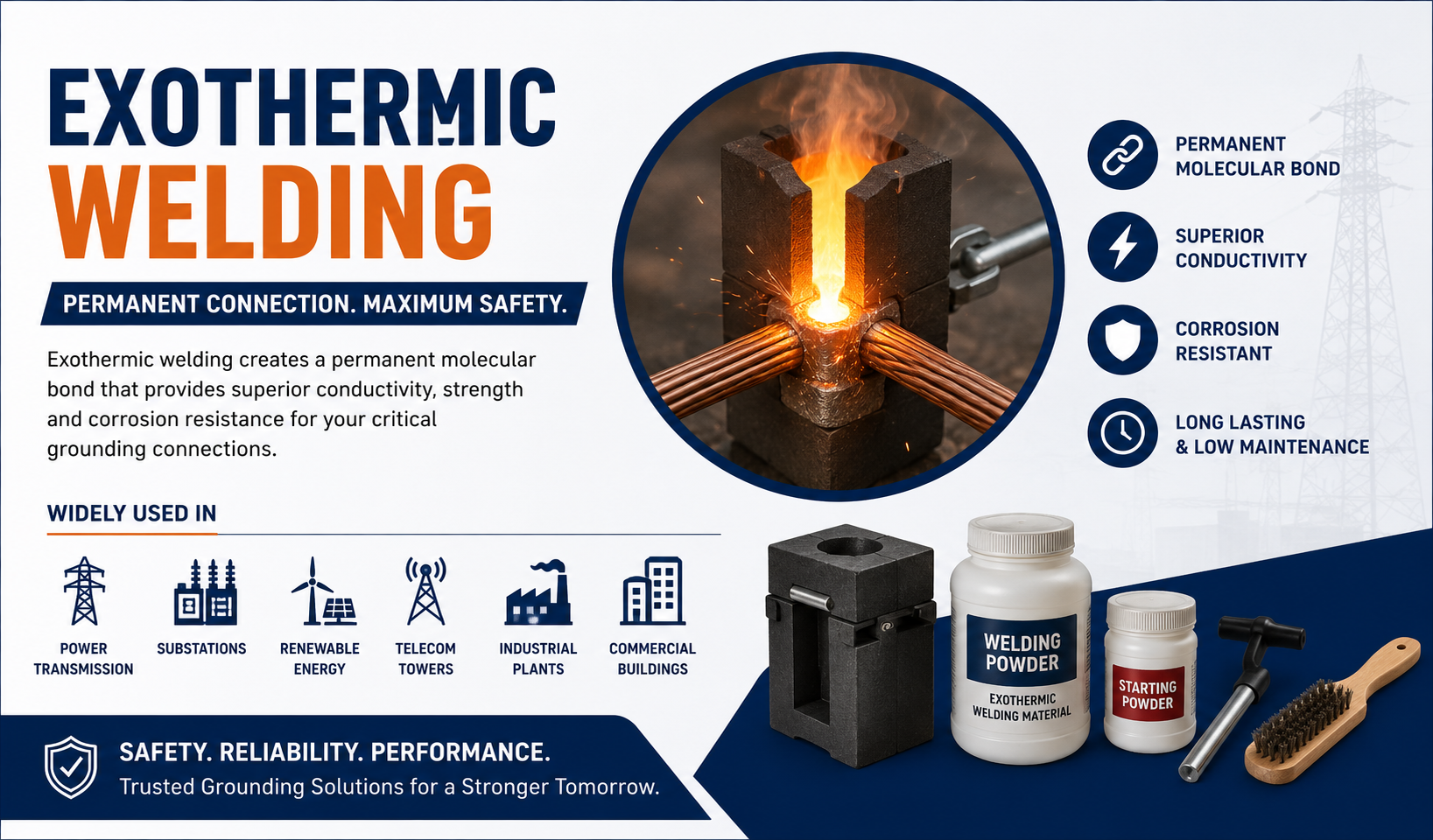
An exothermic welding system is a collection of specialized tools, moulds, welding materials, and accessories used to create permanent metallic connections through a controlled chemical reaction.
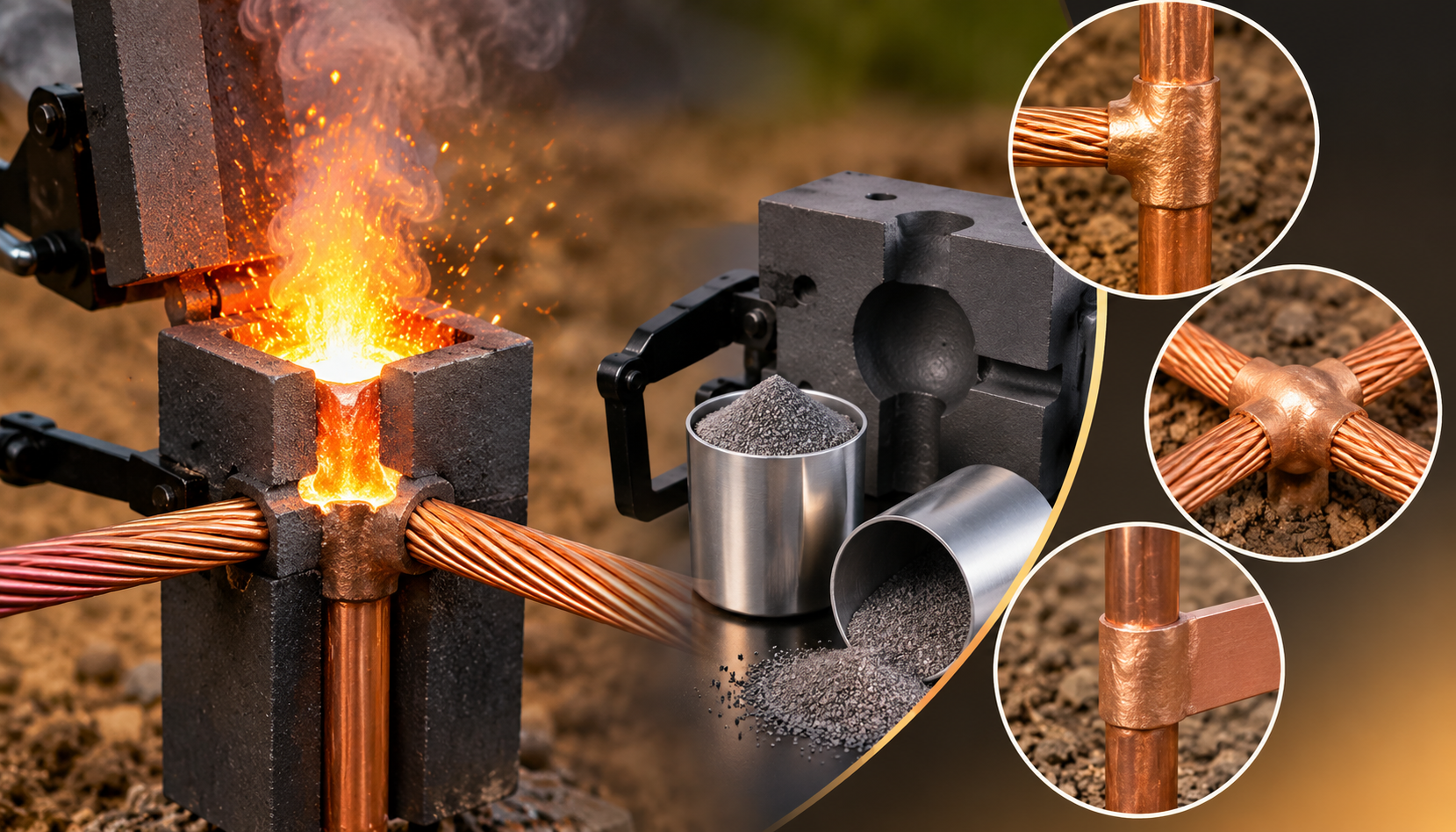
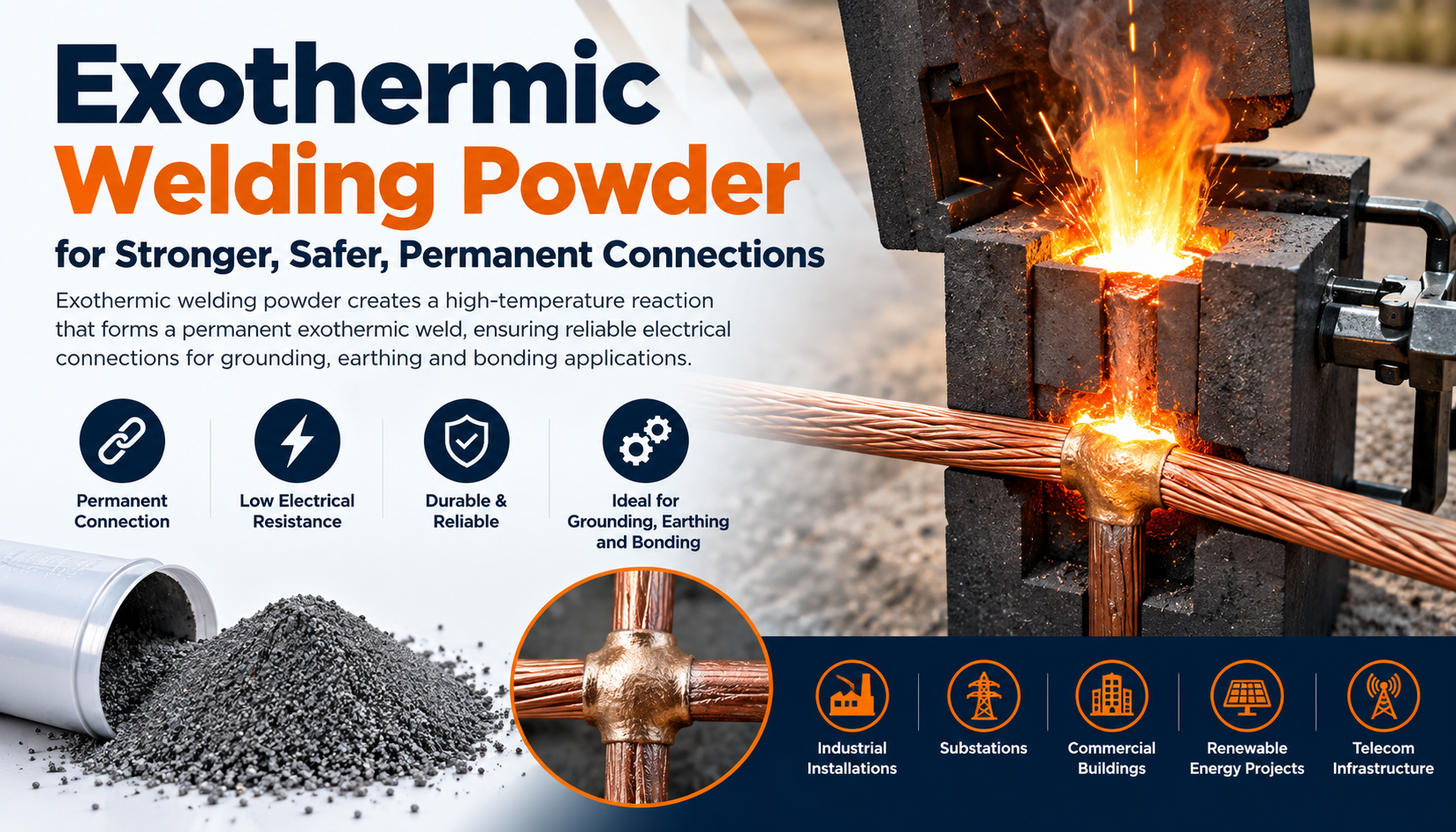
The process typically involves a graphite mould and a specially formulated welding compound. During the reaction, the generated heat produces molten metal that fuses the conductors or metallic components being joined.
According to technical information published by TE Connectivity, exothermic welding uses an aluminothermic reaction involving aluminum and copper oxide to generate molten copper and heat for forming electrical connections.
The resulting connection is particularly useful when a project requires a durable, low-resistance electrical path for grounding, bonding, or lightning protection.
Unlike conventional arc welding, an exothermic welding system does not require an external electrical power source to generate the heat for the welding reaction.
How Does Exothermic Welding Work?
The exothermic welding process uses chemical energy to produce the heat needed to form a metallic connection. The exact procedure depends on the welding system, mould design, conductor materials, and manufacturer instructions.
The general process includes the following stages:
1. Select the Appropriate Welding System
The first step is to identify the conductor materials, conductor sizes, connection geometry, and environmental conditions. These details determine which graphite mould, welding material, and accessories are suitable for the application.
2. Prepare the Conductors and Mould
The conductors and mould must be prepared according to the manufacturer's instructions. Surfaces should be clean and free from contamination, and any required drying or preheating must follow the specified procedure.
Proper preparation helps reduce the risk of defective connections.
3. Position the Conductors
The conductors are positioned inside the mould according to the required connection configuration. Common configurations include cable-to-cable, cable-to-ground-rod, and cable-to-steel connections.
4. Load the Specified Welding Material
The approved welding compound and any specified ignition materials are loaded according to the system's instructions. Only the designated materials and charge sizes should be used.
5. Initiate the Chemical Reaction
The welding material is ignited using the approved ignition method. The chemical reaction generates intense heat and molten metal, which forms the connection inside the mould.
6. Allow Cooling and Inspect the Joint
After the reaction, the connection must cool for the period specified by the manufacturer before the mould is opened and handled. The finished joint should then be inspected using the applicable project acceptance criteria.
Important: Exothermic welding involves very high temperatures and reactive materials. Only trained personnel should perform the operation using the specified personal protective equipment, fire precautions, and safe working procedures.
Key Components of an Exothermic Welding System
A complete exothermic welding system consists of several components that work together to produce consistent connections.
Graphite Mould
The graphite mould shapes the molten metal and holds the conductors in the correct position during the reaction. Moulds are designed for particular conductor sizes, materials, and joint configurations.
Exothermic Welding Powder
Exothermic welding powder is the specially formulated material used to generate heat and produce the required molten metal. The correct formulation and charge size must match the selected system and connection.
Handle Clamp
A compatible handle clamp secures the mould during the operation and supports proper positioning and closure.
Ignition Equipment
The approved ignition equipment initiates the reaction according to the manufacturer's specified procedure.
Accessories and Preparation Tools
Depending on the system, accessories may include cleaning brushes, conductor-positioning tools, inspection equipment, and other items needed to prepare and maintain the mould.
Choosing compatible components is essential for achieving reliable and repeatable results.
Major Benefits of Exothermic Welding
Exothermic welding offers several advantages for electrical grounding and bonding applications.
1. Permanent Electrical Connections
Exothermic welding creates a fused metallic joint rather than relying solely on mechanical pressure. When correctly selected and installed, the connection can provide long-term electrical continuity.
2. Reliable Electrical Conductivity
A properly formed exothermic weld can provide a low-resistance current path suitable for grounding and bonding applications. Actual performance depends on the materials, joint design, installation quality, and applicable acceptance requirements.
3. Resistance to Mechanical Loosening
Unlike bolted connections, a properly formed welded joint does not depend on maintaining bolt tightness. This makes exothermic welding useful for permanent connections in demanding environments.
4. Suitable for Buried Grounding Connections
Underground grounding networks may be exposed to moisture, soil conditions, and corrosion. Correctly designed exothermic connections can provide durable joints for these applications when the selected materials and installation methods are suitable for the environment.
5. No External Electrical Power Required for the Reaction
The welding reaction generates its own heat, allowing the process to be used at many field locations without an external electrical welding supply.
6. Versatile Connection Configurations
Depending on the system, exothermic welding can support several connection types, including conductor splices, tee joints, cross connections, ground-rod connections, and compatible steel-surface connections.
These benefits make exothermic welding an important option for projects that require permanent electrical connections and dependable grounding performance.
Applications of Exothermic Welding Systems
Exothermic welding is used across multiple industries where electrical continuity and permanent metallic connections are important.
Electrical Earthing and Grounding
Grounding systems protect people and equipment by providing an appropriate path for fault current. Exothermic welding is commonly used to connect grounding conductors, ground rods, and compatible metallic components.
Electrical Substations and Power Plants
Substations and generating facilities require reliable grounding networks to support electrical safety and system performance. Exothermic welding can be used for permanent connections within these networks.
Lightning Protection Systems
Lightning protection installations require suitable connections between conductors and grounding components. Exothermic welding can help create permanent joints when specified for the lightning protection design.
Solar and Wind Energy Projects
Renewable energy installations often include grounding and bonding networks across large sites. Exothermic welding can be suitable for compatible connections in solar farms, wind farms, and associated electrical infrastructure.
Telecommunications Infrastructure
Telecommunications towers, equipment shelters, and network installations may require reliable grounding and bonding connections to support equipment protection and electrical safety.
Railway and Industrial Infrastructure
Specialized exothermic welding processes are also used in certain railway applications and industrial connection projects. The specific process and equipment must be selected for the intended application.
Exothermic Welding vs. Mechanical Connections
Selecting an appropriate connection method depends on the project requirements, installation conditions, maintenance needs, and applicable engineering standards.
| Feature | Exothermic Welding | Mechanical Connection |
|---|---|---|
| Connection method | Fuses compatible metals through a chemical reaction | Uses bolts, clamps, or other mechanical components |
| External electrical power | Not required for the welding reaction | Usually not required |
| Dependence on bolt tightness | No | Often yes |
| Installation requirements | Requires a suitable mould, welding material, and trained operator | Requires compatible hardware and correct installation |
| Inspection | Visual and other specified acceptance checks | Hardware, tightness, and other specified checks |
| Typical applications | Permanent grounding and bonding connections | Grounding, bonding, and other connections where suitable |
Neither method is automatically the best choice for every installation. Engineers should evaluate electrical performance, corrosion exposure, accessibility, installation costs, and project specifications before selecting a connection technology.
How to Choose the Right Exothermic Welding System
Selecting the right exothermic welding system is important for connection quality, safety, and project efficiency.
Consider the following factors before purchasing a system.
1. Conductor material: Confirm compatibility with copper, copper-clad steel, steel, or other specified metals.
2. Conductor size: Verify that the mould and welding material are suitable for the conductor dimensions.
3. Connection type: Identify whether the project requires a cable splice, tee connection, cross connection, ground-rod connection, or another configuration.
4. Operating environment: Consider underground installation, moisture, soil conditions, temperature, and exposure to corrosive environments.
5. Quality documentation: Review the manufacturer's technical documentation, product test reports, installation instructions, and applicable certifications.
6. Standards and project requirements: Depending on the application, relevant references may include UL 467 for grounding and bonding equipment, IEEE 837 for permanent substation grounding connections, and IEC 62305 for lightning protection. Verify the applicable edition, product qualification, and project specifications rather than assuming every system meets every standard.
7. Technical support and availability: Evaluate the availability of compatible moulds, welding materials, replacement accessories, and technical assistance.
A carefully selected system can help contractors and engineers achieve consistent connections while reducing avoidable installation problems.
Common Mistakes to Avoid During Exothermic Welding
Even a well-designed exothermic welding system can produce unsatisfactory results if installation requirements are ignored.
Common mistakes include:
- Using a mould that does not match the conductor configuration.
- Selecting an incorrect welding material or charge size.
- Failing to prepare or dry the mould and conductors as instructed.
- Allowing moisture or contamination to affect the connection.
- Opening the mould before the specified cooling period.
- Ignoring personal protective equipment and fire precautions.
- Failing to inspect and document the completed connection.
Following the manufacturer's instructions and the project's quality-control procedures helps improve installation consistency and worker safety.
Why Exothermic Welding Matters for Modern Electrical Infrastructure
Modern infrastructure depends on reliable electrical connections. From power distribution and industrial automation to renewable energy and telecommunications, grounding and bonding systems play an important role in electrical safety and operational reliability.
Exothermic welding provides an established method for producing permanent connections in suitable applications. Its ability to form fused metallic joints without requiring an external electrical welding supply makes it especially useful for many field installations.
However, the quality of the finished connection depends on more than the welding material alone. Correct component selection, conductor preparation, operator training, inspection, and compliance with the project's engineering requirements are all essential.
Organizations planning a new grounding installation or upgrading an existing system should evaluate the available connection technologies in consultation with qualified electrical engineers and experienced installation professionals.
Conclusion
An exothermic welding system is a valuable solution for creating permanent electrical connections in grounding, bonding, lightning protection, and other compatible industrial applications. By combining a suitable graphite mould, specially formulated welding material, and the correct accessories, the process can produce durable metallic joints for demanding infrastructure projects.
Understanding the working process, major components, benefits, applications, and selection criteria helps engineers, contractors, and procurement teams make informed decisions.
When choosing an exothermic welding system, prioritize material compatibility, technical documentation, appropriate product qualifications, installation safety, and compliance with project specifications. These factors help support reliable connections and long-term electrical system performance.
Frequently Asked Questions (FAQs)
What is an exothermic welding system used for?
An exothermic welding system is primarily used to create permanent electrical connections for earthing, grounding, bonding, and lightning protection. Specialized processes also support certain railway and industrial applications.
How does exothermic welding work?
Exothermic welding uses a controlled chemical reaction to generate heat and molten metal, which fuses compatible conductors or metal components into a permanent joint.
Does exothermic welding require electricity?
The chemical reaction does not require an external electrical power supply to generate heat. However, the installation may require other equipment and suitable working conditions.
What materials can be joined using exothermic welding?
Depending on the system and mould, compatible materials may include copper, copper-clad steel, and certain steel or copper-alloy components. Always confirm material compatibility with the manufacturer.
Is exothermic welding suitable for grounding systems?
Yes. It is widely used for permanent grounding and bonding connections, including conductor-to-conductor and conductor-to-ground-rod joints, where the selected system meets the project's requirements.
What should buyers check before purchasing an exothermic welding system?
Buyers should verify conductor compatibility, connection configuration, mould availability, welding material specifications, safety requirements, product testing, and compliance with applicable project standards.
How long does an exothermic welded connection last?
A properly designed and installed connection can provide long-term service. Its actual service life depends on installation quality, material compatibility, environmental exposure, and the requirements of the application.