How to Choose the Right Exothermic Welding Product for Earthing and Grounding Systems

Ai Earthing
Modern electrical grounding systems demand permanent, low-resistance, and maintenance-free connections. Traditional mechanical connectors often loosen over time due to vibration, corrosion, or thermal expansion. This is where exothermic welding powder becomes the preferred solution for engineers, contractors, and utility companies.
An Exothermic Welding Product creates molecular bonds between conductors using an intense thermite reaction. The result is a permanent electrical connection that offers exceptional conductivity, mechanical strength, and long-term reliability.
Whether you're installing earthing systems for substations, telecom towers, solar plants, railways, or industrial facilities, understanding exothermic welding is essential for ensuring safety and system performance.
What Is Exothermic Welding Powder?
Exothermic welding powder is a specially formulated mixture of metallic compounds that generates extremely high temperatures during an exothermic reaction. When ignited inside a graphite mould, the powder melts and fuses copper conductors together, creating a permanent weld.
Unlike soldering or brazing, exothermic welding does not rely on external heat sources. Instead, the chemical reaction itself provides enough energy to produce a solid molecular bond.
The resulting connection:
- Has very low electrical resistance
- Does not loosen over time
- Withstands fault currents
- Resists corrosion
- Requires minimal maintenance
What Is an Exothermic Welding Product?
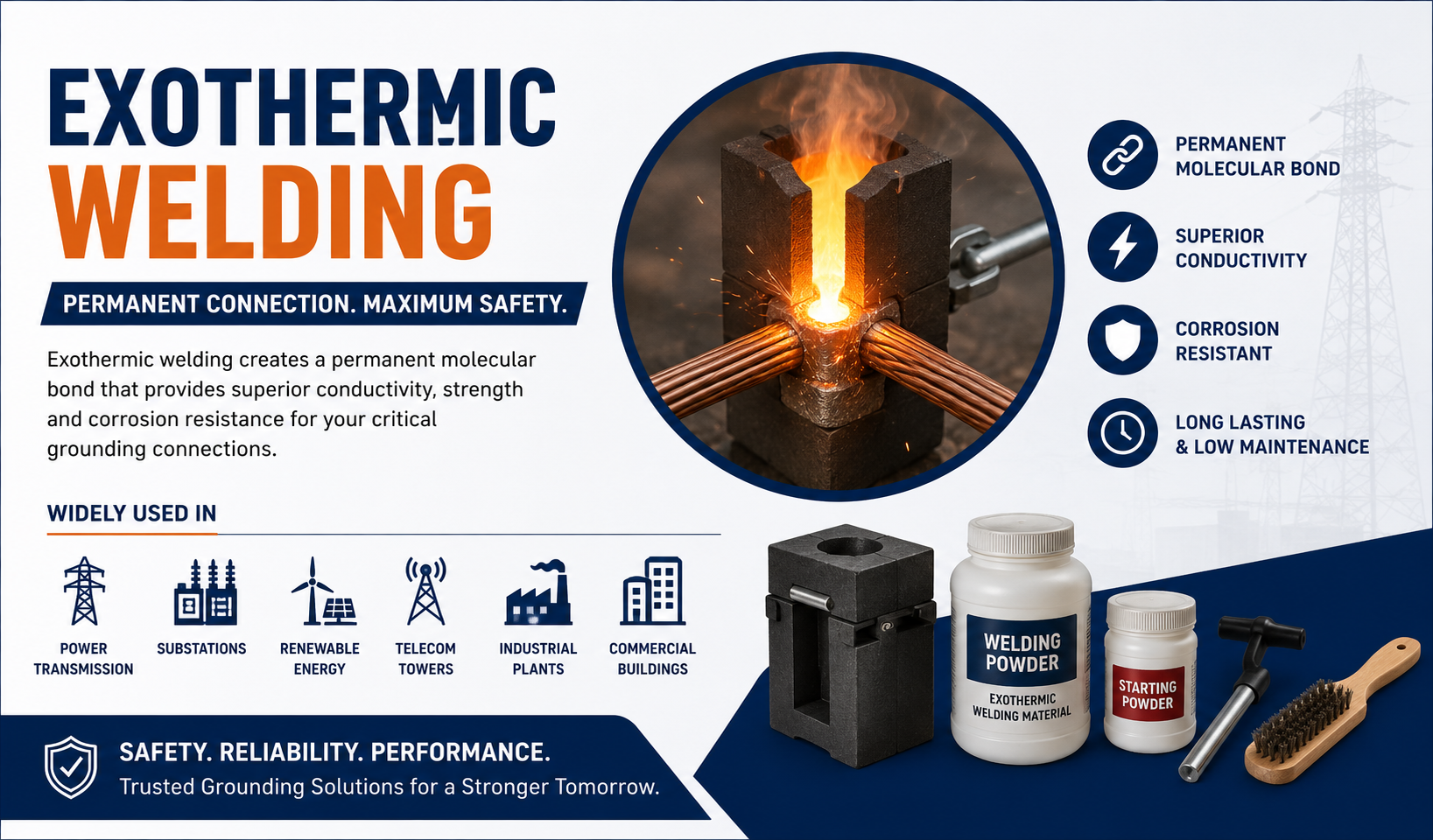
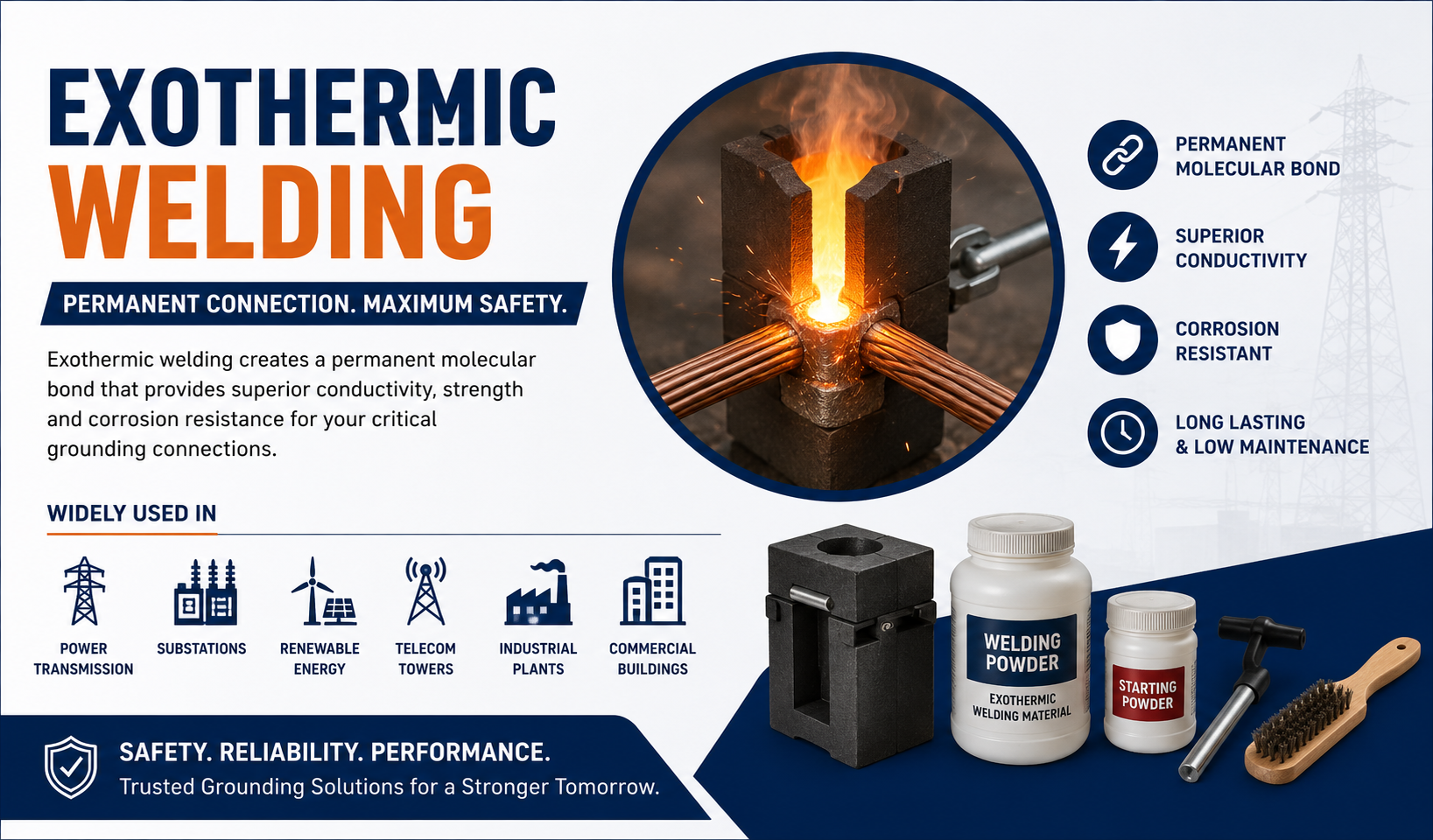
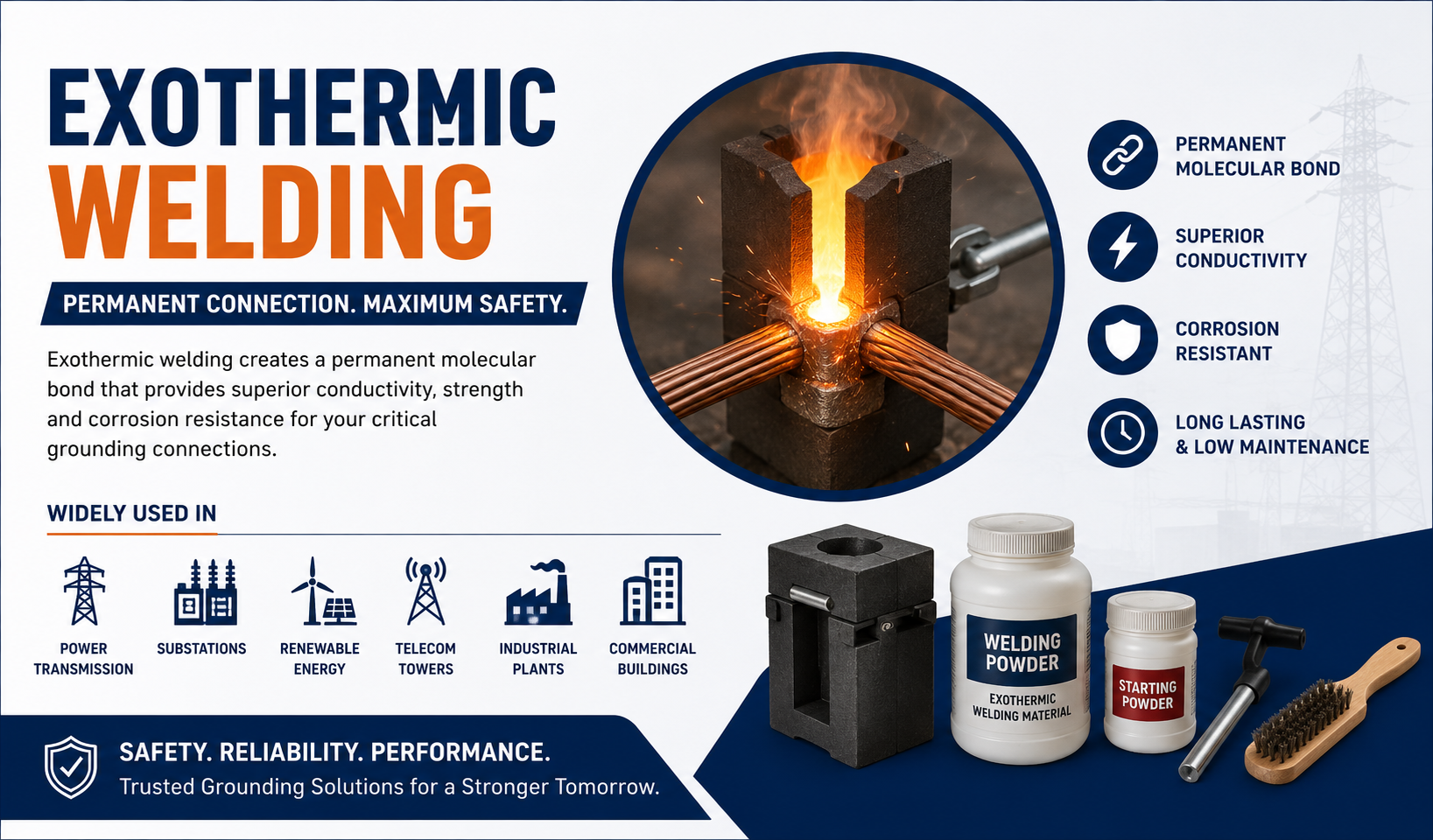
An Exothermic Welding Product includes all components required to perform an exothermic weld safely and effectively.
Typical products include:
- Exothermic welding powder
- Graphite moulds
- Ignition powder
- Starting flint gun
- Mould handle clamps
- Cleaning brush
- Mould cleaning kit
- Metal retaining discs
- Welding accessories
These products work together to create reliable grounding connections across various electrical applications.
How Does Exothermic Welding Work?
The exothermic welding process is based on a chemical reaction between metal oxides and aluminium powder.
The process includes:
- Clean the conductors thoroughly.
- Position them correctly inside the graphite mould.
- Pour the required amount of exothermic welding powder into the mould.
- Add ignition powder.
- Ignite using a flint igniter.
- The reaction reaches temperatures above 2,500°C.
- Molten copper flows into the weld cavity.
- After cooling, remove the mould and inspect the completed weld.
The finished connection becomes a permanent part of the conductor itself.
Benefits of Exothermic Welding Powder
Permanent Connection
Unlike mechanical clamps, exothermic welds never loosen due to vibration or thermal cycling.
Excellent Electrical Conductivity
The weld provides conductivity equal to or better than the connected conductor.
Corrosion Resistance
The molecular bond resists oxidation and environmental corrosion, making it suitable for underground installations.
High Mechanical Strength
The connection can withstand significant mechanical stress without failure.
Maintenance-Free Performance
No periodic tightening or replacement is required.
Long Service Life
Properly installed exothermic welds often last as long as the grounding system itself.
Applications of Exothermic Welding Products
An Exothermic Welding Product is widely used in industries requiring dependable electrical grounding.
Common applications include:
- Electrical substations
- Transmission lines
- Solar power plants
- Wind energy projects
- Telecommunications towers
- Railway signalling
- Oil and gas facilities
- Chemical plants
- Data centres
- Industrial manufacturing units
- Commercial buildings
- Lightning protection systems
Why Industries Prefer Exothermic Welding
Electrical grounding systems must remain reliable for decades. Poor connections can increase resistance, generate excessive heat, and compromise equipment protection.
Exothermic welding offers several advantages over conventional methods:
| Feature | Exothermic Welding | Mechanical Clamp |
|---|---|---|
| Permanent Connection | Yes | No |
| Low Resistance | Excellent | Moderate |
| Corrosion Resistance | High | Moderate |
| Maintenance | Minimal | Regular |
| Fault Current Capacity | Excellent | Limited |
| Service Life | Very Long | Moderate |
Types of Conductors That Can Be Welded
Exothermic welding powder can join different conductor combinations, including:
- Copper to copper
- Copper cable to copper rod
- Copper strip to rod
- Copper cable to steel
- Copper cable to rebar
- Ground rod connections
- Earthing grid intersections
This flexibility makes it suitable for a wide range of grounding designs.
Factors to Consider Before Choosing an Exothermic Welding Product
Selecting the right Exothermic Welding Product ensures consistent weld quality and reliable system performance.
Important factors include:
Conductor Size
Choose welding powder and moulds that match the conductor dimensions.
Material Compatibility
Ensure compatibility with copper, steel, or other conductor materials.
Graphite Mould Quality
High-quality graphite moulds produce consistent welds over multiple uses.
Environmental Conditions
Consider moisture, temperature, and installation environment.
Manufacturer Reputation
Purchase products from experienced manufacturers with proven quality standards.
Technical Support
Reliable suppliers provide installation guidance and application assistance.
Safety Tips During Exothermic Welding
Because exothermic reactions generate extremely high temperatures, safety precautions are essential.
Always:
- Wear safety goggles
- Use heat-resistant gloves
- Keep moulds completely dry
- Clean conductors before welding
- Follow manufacturer instructions
- Allow moulds to cool before reuse
- Inspect completed welds carefully
Proper safety practices reduce installation risks and improve weld quality.
Common Mistakes to Avoid
Many welding failures occur due to improper installation rather than product defects.
Avoid these mistakes:
- Using damp graphite moulds
- Incorrect conductor positioning
- Insufficient cleaning
- Wrong powder size
- Reusing damaged moulds
- Incomplete ignition
- Moving conductors before cooling
Proper training and adherence to installation procedures help achieve consistent, high-quality welds.
Why Quality Matters
Not all exothermic welding powder delivers the same performance.
Premium products provide:
- Consistent chemical composition
- Reliable ignition
- Uniform weld formation
- Better conductivity
- Longer mould life
- Superior mechanical strength
- Improved safety during installation
Investing in high-quality products reduces installation failures and long-term maintenance costs.
Choosing the Right Manufacturer
When selecting an Exothermic Welding Product supplier, consider:
- Industry experience
- Product quality certifications
- Manufacturing standards
- Technical expertise
- Product range
- Timely delivery
- Customer support
- Competitive pricing
A trusted manufacturer helps ensure reliable grounding solutions for projects of every size.
Future of Exothermic Welding Technology
As renewable energy, smart grids, electric vehicle infrastructure, and data centres continue to expand, demand for dependable grounding systems is increasing rapidly.
Modern exothermic welding products continue to evolve with improved formulations, enhanced mould designs, and greater installation efficiency, making them indispensable for today's electrical infrastructure.
Conclusion
Exothermic welding powder plays a critical role in creating permanent, high-performance electrical grounding connections. Combined with a quality Exothermic Welding Product, it provides exceptional conductivity, corrosion resistance, and long-term reliability across a wide range of industrial applications.
Whether you're installing earthing systems for power plants, substations, telecommunications, or commercial infrastructure, choosing high-quality exothermic welding solutions ensures safer, stronger, and maintenance-free electrical connections for years to come.
Frequently Asked Questions (FAQs)
What is exothermic welding powder used for?
Exothermic welding powder is used to create permanent electrical connections in earthing, grounding, lightning protection, and bonding systems.
What is an Exothermic Welding Product?
An Exothermic Welding Product includes welding powder, graphite moulds, ignition materials, and accessories used to perform exothermic welding safely and effectively.
Is exothermic welding stronger than mechanical clamping?
Yes. Exothermic welding forms a molecular bond that offers higher mechanical strength and lower electrical resistance than most mechanical connectors.
Can exothermic welding be used underground?
Yes. Exothermic welds are highly resistant to corrosion and are widely used in underground grounding installations.
How long do exothermic weld connections last?
When installed correctly using quality materials, exothermic welds can last for decades and often match the service life of the grounding system itself.
Is special training required for exothermic welding?
Basic training is recommended to ensure proper handling of the welding powder, moulds, and safety procedures, resulting in reliable and consistent weld quality.