How to Choose the Right PEEK Rod for Industrial Applications

Polymat India
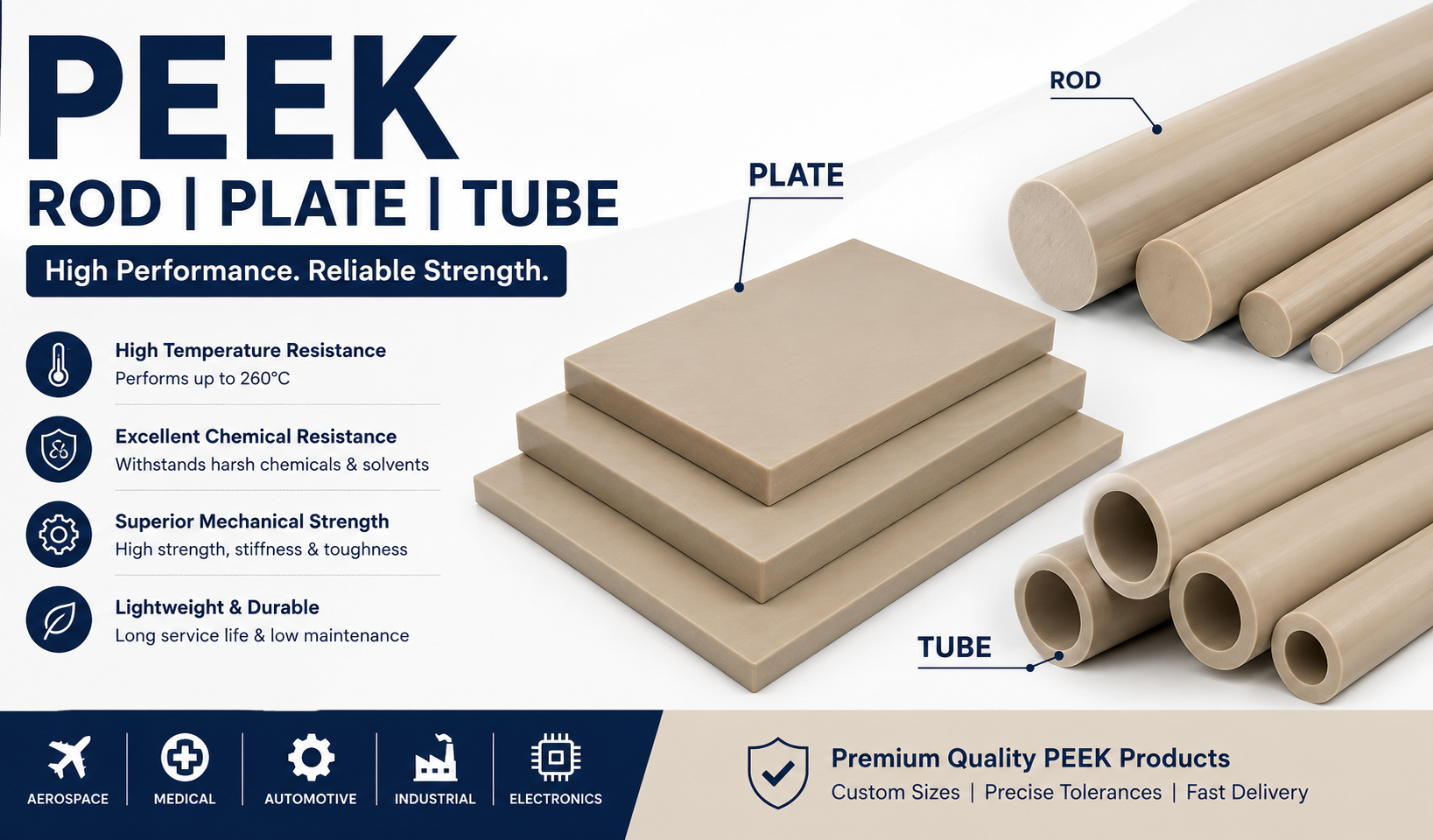
PEEK (Polyether Ether Ketone) is a high-performance engineering thermoplastic widely used in industries where conventional plastics cannot withstand demanding operating conditions. Its excellent mechanical strength, chemical resistance, dimensional stability, and high-temperature performance make it suitable for applications in aerospace, automotive, electrical, medical, chemical processing, and industrial machinery.
For businesses looking to source reliable PEEK rods, choosing experienced PEEK rod suppliers and established PEEK rod manufacturers is essential. The quality of the raw material, manufacturing process, dimensional accuracy, and customization capabilities can directly affect the performance and service life of the finished component.
What Is a PEEK Rod?
A PEEK rod is a solid cylindrical form of PEEK polymer that can be machined into precision components such as bushings, seals, bearings, rollers, spacers, insulators, and custom engineering parts.
PEEK rods are available in different diameters, lengths, grades, and formulations. Depending on the application, buyers can choose from virgin PEEK, reinforced PEEK, and modified grades containing materials such as glass fiber, carbon fiber, or PTFE.
The combination of strength, stiffness, wear resistance, and temperature stability makes PEEK rods particularly useful for demanding industrial environments.
Why Choose PEEK Rods?
PEEK offers several advantages compared with many conventional engineering plastics. Some of its key properties include:
- Excellent high-temperature resistance
- High mechanical strength and stiffness
- Outstanding chemical resistance
- Good wear and abrasion resistance
- Low moisture absorption
- Excellent dimensional stability
- Good fatigue resistance
- Strong electrical insulation properties
- Resistance to hydrolysis and steam
- Excellent machinability for precision components
These properties allow PEEK rods to perform reliably in environments involving heat, pressure, chemicals, friction, and continuous mechanical loading.
Applications of PEEK Rods
PEEK rods are used across numerous industries because of their combination of mechanical and thermal properties.
Aerospace Industry
In aerospace applications, weight reduction and reliable performance are critical. PEEK components can be used for bushings, seals, electrical insulation parts, fasteners, and other precision-engineered components.
Automotive Industry
Automotive manufacturers use PEEK for components exposed to heat, chemicals, friction, and mechanical stress. PEEK rods can be machined into bearings, bushings, valve components, and other under-the-hood parts.
Chemical Processing
PEEK's chemical resistance makes it suitable for components used around aggressive chemicals. Machined PEEK parts can be used in pumps, valves, seals, and chemical-processing equipment.
Electrical and Electronics
Because PEEK provides good electrical insulation and thermal stability, it can be used to manufacture electrical connectors, insulating components, coil forms, and precision electronic parts.
Medical Applications
Specialized medical-grade PEEK is used for selected medical and healthcare applications where biocompatibility and sterilization resistance are important. Buyers should confirm the appropriate medical grade and required certifications with the manufacturer.
Industrial Machinery
PEEK rods are frequently machined into wear components such as bearings, rollers, guide rings, bushings, and seals used in industrial machinery.
How to Choose Reliable PEEK Rod Suppliers
Selecting the right supplier involves more than comparing prices. A dependable supplier should be able to provide consistent material quality, accurate dimensions, technical documentation, and dependable delivery.
Consider the following factors when evaluating PEEK rod suppliers:
1. Material Quality
Ask about the grade and source of the PEEK material. The supplier should be able to provide technical specifications and, where required, material certificates.
2. Available Sizes
Check whether the supplier offers the rod diameter and length required for your application. A broad size range can reduce the need for unnecessary machining or material wastage.
3. PEEK Grades
Different applications require different PEEK formulations. Ask whether the supplier provides virgin, glass-filled, carbon-filled, bearing-grade, or other modified PEEK materials.
4. Dimensional Accuracy
For precision machining, dimensional consistency is extremely important. Reputable suppliers should maintain appropriate manufacturing tolerances and quality-control procedures.
5. Technical Support
A knowledgeable supplier can help you select the appropriate grade based on temperature, chemical exposure, load, friction, and machining requirements.
6. Documentation and Certifications
For regulated industries, documentation can be essential. Depending on the application, buyers may require material certificates, compliance information, inspection reports, or other technical documentation.
What to Look for in PEEK Rod Manufacturers
Working directly with experienced PEEK rod manufacturers can provide advantages when you require customized sizes, large quantities, or specific material grades.
A capable manufacturer should have:
- Modern extrusion or molding capabilities
- Consistent quality-control processes
- Multiple PEEK grades
- Custom size manufacturing
- Precise dimensional control
- Technical expertise
- Material traceability
- Reliable production capacity
- Appropriate testing facilities
Manufacturers with strong technical capabilities can also assist with selecting the most suitable PEEK formulation for a particular application.
Virgin PEEK vs. Reinforced PEEK Rods
One important decision when purchasing PEEK rods is whether to use virgin or reinforced material.
Virgin PEEK provides an excellent balance of mechanical strength, chemical resistance, temperature performance, and machinability. It is suitable for many general engineering applications.
Glass-filled PEEK generally provides increased stiffness and dimensional stability compared with unfilled PEEK.
Carbon-filled PEEK can offer improved stiffness, strength, thermal performance, and wear characteristics for demanding applications.
PTFE-filled or bearing-grade PEEK may be selected when lower friction and improved wear performance are important.
The best grade depends on the operating environment and the performance requirements of the finished component.
PEEK Rod Machining
PEEK rods are particularly valuable because they can be machined into complex precision components using conventional CNC machining techniques.
Manufacturers can produce components such as:
- Bushings
- Bearings
- Seals
- Washers
- Rollers
- Spacers
- Insulators
- Valve components
- Custom precision parts
However, machining parameters should be selected carefully because excessive heat generation can affect dimensional accuracy and surface quality.
Questions to Ask PEEK Rod Suppliers Before Ordering
Before placing an order, buyers should ask suppliers several important questions:
- What PEEK grade is available?
- What rod diameters and lengths are offered?
- Is custom sizing available?
- Can material certificates be provided?
- What dimensional tolerances are maintained?
- Is the material virgin or reinforced?
- What is the minimum order quantity?
- What testing and quality-control procedures are followed?
- Can samples be provided?
- What are the expected production and delivery times?
Getting clear answers to these questions can help reduce sourcing risks and ensure that the selected material meets the application's requirements.
Why Manufacturer Experience Matters
Experience is an important consideration when selecting PEEK rod manufacturers. PEEK is a specialized engineering material, and consistent production requires appropriate processing knowledge and quality control.
An experienced manufacturer can help customers choose the right grade, dimensions, and manufacturing specifications while maintaining consistency between production batches.
This is particularly important for industries where PEEK components are used in high-temperature, high-load, chemical, or precision applications.
Conclusion
PEEK rods provide an excellent combination of mechanical strength, temperature resistance, chemical resistance, wear performance, and dimensional stability. These characteristics make them suitable for a wide range of demanding industrial applications.
When sourcing these materials, businesses should carefully evaluate PEEK rod suppliers and PEEK rod manufacturers based on material quality, available grades, dimensional accuracy, customization capabilities, technical support, certifications, and production reliability.
Choosing a qualified supplier or manufacturer can help ensure consistent material performance and support the long-term reliability of PEEK components in demanding applications.