Exothermic Welding Process: Complete Guide to Mold Selection, Installation & Grounding

Ai Earthing
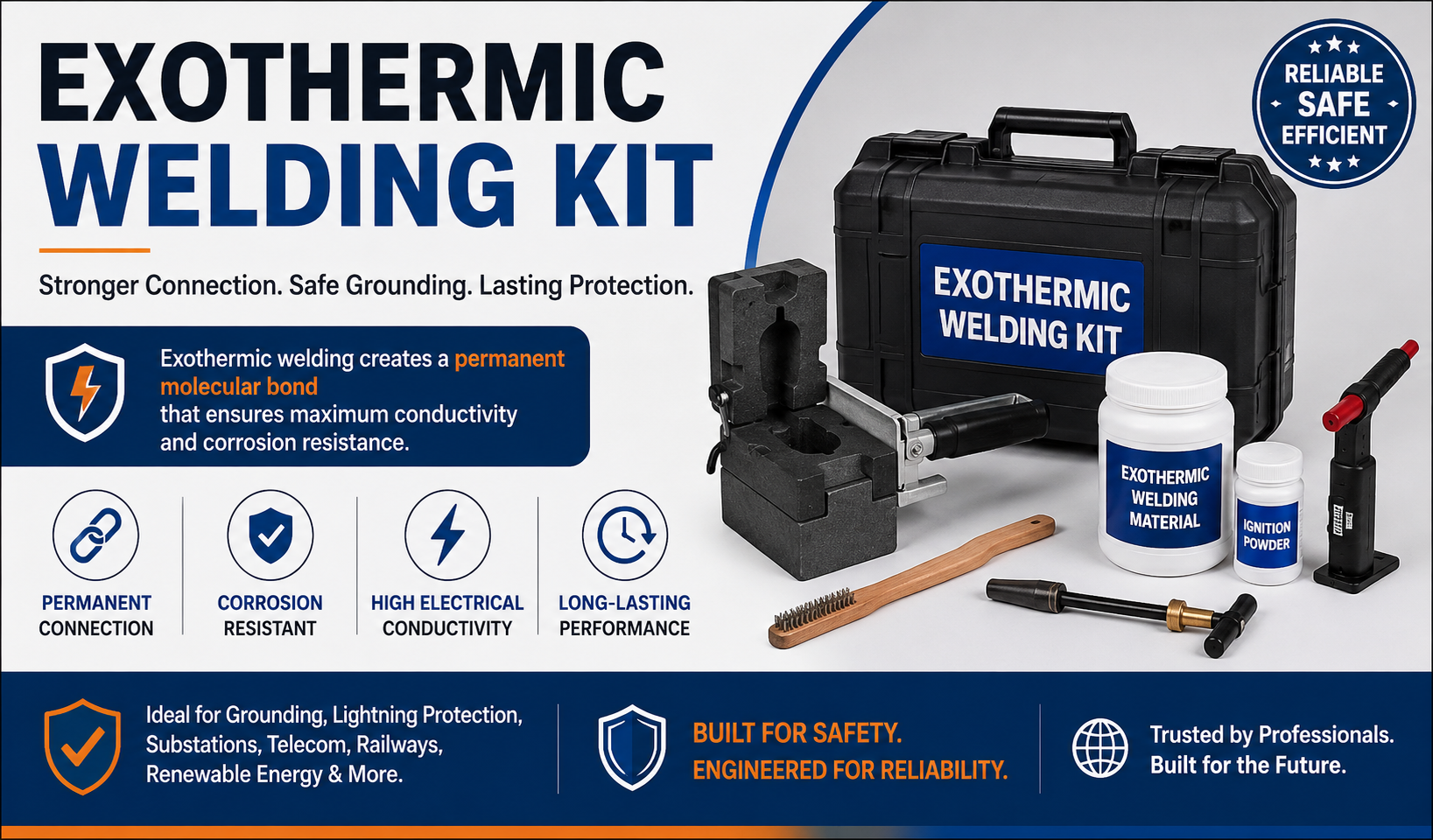
The exothermic welding process is a permanent metal joining method used to create highly conductive electrical connections for grounding and bonding systems. Unlike mechanical clamps or compression connectors, this process uses a controlled chemical reaction that generates extremely high temperatures, allowing molten copper to fuse conductors into a single solid connection.
The result is a durable, corrosion-resistant joint with excellent electrical conductivity, making exothermic welding the preferred solution for substations, transmission lines, telecommunications, railway infrastructure, renewable energy projects, and industrial earthing systems.
How the Exothermic Welding Process Works
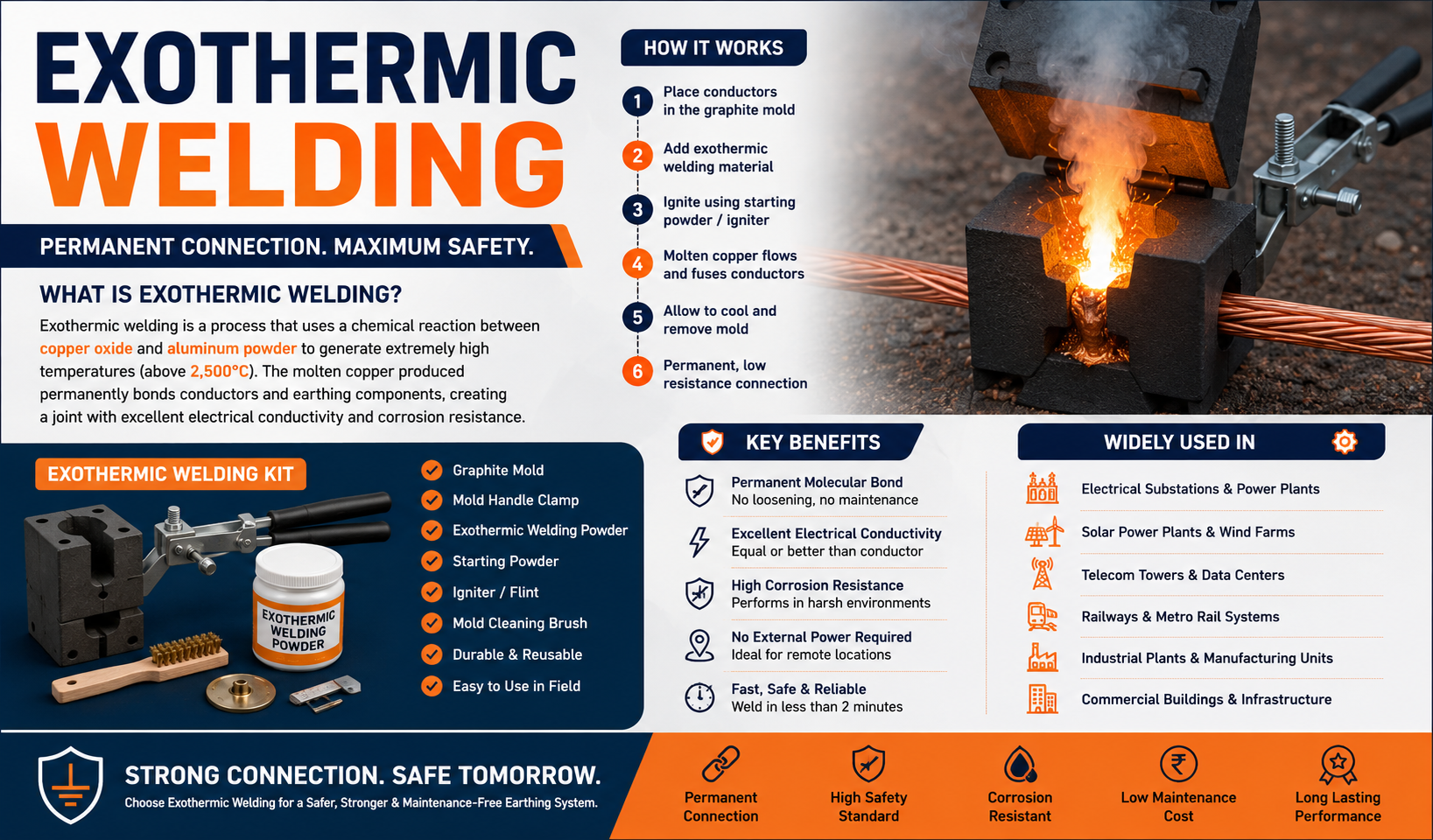
The process relies on a thermite reaction between copper oxide and aluminum powder. When ignited, the reaction produces molten copper and intense heat, permanently bonding the conductors inside a graphite mold.
Step 1: Prepare the Conductors
Before welding, the copper conductor, ground rod, or steel component should be cleaned thoroughly. Remove dirt, oxidation, grease, and moisture to ensure maximum conductivity and a strong metallurgical bond.
Step 2: Select the Correct Exothermic Welding Mold
Choosing the correct exothermic welding mold is essential for achieving accurate connections. The mold is manufactured from high-density graphite and is designed specifically for conductor sizes and connection types.
Common mold configurations include:
- Cable to ground rod
- Cable to cable
- Cable to flat strip
- Cable to steel surface
- Tee connections
- Cross connections
Using the wrong mold can lead to incomplete filling, weak joints, or material wastage.
Step 3: Position the Conductors
Place the conductors securely inside the graphite mold. Proper alignment ensures that molten copper flows evenly throughout the connection cavity without creating voids.
Step 4: Add Welding Powder
Pour the specified amount of exothermic welding powder into the mold chamber. Different conductor sizes require different powder charges, so always match the powder quantity with the mold specification.
Step 5: Ignite the Reaction
An ignition source activates the welding powder. Within seconds, temperatures exceeding 2,500°C generate molten copper that fills the mold cavity and permanently fuses the conductors.
Step 6: Open the Mold
Allow the weld to cool briefly before opening the mold. Remove any slag and inspect the finished connection for complete fusion and smooth copper flow.
What Is an Exothermic Welding Mold?
An exothermic welding mold is a reusable graphite tool that shapes molten copper during the welding process. Because graphite withstands extreme temperatures while maintaining dimensional accuracy, it is the industry standard for exothermic welding applications.
A quality mold offers:
- Precise conductor alignment
- Consistent weld quality
- Long service life
- Reduced material loss
- Faster installation on site
With proper maintenance, graphite molds can typically be reused for dozens of welding operations, depending on application and handling conditions.
Types of Exothermic Welding Molds
Different electrical installations require specialized mold designs.
|
Mold Type |
Typical Application |
|---|---|
|
Cable to Rod |
Earthing electrodes |
|
Cable to Cable |
Ground conductor joints |
|
Tee Mold |
Branch grounding connections |
|
Cross Mold |
Grid grounding networks |
|
Cable to Flat |
Copper strip grounding |
|
Cable to Steel |
Structural bonding |
Selecting the appropriate mold improves both installation efficiency and long-term electrical reliability.
Advantages of the Exothermic Welding Process
The exothermic welding process provides significant advantages over mechanical connectors.
- Permanent molecular bond between conductors
- Excellent electrical conductivity
- Low resistance throughout the joint's life
- Corrosion-resistant connection
- No loosening from vibration
- Suitable for underground installations
- Minimal maintenance after installation
These benefits make exothermic welding ideal for critical infrastructure where reliability is essential.
Applications of Exothermic Welding
The exothermic welding process is widely used across multiple industries.
Electrical Substations
Grounding grids require permanent copper connections capable of carrying fault currents safely.
Railway Infrastructure
Signal systems and traction grounding depend on reliable electrical continuity in demanding environments.
Telecommunications
Communication towers use exothermic welding for lightning protection and grounding networks.
Solar Power Plants
Photovoltaic installations require durable grounding connections that withstand outdoor conditions for decades.
Oil & Gas Facilities
Hazardous industrial environments benefit from maintenance-free grounding systems with superior corrosion resistance.
How to Choose the Right Exothermic Welding Mold
Selecting the correct mold depends on several technical factors.
1. Conductor Size
Match the mold cavity to the cable diameter for proper molten copper flow.
2. Connection Type
Identify whether the installation requires cable-to-rod, cable-to-cable, tee, or cross connections.
3. Material Compatibility
Ensure the mold is designed for copper, galvanized steel, or other compatible grounding materials.
4. Project Environment
Outdoor, underground, marine, and industrial environments may require different mold configurations and grounding designs.
Safety Precautions During Exothermic Welding
Because the reaction generates extremely high temperatures, safety procedures are essential.
- Wear heat-resistant gloves and face protection.
- Keep molds dry before use.
- Use approved ignition materials only.
- Maintain a safe distance during ignition.
- Inspect graphite molds regularly for cracks or damage.
- Allow adequate cooling before handling welded connections.
Following these practices improves operator safety and weld quality.
Common Mistakes to Avoid
Many welding failures occur due to preventable installation errors.
- Using the incorrect exothermic welding mold
- Wet or contaminated conductors
- Improper cable positioning
- Incorrect powder charge
- Opening the mold before sufficient cooling
- Reusing damaged graphite molds
Careful preparation significantly reduces installation defects.
Why Exothermic Welding Is Better Than Mechanical Connections
Mechanical connectors may loosen because of vibration, corrosion, or thermal expansion. In contrast, the exothermic welding process creates a solid metallic bond that becomes part of the conductor itself. This eliminates contact resistance issues and delivers consistent performance over the entire service life of the grounding system.
For industries where electrical safety and fault-current performance are critical, exothermic welding remains one of the most trusted grounding technologies available.
Conclusion
The exothermic welding process is the benchmark for creating permanent, high-conductivity grounding connections in industrial and electrical infrastructure. By selecting the correct exothermic welding mold, preparing conductors properly, and following safe installation procedures, engineers and contractors can achieve reliable, corrosion-resistant joints that require minimal maintenance. Whether used in substations, railways, telecommunications, or renewable energy projects, exothermic welding delivers long-term performance where dependable grounding matters most.
FAQ
What is the exothermic welding process used for?
It is primarily used to create permanent electrical grounding and bonding connections for substations, telecom towers, railways, solar plants, and industrial facilities.
What is an exothermic welding mold made of?
Most exothermic welding molds are manufactured from high-density graphite because it withstands extreme temperatures and can be reused multiple times.
Can an exothermic welding mold be reused?
Yes. A graphite mold can typically be reused for numerous welds when handled carefully and maintained according to manufacturer guidelines.
Is exothermic welding stronger than mechanical grounding clamps?
Yes. Exothermic welding creates a permanent molecular bond with lower electrical resistance and greater long-term reliability than most mechanical connectors.
Why is mold selection important?
The correct mold ensures proper conductor alignment, complete copper flow, consistent weld quality, and reduced material wastage during installation.