How to Choose the Right Exothermic Welding Powder for Reliable Electrical Grounding

Ai Earthing
Electrical grounding plays a critical role in protecting people, equipment, and infrastructure from electrical faults, lightning strikes, and power surges. One of the most trusted methods for creating permanent electrical connections is exothermic welding. At the center of this process is exothermic welding powder, a specially formulated material that creates molecular bonds between conductors without requiring an external power source.
Industries including power transmission, telecommunications, railways, renewable energy, oil and gas, and industrial manufacturing depend on high-quality Exothermic Welding Product solutions to ensure reliable grounding systems that last for decades. Unlike mechanical connectors, exothermic welds provide superior electrical conductivity and exceptional resistance to corrosion.
This guide explains how exothermic welding powder works, its advantages, applications, installation process, and factors to consider before purchasing.
What Is Exothermic Welding Powder?
Exothermic welding powder is a specially engineered mixture of copper oxide and aluminum powder. When ignited using a starting material, a chemical reaction occurs that generates temperatures exceeding 2,500°C (4,500°F).
The intense heat melts copper and permanently fuses it with the conductors placed inside a graphite mold. The resulting weld becomes stronger than many conventional mechanical connections while maintaining excellent electrical conductivity.
Unlike soldering or brazing, exothermic welding forms a molecular bond instead of simply joining metal surfaces.
How Exothermic Welding Works
The exothermic welding process is relatively straightforward but requires precision.
First, the conductors are cleaned to remove dirt, oxidation, and grease. They are then positioned inside a graphite mold designed specifically for the conductor size and connection type.
Next, the appropriate amount of exothermic welding powder is poured into the mold chamber. After placing the starting powder and igniting the reaction, molten copper flows into the weld cavity and permanently joins the conductors.
Once the reaction is complete, the mold is opened after cooling, revealing a solid electrical connection requiring no tightening or future maintenance.
Why Choose Exothermic Welding Instead of Mechanical Connectors?
Mechanical clamps and bolted connectors may loosen over time because of vibration, thermal expansion, corrosion, or environmental exposure.
A quality Exothermic Welding Product provides several advantages:
Permanent Connection
The weld becomes part of the conductor itself, creating a molecular bond.
Excellent Conductivity
Electrical resistance remains extremely low throughout the service life.
Corrosion Resistance
The copper weld resists oxidation and environmental degradation.
High Mechanical Strength
The connection withstands mechanical stress, vibration, and temperature changes.
Maintenance-Free Performance
Unlike mechanical joints, no periodic tightening or replacement is necessary.
Long Service Life
Properly installed exothermic welds often last as long as the grounding system itself.
Applications of Exothermic Welding Powder
Modern industries rely on exothermic welding for critical grounding applications.
Common applications include:
- Power substations
- Electrical transmission lines
- Solar power plants
- Wind energy projects
- Telecommunications towers
- Railway signaling systems
- Petrochemical facilities
- Industrial plants
- Data centers
- Lightning protection systems
- Earthing grids
- Copper conductor bonding
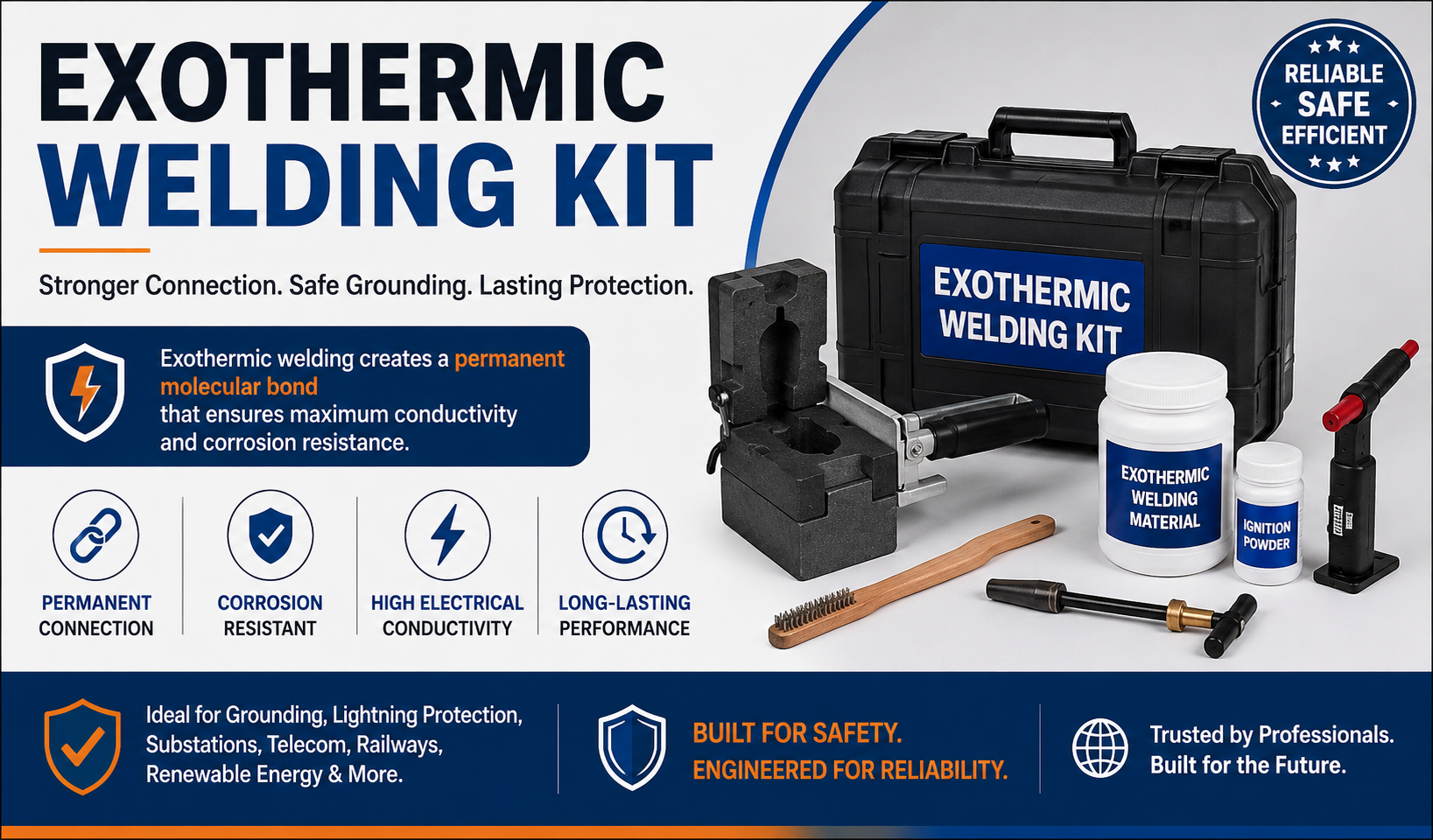
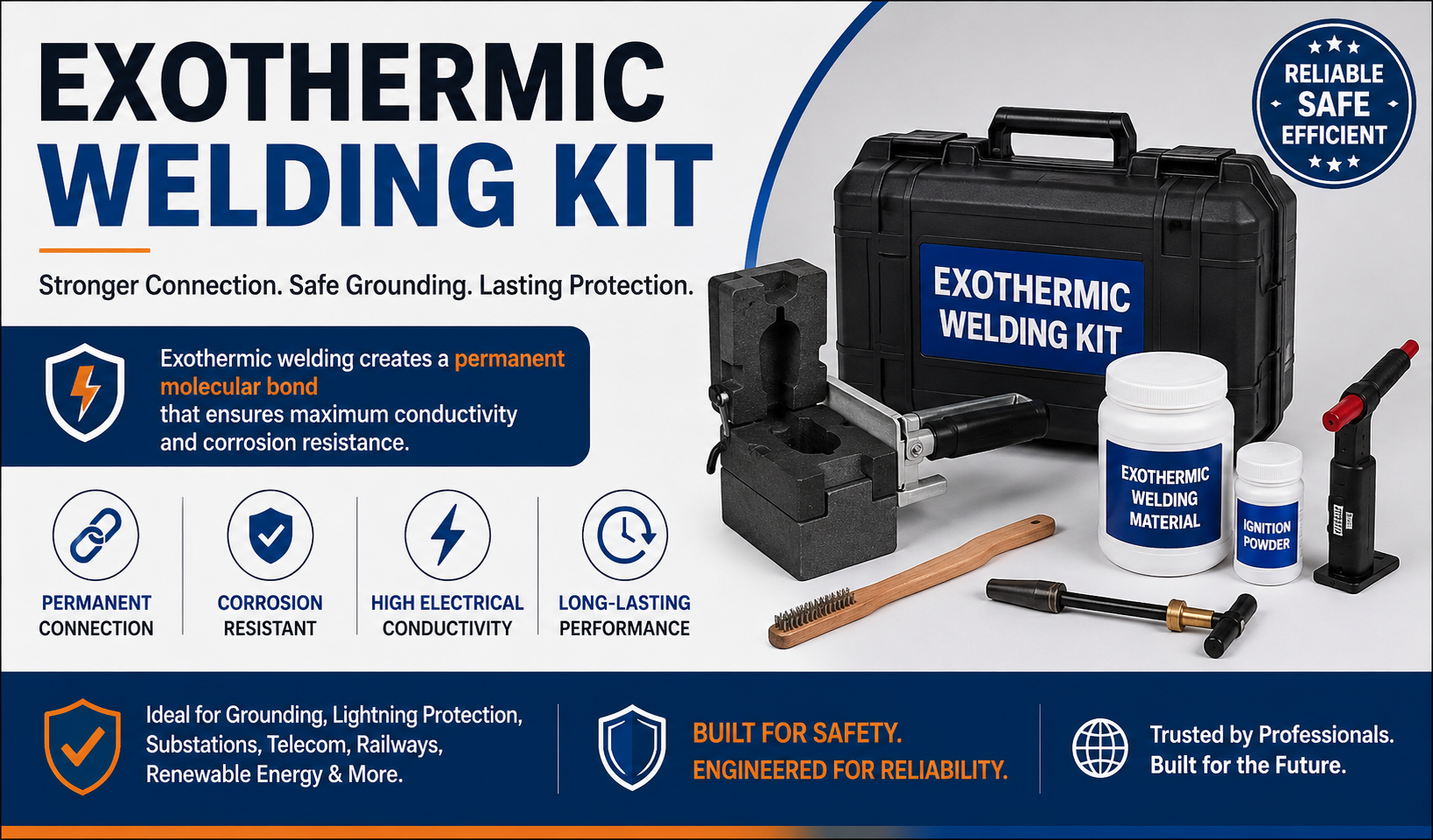
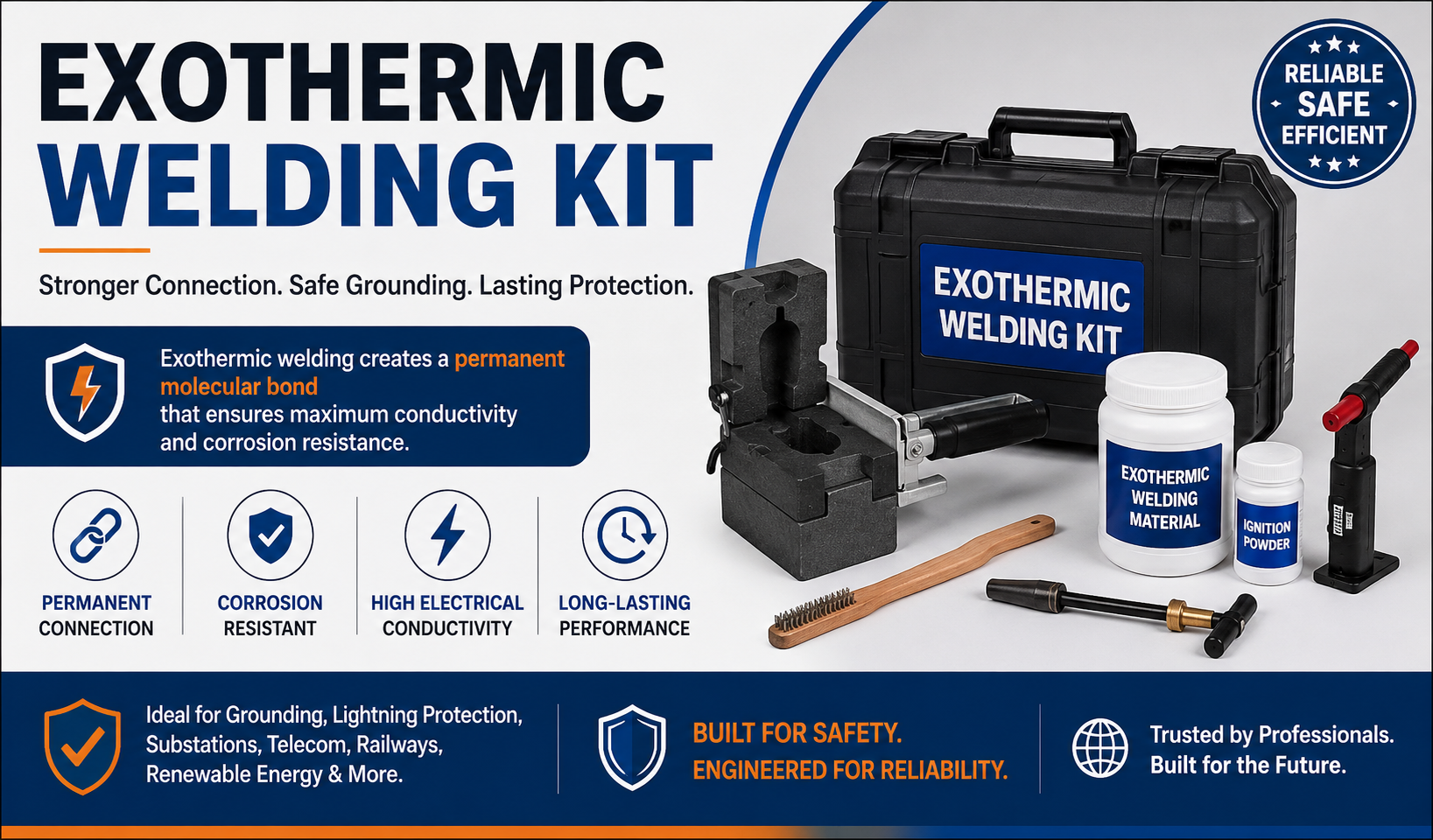
Components Required for Exothermic Welding
A successful weld requires more than just the powder.
The complete system typically includes:
- Exothermic welding powder
- Graphite mold
- Mold handle clamp
- Starting powder
- Flint ignitor
- Wire brush
- Cleaning tools
- Safety gloves
- Protective goggles
Each component contributes to producing a clean, consistent weld.
Types of Exothermic Welding Connections
Different applications require different mold designs.
Popular connection types include:
- Cable to cable
- Cable to ground rod
- Cable to flat strip
- Cable to steel surface
- Cable to pipe
- Cable to rebar
- Tee connection
- Cross connection
- Parallel conductor connection
Selecting the correct mold ensures reliable results.
Industries That Depend on Exothermic Welding Products
Because grounding failures can have serious safety and financial consequences, many industries choose Exothermic Welding Product solutions.
These include:
- Electrical utilities
- Infrastructure projects
- Metro rail systems
- Airports
- Telecommunications
- Renewable energy
- Manufacturing facilities
- Oil refineries
- Chemical plants
- Commercial buildings
Reliable grounding improves equipment safety while reducing maintenance costs.
Benefits of High-Quality Exothermic Welding Powder
Not all welding powders deliver the same performance.
Premium products provide:
- Consistent chemical composition
- Reliable ignition
- Uniform molten copper flow
- High conductivity
- Minimal slag formation
- Strong weld quality
- Better resistance to cracking
- Longer storage stability
Choosing a trusted manufacturer helps ensure consistent field performance.
Installation Best Practices
Proper installation significantly affects weld quality.
Always ensure:
- Conductors are clean and dry.
- The graphite mold is free from moisture.
- The correct powder size is selected.
- The mold closes tightly.
- The reaction chamber is clean before reuse.
- Safety equipment is worn throughout the process.
Following manufacturer recommendations improves weld consistency.
Common Mistakes to Avoid
Several installation errors can reduce weld quality.
Avoid:
- Using damp graphite molds
- Selecting the wrong powder size
- Reusing damaged molds
- Failing to clean conductors
- Incorrect conductor positioning
- Opening the mold too early
- Ignoring safety precautions
Proper preparation minimizes installation failures.
How to Choose the Right Exothermic Welding Product
Before purchasing an Exothermic Welding Product, evaluate several important factors.
Consider:
- Conductor size compatibility
- Graphite mold availability
- Powder quality consistency
- Manufacturer reputation
- Compliance with international standards
- Technical support
- Product availability
- Packaging quality
- Project-specific requirements
A reputable supplier can recommend the correct weld size for your application.
Maintenance Requirements
One of the greatest advantages of exothermic welds is their low maintenance.
After installation:
- Inspect visually during routine grounding inspections.
- Check surrounding grounding conductors.
- Replace damaged grounding conductors if necessary.
- No tightening or retorquing is required.
This makes exothermic welding ideal for inaccessible installations.
Environmental Advantages
Permanent welded connections reduce maintenance visits and replacement frequency. Their long service life minimizes material waste while improving the reliability of electrical infrastructure.
For renewable energy installations such as solar farms and wind projects, dependable grounding supports safe and efficient long-term operation.
Conclusion
A properly selected exothermic welding powder creates permanent, highly conductive electrical connections capable of lasting for decades. Whether used in substations, telecommunications, renewable energy, industrial facilities, or lightning protection systems, a premium Exothermic Welding Product offers superior performance compared to traditional mechanical connectors.
By choosing high-quality materials, using the correct graphite molds, and following proper installation procedures, organizations can build grounding systems that require minimal maintenance while providing exceptional electrical reliability and safety.
Frequently Asked Questions (FAQs)
What is exothermic welding powder made of?
Exothermic welding powder typically consists of copper oxide and aluminum powder. When ignited, the chemical reaction generates molten copper that permanently bonds conductors.
Is exothermic welding stronger than mechanical connectors?
Yes. Exothermic welding creates a molecular bond that offers higher mechanical strength and lower electrical resistance than most mechanical connectors.
Where is exothermic welding commonly used?
It is widely used in electrical substations, solar plants, telecommunications, railway systems, industrial facilities, and lightning protection systems.
Does an exothermic weld require maintenance?
Generally, no. Once installed correctly, exothermic welds require very little maintenance and usually last for the life of the grounding system.
Can exothermic welding be used outdoors?
Yes. Exothermic welded connections are highly resistant to corrosion and environmental conditions, making them suitable for outdoor installations.
Why is choosing a quality Exothermic Welding Product important?
A high-quality product ensures consistent weld performance, reliable conductivity, improved durability, and long-term safety for critical grounding applications.