How Exothermic Welding Powder Ensures Permanent Electrical Connections for Reliable Earthing Systems

Ai Earthing
Electrical grounding plays a critical role in ensuring the safety, reliability, and performance of electrical systems. Whether it is a power plant, telecommunications tower, railway infrastructure, data center, solar power installation, or industrial facility, an effective earthing system protects both equipment and people from electrical faults.
One of the most trusted methods for creating permanent grounding connections is exothermic welding. At the heart of this process lies exothermic welding powder, a specially formulated material that produces a molecular bond between conductors without requiring an external power source.
In this comprehensive guide, we'll explain how exothermic welding powder works, its benefits, applications, installation process, and why investing in a high-quality Exothermic Welding Product ensures long-lasting electrical safety.
What is Exothermic Welding Powder?
Exothermic welding powder is a specially engineered mixture of metal oxides and aluminum powder that creates an intense exothermic chemical reaction when ignited. This reaction generates temperatures exceeding 2500°C, melting copper and permanently bonding conductors together.
Unlike mechanical clamps or compression connectors, exothermic welding creates a molecular bond that becomes stronger than the conductor itself.
The resulting connection offers:
- Extremely low electrical resistance
- High mechanical strength
- Excellent corrosion resistance
- Long service life
- Maintenance-free performance
These advantages make exothermic welding the preferred method for critical grounding systems worldwide.
How Does Exothermic Welding Powder Work?
The process is surprisingly simple yet highly effective.
Step 1: Prepare the Mold
A graphite mold is selected according to the conductor sizes and connection type.
Step 2: Clean the Conductors
Proper cleaning removes oxidation, dirt, and grease for a perfect weld.
Step 3: Add the Exothermic Welding Powder
The measured quantity of exothermic welding powder is poured into the graphite mold.
Step 4: Ignite the Powder
Using a starting powder and ignition source, the chemical reaction begins instantly.
Step 5: Molten Copper Formation
The reaction produces molten copper that flows around the conductors.
Step 6: Permanent Molecular Bond
Within seconds, the copper solidifies into a seamless electrical connection.
After cooling, the mold is opened and the completed weld is ready for use.
Why Choose Exothermic Welding Over Mechanical Connectors?
Many grounding systems still rely on mechanical clamps, but these have several disadvantages over exothermic welding.
Permanent Connection
Mechanical connectors may loosen due to vibration, corrosion, or thermal expansion.
Exothermic welding creates a permanent bond that never loosens.
Superior Conductivity
The welded joint has electrical conductivity equal to or better than the conductor itself.
Corrosion Resistance
The copper weld resists oxidation and environmental degradation.
High Current Capacity
Exothermic welds safely withstand lightning strikes and fault currents.
Long-Term Reliability
Once installed correctly, no maintenance is typically required.
Applications of Exothermic Welding Powder
High-quality exothermic welding powder is used across numerous industries.
Power Transmission
Grounding transformers, substations, and transmission towers.
Renewable Energy
Solar farms and wind power installations require dependable earthing systems.
Telecommunications
Reliable grounding protects communication towers from lightning damage.
Railway Infrastructure
Track bonding and signaling systems depend on durable electrical connections.
Oil and Gas
Hazardous environments demand maintenance-free grounding.
Industrial Plants
Manufacturing facilities use exothermic welding for electrical safety.
Data Centers
Reliable grounding minimizes equipment damage and ensures uninterrupted operations.
Common Exothermic Welding Product Range
Manufacturers typically offer a complete Exothermic Welding Product range to support different installation requirements.
These products include:
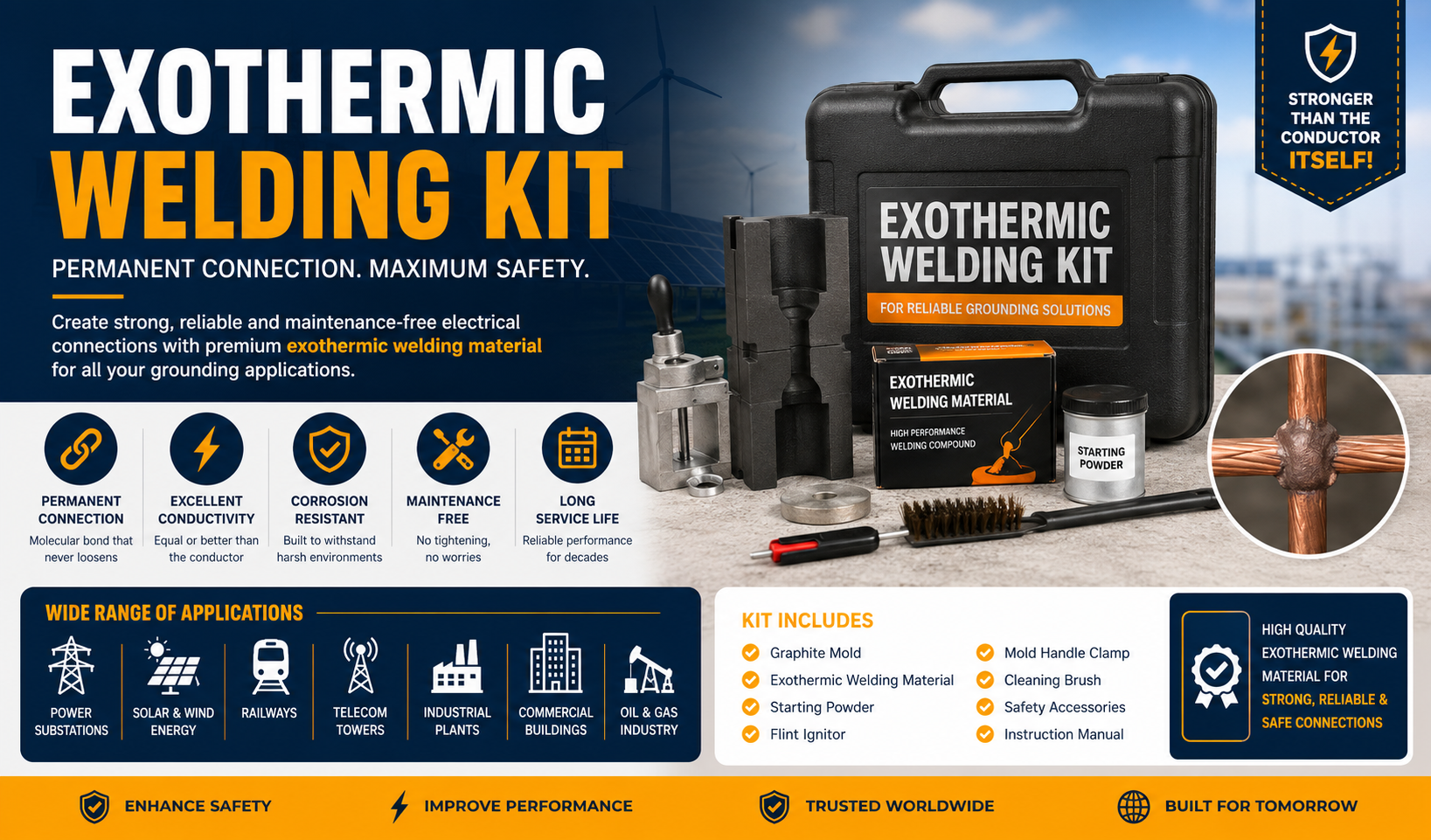
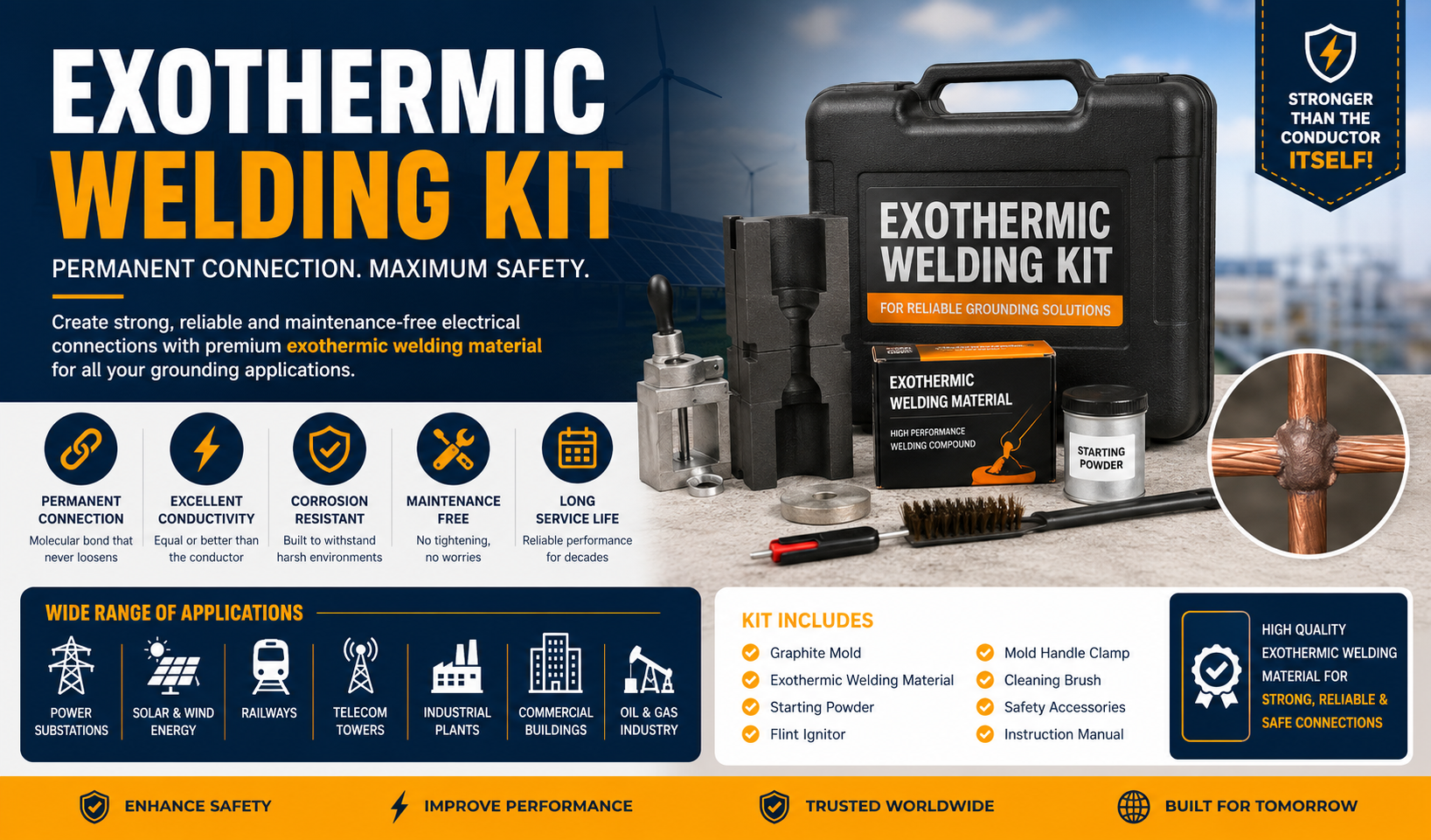
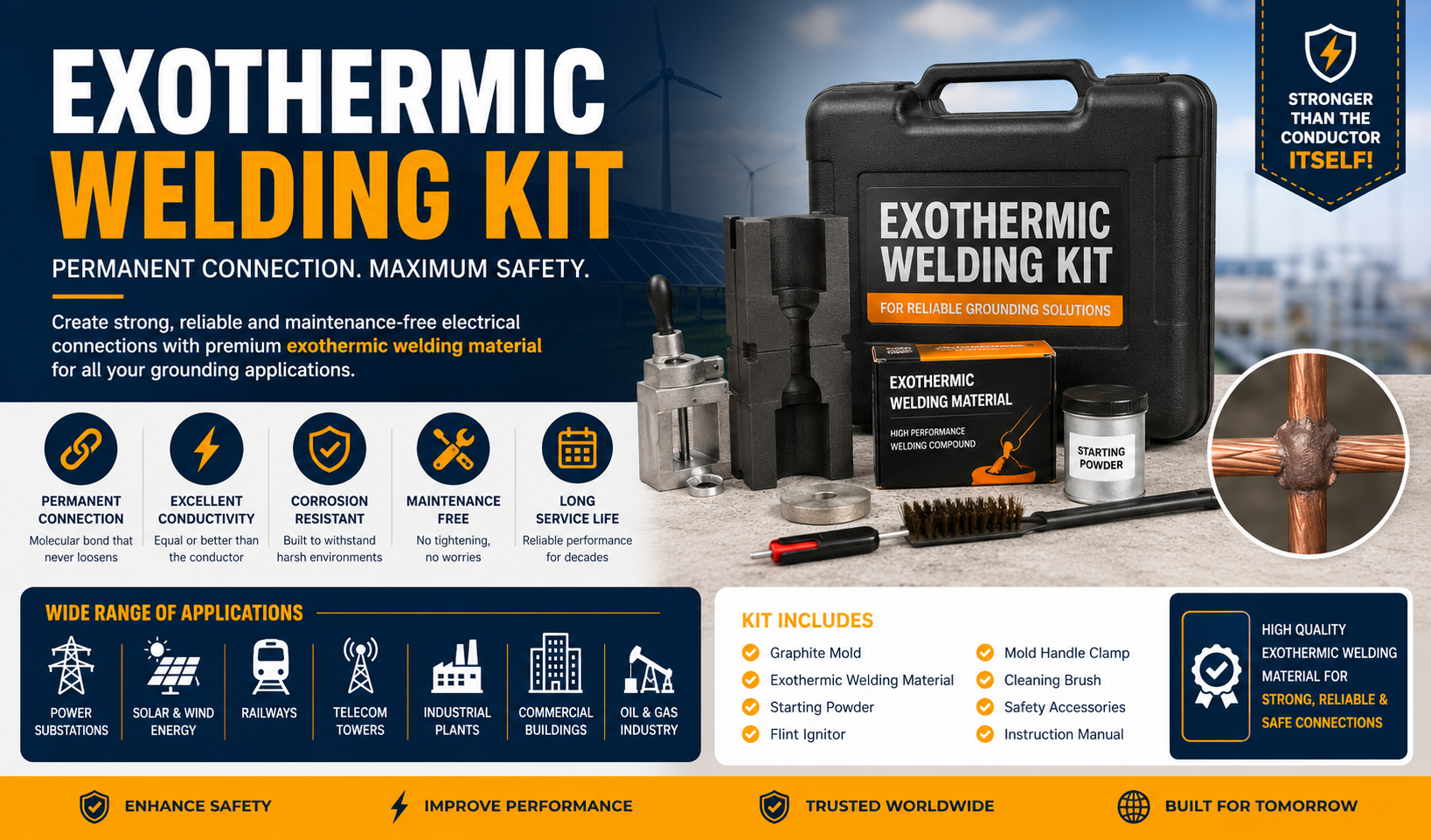
- Exothermic welding powder
- Graphite molds
- Mold handles
- Flint igniters
- Starting powder
- Cleaning brushes
- Wire brushes
- Mold release spray
- Crucibles
- Welding accessories
Selecting compatible products ensures consistent welding quality and improved installation efficiency.
Benefits of High-Quality Exothermic Welding Powder
Choosing premium exothermic welding powder provides several important advantages.
Excellent Electrical Conductivity
Low resistance improves current flow and enhances grounding performance.
Strong Mechanical Bond
The weld can withstand harsh environmental conditions and heavy mechanical stress.
Fast Installation
Most welds are completed in less than one minute.
Maintenance-Free Operation
Unlike bolted connections, welded joints require minimal maintenance.
Long Service Life
Properly installed welds often last as long as the grounding system itself.
Cost Savings
Reduced maintenance lowers lifetime operating costs.
Types of Connections Made Using Exothermic Welding
Different grounding systems require different connection styles.
Popular connection types include:
- Cable to cable
- Cable to ground rod
- Cable to flat strip
- Cable to rebar
- Cable to steel structure
- Tee connection
- Cross connection
- Parallel connection
Each requires a specific graphite mold and powder size.
Factors to Consider Before Buying Exothermic Welding Powder
Not all products offer the same quality.
Consider these factors before purchasing:
Powder Quality
Ensure consistent chemical composition.
Certification
Choose products that comply with recognized international standards.
Mold Compatibility
Powder size must match the graphite mold specifications.
Manufacturer Reputation
Experienced manufacturers provide better quality control.
Technical Support
Reliable suppliers offer installation guidance and product selection assistance.
Safety Precautions During Exothermic Welding
Although the process is straightforward, proper safety practices are essential.
Always:
- Wear heat-resistant gloves.
- Use eye protection.
- Ensure the mold is dry.
- Keep moisture away from welding powder.
- Use approved ignition materials.
- Follow manufacturer instructions carefully.
- Inspect molds before each use.
Proper handling ensures both operator safety and high-quality welds.
Maintenance of Exothermic Welding Equipment
Graphite molds require regular care to maximize their lifespan.
Recommended practices include:
- Clean molds after each weld.
- Store molds in dry conditions.
- Avoid dropping graphite molds.
- Replace damaged molds promptly.
- Inspect handles and accessories regularly.
Proper maintenance ensures consistent welding performance.
Industries That Depend on Exothermic Welding Products
A reliable Exothermic Welding Product is essential in:
- Electrical utilities
- Renewable energy
- Telecommunications
- Railway systems
- Airports
- Industrial manufacturing
- Petrochemical plants
- Mining operations
- Defense facilities
- Commercial buildings
- Smart city infrastructure
As electrical networks continue expanding, demand for dependable grounding solutions continues to grow.
Why Quality Matters
Inferior welding powder may lead to:
- Weak electrical connections
- Higher resistance
- Premature corrosion
- Safety risks
- Costly repairs
Investing in premium exothermic welding powder helps ensure long-term system reliability and compliance with industry standards.
Future of Exothermic Welding Technology
Modern grounding systems are becoming increasingly sophisticated.
Manufacturers continue improving:
- Welding efficiency
- Powder consistency
- Mold durability
- Installation speed
- Environmental performance
- Quality assurance
As renewable energy and smart infrastructure expand, exothermic welding will remain a preferred solution for permanent electrical connections.
Conclusion
An effective grounding system begins with dependable electrical connections. Exothermic welding powder provides one of the most reliable methods for creating permanent, corrosion-resistant, and low-resistance bonds that can withstand decades of service. Whether protecting substations, telecom towers, solar farms, or industrial facilities, using a high-quality Exothermic Welding Product enhances safety, minimizes maintenance, and improves overall system performance.
By selecting the right powder, compatible molds, and trusted accessories, organizations can build earthing systems designed for long-term reliability in demanding environments.
Frequently Asked Questions (FAQs)
What is exothermic welding powder used for?
Exothermic welding powder is used to create permanent electrical connections in grounding and earthing systems by forming a molecular bond between conductors.
Is exothermic welding stronger than mechanical connectors?
Yes. Exothermic welds provide greater mechanical strength, lower electrical resistance, and superior corrosion resistance compared to most mechanical connectors.
Can exothermic welding be used outdoors?
Yes. It is widely used in outdoor installations such as substations, telecom towers, solar farms, railways, and industrial plants because of its durability and weather resistance.
What products are included in an Exothermic Welding Product range?
A typical Exothermic Welding Product range includes welding powder, graphite molds, mold handles, igniters, starting powder, cleaning brushes, and other welding accessories.
How long does an exothermic welded connection last?
When installed correctly, an exothermic weld can last for the entire lifespan of the grounding system with little to no maintenance.
Is exothermic welding suitable for renewable energy projects?
Yes. Solar and wind power installations commonly use exothermic welding for reliable, long-lasting earthing connections that can withstand harsh environmental conditions.