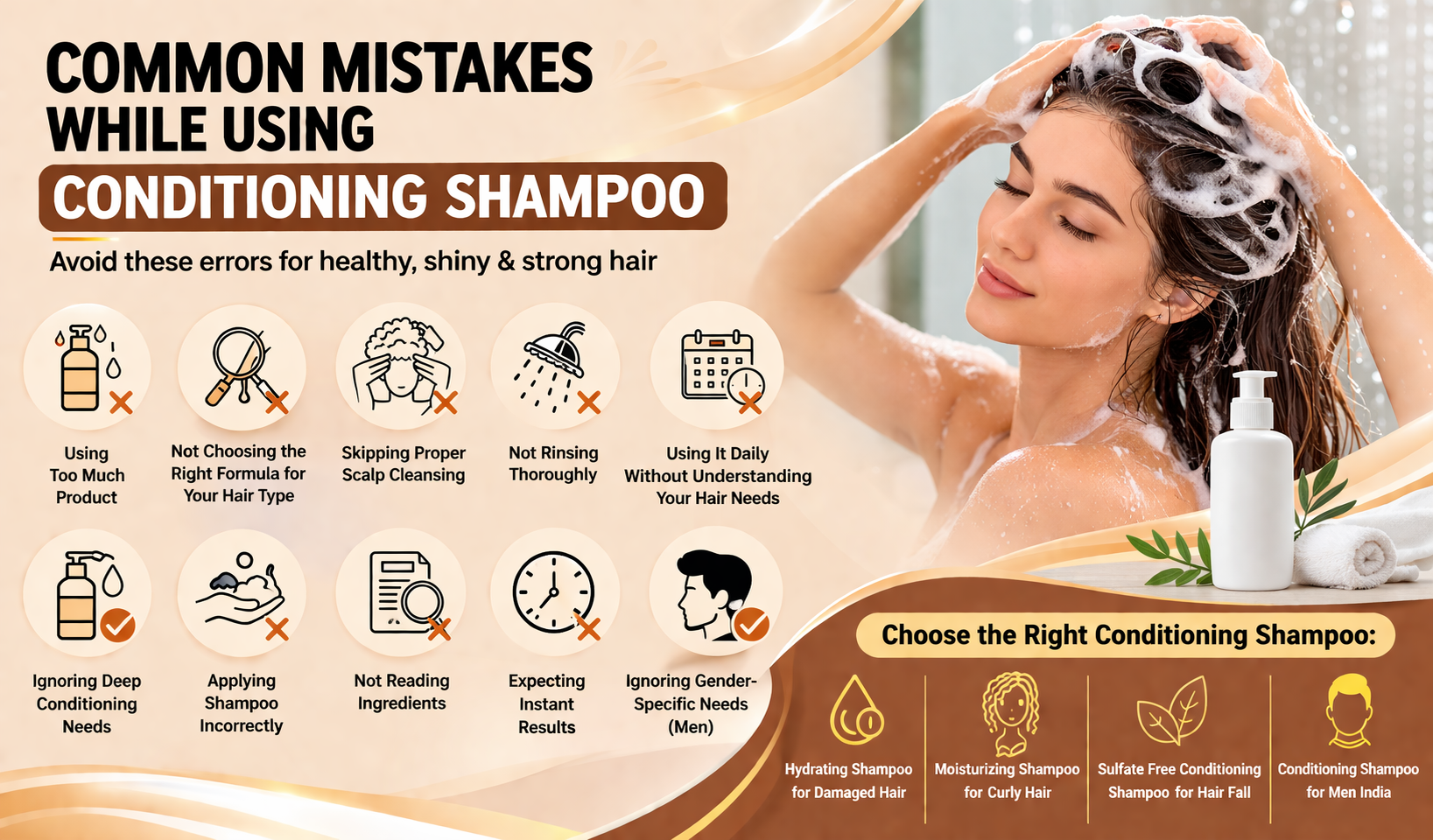

Common Mistakes While Using Conditioning Shampoo

Enstylz
Conditioning shampoos have become a go-to solution for people looking to simplify their hair care routine while still maintaining soft, healthy hair. Whether you're using a hydrating shampoo for damaged hair or a moisturizing shampoo for curly hair, these products promise cleansing and conditioning in one step.
However, many people unknowingly make mistakes while using conditioning shampoos—reducing their effectiveness or even causing hair issues like dryness, breakage, or hair fall. Let’s break down the most common mistakes and how to fix them.
1. Using Too Much Product
One of the biggest misconceptions is that more shampoo equals better results. Overusing conditioning shampoo can lead to product buildup, making your hair feel greasy and heavy.
Why it’s a mistake:
- Blocks scalp pores
- Weighs down hair
- Reduces volume
What to do instead:
Use a coin-sized amount for short hair and slightly more for longer hair. Even the best conditioning shampoo for men India works effectively with minimal usage.
2. Not Choosing the Right Formula for Your Hair Type
Not all conditioning shampoos are created equal. Using the wrong type can worsen your hair condition instead of improving it.
Examples:
- Using a heavy formula on oily hair
- Using a light shampoo on extremely dry hair
Solution:
- For damaged strands → Choose a hydrating shampoo for damaged hair
- For curls → Opt for a moisturizing shampoo for curly hair
- For hair fall → Use a sulfate free conditioning shampoo for hair fall
Matching your shampoo to your hair type is essential for visible results.
3. Skipping Proper Scalp Cleansing
Many users focus only on the hair length and ignore the scalp while using conditioning shampoos.
Why it matters:
A healthy scalp = healthy hair growth
Mistake:
- Applying shampoo only to ends
- Not massaging the scalp properly
Fix:
Gently massage your scalp for at least 30–60 seconds to remove dirt, oil, and buildup effectively.
4. Not Rinsing Thoroughly
Conditioning shampoos contain moisturizing agents that can leave residue if not rinsed properly.
Consequences:
- Sticky or greasy hair
- Dandruff-like flakes
- Scalp irritation
Tip:
Rinse your hair thoroughly with lukewarm water until it feels completely clean.
5. Using It Daily Without Understanding Your Hair Needs
While many conditioning shampoos are marketed for daily use, not everyone needs to wash their hair every day.
Problem:
- Overwashing strips natural oils
- Can increase dryness or hair fall
Better approach:
- Wash 2–3 times a week for most hair types
- Daily use only if you have an oily scalp or sweat frequently
Even a sulfate free conditioning shampoo for hair fall should be used based on your hair’s condition—not blindly every day.
6. Ignoring Additional Conditioning Needs
Conditioning shampoos are convenient, but they may not fully replace a deep conditioner—especially for very dry or chemically treated hair.
Mistake:
Relying only on shampoo for complete hydration
Solution:
Use a deep conditioner or hair mask once a week, especially if you're using a hydrating shampoo for damaged hair.
7. Applying Shampoo Incorrectly
How you apply shampoo matters just as much as which shampoo you use.
Common mistakes:
- Applying directly on dry hair
- Not emulsifying before use
Correct method:
- Wet your hair completely
- Rub shampoo between your palms
- Apply evenly starting from the scalp
8. Not Reading Ingredients
Many people overlook the ingredient list, which can make a big difference in hair health.
Avoid:
- Harsh sulfates (unless needed for deep cleansing)
- Alcohol-heavy formulas
Look for:
- Natural oils
- Proteins
- Mild cleansers
A sulfate free conditioning shampoo for hair fall is generally a safer choice for sensitive scalps.
9. Expecting Instant Results
Hair care takes time, and conditioning shampoos are no exception.
Reality check:
- Results take 2–4 weeks
- Hair repair is gradual
Switching products too frequently can prevent you from seeing real benefits.
10. Ignoring Gender-Specific Needs
Hair care needs can differ based on lifestyle, scalp type, and grooming habits.
For example, a conditioning shampoo for men India is often formulated to:
- Tackle sweat and oil buildup
- Strengthen hair roots
- Reduce hair fall
Choosing a product tailored to your needs can improve results significantly.
Final Thoughts
Conditioning shampoos are a great innovation—but only when used correctly. Avoiding these common mistakes can make a huge difference in your hair’s health, shine, and strength.
Whether you're using a moisturizing shampoo for curly hair or a hydrating shampoo for damaged hair, the key lies in proper usage, consistency, and choosing the right formula.