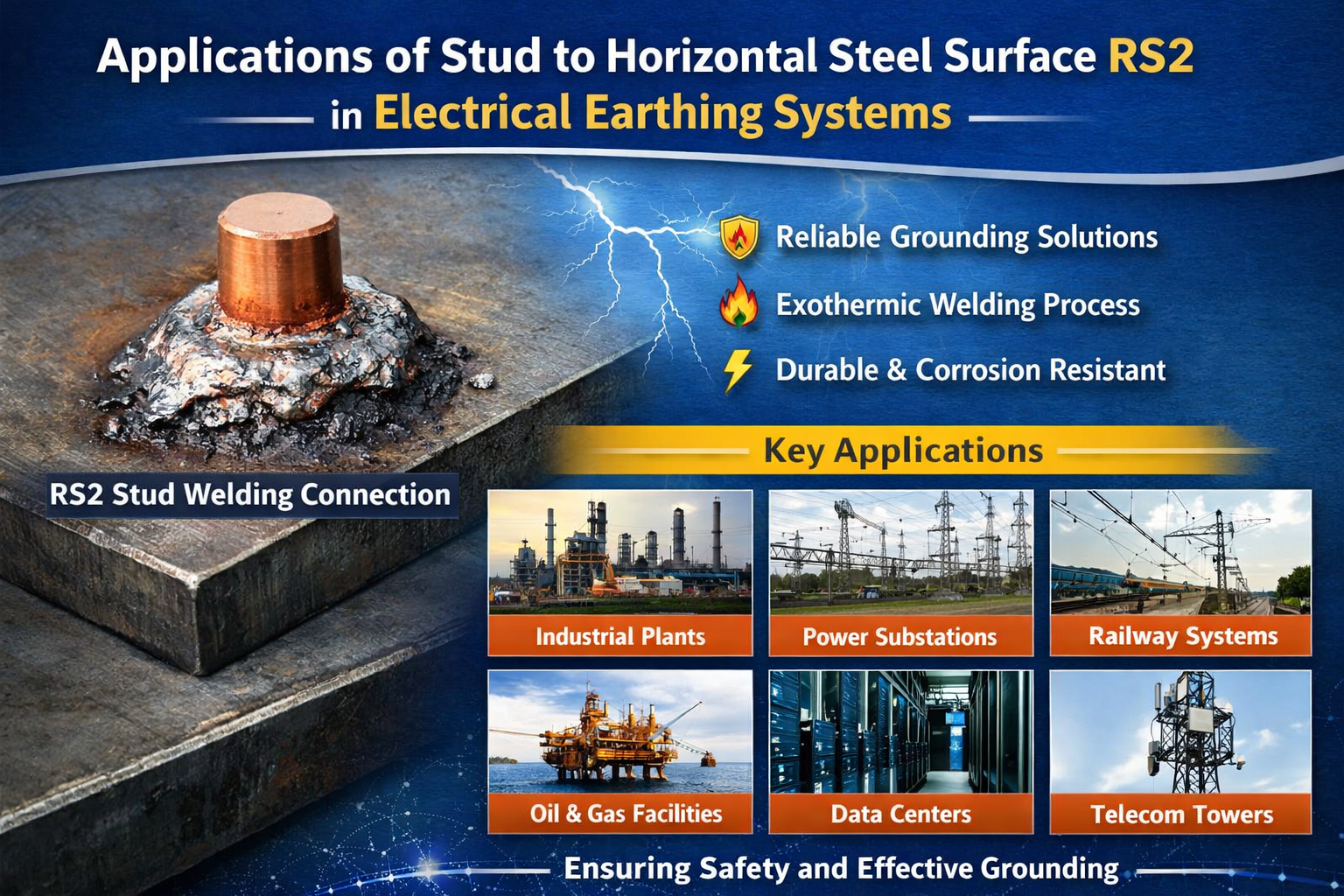

Applications of Stud to Horizontal Steel Surface in Electrical Earthing Systems

Ai Earthing
Electrical earthing systems are a critical component of any industrial, commercial, or infrastructure project. They ensure safety by providing a low-resistance path for fault currents, lightning strikes, and electrical surges. Among the various connection methods used in earthing systems, stud to horizontal steel surface connections have gained significant popularity due to their durability, conductivity, and long-term reliability.
In this article, we’ll explore the applications of stud to horizontal steel surface RS2, the role of stud to steel surface exothermic welding, and why this method is widely preferred in modern earthing systems.
Understanding Stud to Horizontal Steel Surface Connections
A horizontal steel surface welding connection involves attaching a conductive stud onto a flat steel surface using specialized welding techniques. This connection is commonly used in grounding systems where a secure and permanent bond is required between the earthing conductor and steel structures.
The RS2 stud welding connection is specifically designed for horizontal surfaces, ensuring strong mechanical bonding and excellent electrical continuity.
Key Features:
- High conductivity
- Corrosion resistance
- Permanent bonding
- Minimal maintenance
- Suitable for harsh environments
Importance of Reliable Earthing Connections
Before diving into applications, it’s important to understand why reliable connections matter in earthing systems:
- Prevents electrical shocks
- Protects equipment from damage
- Ensures system stability
- Safeguards against lightning strikes
- Reduces fire hazards
A poorly executed connection can increase resistance, leading to system failure. This is where exothermic welding stud to steel surface techniques play a crucial role.
Role of Exothermic Welding in Stud Connections
Stud to steel surface exothermic welding is a process that uses a chemical reaction to produce molten metal, which fuses the stud to the steel surface. Unlike mechanical connections, this creates a molecular bond.
Benefits of Exothermic Welding:
- Permanent and maintenance-free
- Low electrical resistance
- Resistant to corrosion and oxidation
- Withstands high fault currents
- No loosening over time
Because of these advantages, exothermic welding stud to steel surface is widely used in critical earthing applications.
Major Applications of Stud to Horizontal Steel Surface in Earthing Systems
1. Industrial Plants and Manufacturing Units
Industrial environments involve heavy machinery, high voltage systems, and continuous operations. A reliable earthing system is essential to ensure safety and uninterrupted production.
Applications include:
- Grounding of machinery frames
- Earthing of cable trays and panels
- Bonding of structural steel
The stud to horizontal steel surface RS2 is ideal here because it ensures a robust connection even in vibration-prone environments.
2. Power Generation and Substations
Power plants and substations require highly reliable grounding systems to handle fault currents and lightning surges.
Common uses:
- Transformer grounding
- Switchgear earthing
- Grid bonding to steel structures
The RS2 stud welding connection ensures a low-resistance path, which is crucial for efficient fault current dissipation.
3. Railway and Metro Infrastructure
Railway electrification systems depend heavily on proper earthing for safety and signal reliability.
Applications include:
- Track grounding
- Earthing of overhead line equipment
- Bonding of steel bridges and structures
Using horizontal steel surface welding connection ensures durability in outdoor and high-vibration conditions.
4. Oil & Gas Industry
The oil and gas sector operates in hazardous environments where sparks or electrical faults can lead to catastrophic incidents.
Key applications:
- Earthing of pipelines
- Bonding of storage tanks
- Grounding of offshore platforms
Here, stud to steel surface exothermic welding is preferred because it provides spark-free, corrosion-resistant, and long-lasting connections.
5. Commercial Buildings and Data Centers
Modern buildings and data centers require stable electrical systems to protect sensitive equipment.
Applications include:
- Earthing of server racks
- Bonding of structural steel frameworks
- Lightning protection systems
The use of exothermic welding stud to steel surface ensures uninterrupted grounding performance, critical for data protection and uptime.
6. Renewable Energy Projects
Solar and wind energy installations require effective grounding to handle lightning strikes and electrical faults.
Common uses:
- Solar panel mounting structure grounding
- Wind turbine earthing
- Inverter and equipment grounding
The stud to horizontal steel surface RS2 is widely used due to its reliability in outdoor environments.
7. Telecommunication Towers
Telecom towers are highly exposed to lightning and electrical surges, making earthing systems crucial.
Applications include:
- Tower grounding
- Equipment bonding
- Lightning protection systems
A horizontal steel surface welding connection ensures long-term stability even under extreme weather conditions.
Advantages Over Traditional Connection Methods
Compared to bolted or clamped connections, RS2 stud welding connection offers several advantages:
1. Permanent Bond
Unlike mechanical connections, welded studs do not loosen over time.
2. Lower Resistance
The molecular bond created by exothermic welding stud to steel surface ensures superior conductivity.
3. Corrosion Resistance
These connections are highly resistant to environmental degradation.
4. Reduced Maintenance
Once installed, they require little to no maintenance.
5. High Mechanical Strength
Ideal for high-stress and vibration-prone environments.
Installation Process Overview
The installation of a stud to horizontal steel surface RS2 connection typically involves:
- Surface preparation (cleaning the steel surface)
- Positioning the stud
- Using an exothermic welding setup
- Initiating the chemical reaction
- Allowing the molten metal to fuse the stud to the surface
- Cooling and inspection
This process ensures a strong and reliable connection that meets industry standards.
Best Practices for Implementation
To maximize the performance of stud to steel surface exothermic welding, consider the following:
- Use high-quality materials
- Ensure proper surface cleaning
- Follow manufacturer guidelines
- Conduct resistance testing after installation
- Protect connections from physical damage
Future Trends in Earthing Systems
With the rise of smart grids, renewable energy, and advanced infrastructure, the demand for reliable grounding solutions is increasing.
Emerging trends include:
- Automation in welding processes
- Advanced corrosion-resistant materials
- Integration with monitoring systems
- Increased adoption of RS2 stud welding connection in modular construction
Conclusion
The application of stud to horizontal steel surface RS2 in electrical earthing systems has revolutionized the way grounding connections are made. With the use of stud to steel surface exothermic welding, industries can achieve highly reliable, durable, and maintenance-free connections.
From power plants to telecom towers and renewable energy projects, the horizontal steel surface welding connection plays a vital role in ensuring electrical safety and system efficiency. As infrastructure continues to evolve, the importance of robust earthing solutions like exothermic welding stud to steel surface will only grow.
If you’re looking to build a safe and efficient earthing system, investing in RS2 stud welding connection technology is not just an option—it’s a necessity.